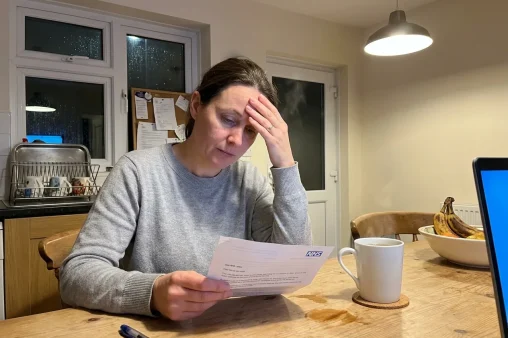

A 2024 case-control study found that adults who experienced significant emotional trauma had roughly double the odds of developing Irritable Bowel Syndrome (IBS). Not slightly elevated. Double. And the tests your GP has been running? They weren’t designed to detect what unresolved trauma does to your nervous system, your gut lining, or your inflammatory response. So they return “normal.” And you walk out wondering if you’re making it up.
You’re not.
The connection between emotional trauma and physical conditions like IBS and migraines is real, it’s measurable, and the research is getting stronger every year. But it isn’t universal, it doesn’t replace medical investigation, and getting it wrong in either direction carries real consequences.
And underneath all of that, you’re probably carrying something you haven’t said out loud. That the thing you went through and these symptoms might actually be connected. And an equally terrifying thought, that maybe they’re not, and nobody will ever find the answer.
Before we go any further, I want to be straight with you. I’m Sameena Khan. I’m a clinical homeopath and bioenergetic practitioner. I’ve spent 30 years sitting across from people whose bodies were telling a story nobody had listened to. That means I have a perspective on this, and you deserve to know that before you read another word.
Key Takeaways
- Emotional trauma roughly doubles the odds of developing IBS. That’s not imagined. That’s measured
- Standard blood tests can’t detect what trauma does to your nervous system and gut. And a 10-minute GP appointment can’t investigate the emotional root either
- Not every case has an emotional root. My specific condition-to-emotion patterns come from 30 years of clinical observation, not peer-reviewed controlled studies. Medical investigation should always come first
Here for one specific thing?
- What the research says about the mind-body connection? Jump to the evidence
- How specific conditions link to specific emotional experiences? See the clinical patterns
- Why your GP keeps saying “normal” when you know something’s wrong? Read about the systemic gap
- Whether this approach is genuinely right for your situation? Take the self-assessment
What does the research actually show about trauma and physical symptoms?
Emotional trauma creates measurable biological changes in your nervous system, your gut, and your body’s inflammatory response. This isn’t a belief. It’s data.
A large-scale prospective cohort study found adults with high childhood abuse histories showed 64% greater IBS risk. Those with high emotional neglect showed 38% greater risk. For migraines, systematic reviews confirm that Post-Traumatic Stress Disorder (PTSD) significantly elevates risk, and exposure to three or more adverse childhood experiences is associated with migraines regardless of gender.
So the question isn’t really whether emotional experience affects the body. It’s how.
I used to be a systems analyst at BT. And one thing I bring from that world is thinking in terms of systems. Think of your brain as a motherboard. It’s programming your body to eat, to sleep, to digest, to regulate temperature, to do everything it needs to do.
When we go through significant stresses we never processed, the programming gets disrupted. The signals aren’t clear any more.
The science now shows us three specific pathways where that disruption happens.
Your gut-brain connection. A 2024 study published in Cell identified a specific neural circuit. Chronic stress suppresses a region of the brain called the amygdala, which reduces signals through the vagus nerve to glands in your gut. Those glands produce less protective mucus. Beneficial bacteria get depleted. The gut wall becomes more permeable.
That’s a mapped, measurable pathway from emotional stress to gut problems. Not theory. Circuitry.
Your stress hormones stay stuck on high. Unresolved trauma keeps your body’s stress engine running constantly. Cortisol stays elevated. That changes gut permeability, shifts your microbiome, and creates chronic low-grade inflammation. Your body gets stuck in emergency mode.
And when your body has been in emergency mode for years, it starts treating everything as a threat. Food, pollen, changes in temperature. Things that never bothered you before suddenly do.
Your nervous system stays braced. Think about it. Trauma shifts the balance between “fight or flight” and “rest and digest.”
If your body is permanently braced for the next threat, it suppresses the functions it considers non-essential. Digestion. Repair. Immune regulation.
That’s why your symptoms are often worse under stress and better on holiday. It’s not coincidence, right? It’s your nervous system briefly coming out of survival mode. And it is also the reason behind our article ‘Why Have Rest, Holidays, and Self-Care Not Fixed My Burnout?‘.
Standard blood tests, endoscopies, and Magnetic Resonance Imaging (MRI) scans aren’t designed to detect any of this. They check whether your organs look right and whether your blood chemistry is off. They don’t check what’s happening in your gut bacteria, how your nervous system is firing, or whether your stress hormones are stuck on permanent high.
So your investigations return “normal.” Because by the measures being used, you are normal. The problem isn’t you. It’s what’s being measured.
We cover why blood tests return normal when you know something is wrong in more detail separately.
And this isn’t all theoretical. A 2025 meta-analysis found gut-directed hypnotherapy consistently outperformed other IBS treatments, with the strongest trial showing an 81% responder rate. The researchers rated the overall evidence quality as early-stage. But 81% isn’t wishful thinking. Something real is happening when you treat the brain-gut connection rather than just the gut.
I want to be straight about the limitations though. The Cell study was conducted in animal models, not human IBS patients. The trauma-to-migraine connection is supported by studies tracking large groups where PTSD and migraines consistently appear together, but nobody has mapped a specific brain-to-headache circuit the way they have for the gut.
The evidence is growing rapidly, and I won’t tell you it’s settled. What I will tell you is that in 30 years of sitting across from people with unexplained symptoms, the patterns are too consistent to dismiss.

What do 30 years of root cause practice reveal about specific conditions?
People come to me with labels. IBS. Chronic migraines. Unexplained fatigue. They expect me to treat the label.
I don’t.
I start with two questions. When did it start? And what was happening in your life at that point?
Before I say this next part, I want to be clear. The patterns I’m about to describe are my clinical observations from thousands of cases over three decades. They aren’t backed by peer-reviewed controlled studies. The general link between psychological adversity and conditions like IBS has strong research behind it. My specific condition-to-emotion mappings don’t. I share them because they help people understand what might be happening in their body, not because they’re universal rules.
Hay fever and unresolved grief. Paul Turner was a BT engineer who came to me with severe hay fever. Couldn’t work outdoors. His job depended on being outside, and every spring his eyes streamed, his nose ran, and he was functionally unable to do it.
He was sceptical. Wanted only acute treatment. “Oh, do I have to do a full consultation?” Yep. You do.
When I took his case properly, went right back through his history, I found his daughter had died. And he’d never truly grieved her.
The streaming eyes. The running nose. The tears that wouldn’t stop every spring. His body was doing the crying he never did.
I gave him one remedy. A high-strength grief remedy, which happens to be one of the best hay fever remedies in homeopathy. Within a month, Paul’s hay fever cleared completely.
Twenty years later, he phoned my clinic by accident. Wrong number.
I said, “While I’ve got you, how’s the hay fever?”
He said he hadn’t had it since. Not once in twenty years.
That’s not symptom management. That’s the root being pulled.
Paul didn’t come to me saying “I think my grief is causing my hay fever.” Nobody does. He came wanting his symptoms to stop so he could get back to work. It was only because the consultation went deep enough to uncover his daughter’s death that the connection became visible. If he’d been given an antihistamine and sent on his way, he’d still be taking it every spring. Instead, one remedy addressed the grief, and the hay fever was simply the surface expression of something his body had been holding for years.
Shock and unexplained bleeding. One of the cases that stays with me most. A young girl, just ten years old, was attacked by a dog. The shock was enormous.
Her body went into such a state of emergency that her periods started early. And they never stopped.
Continuous bleeding, month after month. Every gynaecological investigation came back clear. The specialists were looking at her reproductive system, running every test they had. Nothing structurally wrong.
Because the bleeding wasn’t a reproductive problem. Her body was stuck in shock. It had been in survival mode since the moment that dog went for her, and nobody had asked the question that mattered. Not “what’s wrong with your uterus?” but “what happened to you?”
And what made this case particularly difficult wasn’t just the clinical picture. A ten-year-old who’s been through something that frightening isn’t going to open up to just anyone. She needed someone she trusted enough to take her back to that moment safely. Not a rushed referral with a stranger behind a desk. Not a tick-box questionnaire. She needed time, patience, and the kind of space where a child can say what actually happened without feeling judged or hurried.
Not just the right treatment. The right relationship.
That’s what a safe, non-judgmental space actually means in practice. Not a phrase on a website, but the difference between a child who stays stuck in shock and one who can finally let her body process what happened.
Other patterns I see consistently. Digestive issues linked to emotionally “indigestible” shocks. I had a client with 18 years of gut problems that cleared permanently when we traced the origin to a financial betrayal she’d found impossible to stomach. Literally indigestible.
Chronic constipation. “What are you holding in?”
Urinary infections. “Who’s pissed you off?”
Angry-looking eczema. “What’s made them angry emotionally?”
These aren’t cute metaphors. They’re questions I ask in my clinic every week.
Migraines are harder to map to single emotional events than gut conditions. The research links them more strongly to accumulated stress and PTSD than to specific shocks, and in my practice they often appear alongside other women’s health conditions like thyroid and hormonal symptoms rather than in isolation.
Why is conventional medicine structurally unable to find this?
The structural gap in conventional medicine isn’t about blaming individual GPs. Most are doing extraordinary work under impossible conditions.
The problem is the system they work within.
A standard GP appointment in the UK is 10 minutes. GPs themselves estimate they need around 15.7 minutes for complex presentations. The British Medical Association recommends 15 minutes.
In 10 minutes, you can take symptoms, order blood tests, and write a referral. You cannot take a timeline from birth to now. You cannot ask “what was happening in your life when this started?”
So the GP refers you to a gastroenterologist. Scope. Normal. Referral back. Maybe a neurologist for the migraines. Scan. Normal. Back to the GP. And round you go.
According to The King’s Fund, only 54.2% of neurology patients were even seen within 18 weeks. You could cycle through that queue multiple times before anyone looks at the whole picture.
Published research estimates that persistent physical symptoms account for roughly 45% of all primary care consultations. You are not an unusual case. You are the majority.
And there’s a gender dimension that makes this worse. A 2024 UK Parliamentary report found that 62% of women reported their pain was ignored or dismissed by healthcare professionals. Up from 49% just a year earlier.
For endometriosis, the average diagnostic delay is eight years. Almost half of diagnosed women had visited their GP ten or more times before anyone found the answer.
Here’s what gets me though. The gap isn’t even a knowledge problem. The NHS Talking Therapies Manual explicitly requires assessors to explore adverse life circumstances. National Institute for Health and Care Excellence (NICE) guidelines already recommend approaches like gut-directed hypnotherapy for IBS that hasn’t responded to standard treatment.
The tools exist. The evidence is there.
But in one UK study, just 17.6% of White British IBS patients in secondary care were actually recommended brain-gut therapy. For ethnic minority patients? 2.9%.
The guidance exists. The evidence exists. The system just can’t deliver it. A 10-minute appointment followed by organ-specific referrals makes it structurally impossible.
If you’re curious what a thorough investigation looks like by contrast, our article ‘What Actually Happens in My First Holistic Healing Consultation (an Honest Walkthrough)?‘ shows the full process.

When is this NOT the right explanation, and who is it actually right for?
Knowing when this approach doesn’t apply is as important as knowing when it does.
Three groups this is not the right starting point for.
Women with red-flag symptoms. Unexplained weight loss. Blood in your stool. Sudden-onset severe headaches with neurological changes. New symptoms after 50. You need urgent medical investigation. Not an emotional one.
I tell every client the same thing. “Go and see a GP, get a diagnosis, get some blood tests done. Let’s rule out the serious stuff. And then come and see me.”
People with conditions that have clear physiological causes. Coeliac disease. Crohn’s. Inflammatory bowel disease. Structural migraines. These need physiological treatment. I can support alongside it, but no amount of emotional processing resolves an autoimmune condition.
People who aren’t ready to explore their emotional history.UK Government guidance on trauma-informed practice explicitly warns that encouraging traumatic disclosure before someone is ready can cause re-traumatisation.
If the thought of opening this up feels overwhelming rather than hopeful, forcing it isn’t healing. It’s harm. There’s nothing wrong with saying “not yet.”
We’ve written honestly about what root cause healing can and cannot fix for exactly this reason.
The honest limitations of my own approach. I combine homeopathy, bioenergetic scanning, hypnotherapy, and coaching to investigate emotional roots of physical symptoms. Several things need saying.
I know what it looks like to override your body’s signals. I did it myself for years until burnout forced me to stop. That experience is part of why I won’t promise quick results.
This takes time. If you’ve been on multiple medications for 15 to 20 years, eight weeks is often not enough to peel back all those layers. Every committed client I’ve worked with sees some improvement, but the speed and degree of that shift is genuinely less predictable with long-standing conditions and heavy medication layers.
Some chronic autoimmune conditions respond more slowly than others, even with full engagement. When initial results don’t match expectations, I adjust the protocol and provide additional sessions at no extra cost. That’s not a sales line. It’s what happens when I’m asking someone’s body to unravel something it’s been carrying for decades.
And I can’t do the work for you. People who don’t take their remedies, don’t do the homework, and expect a passive fix don’t see shifts. There’s no magic pill, but there is a magic process. It requires your participation.
I’ve had people follow everything properly and feel frustrated at week six because nothing obvious had shifted yet. Sometimes the body needs longer than either of us would like before changes become visible.
And sometimes the shift shows up somewhere you weren’t watching. They came wanting their migraines gone and instead noticed they were sleeping properly for the first time in years.
The root was moving. Just not where they expected.
Who is it actually right for?
The person with “normal” results and no answers. You’ve done the blood tests, seen the specialists, had the scans. Everything came back clear. But the symptoms haven’t. You’ve run out of places to look within the conventional system.
The person who already suspects the connection. You’ve wondered, maybe for a while now, whether a bereavement, an abusive relationship, or something from childhood could be connected to what your body is doing. You’ve never mentioned it in a medical setting because nobody has ever asked.
The person willing to do the work. You understand this is a process, not a prescription. You’re prepared to go back to when it started, to commit between sessions, and to participate actively in your own healing.
Does your situation fit this pattern?
Before you speak to anyone, run through these four questions honestly.
1. Did your symptoms start or dramatically worsen after a specific life event? A divorce. A bereavement. A traumatic experience you may never have connected to your health.
2. Do your symptoms persist or return despite medical treatment? You’ve tried medication. You’ve followed the diet. You’ve done what you were told. And either it doesn’t work, or it works for a while and comes back. You can cut the weeds at the top, right? But until you pull them out from the roots, they keep growing.
3. Do conventional investigations consistently return “normal”? Blood tests clear. Scans clear. And yet you know something is wrong.
4. Do symptoms visibly correlate with emotional states? Worse under stress. Better on holiday. Flare during conflict.
If three or four apply to you, investigating the emotional connection isn’t grasping at straws. It’s a reasonable, evidence-supported next step.
If one or fewer applies, there may be a physiological explanation that hasn’t been found yet. Keep pursuing medical investigation.
A difficult truth about your situation
Before I say this, don’t beat yourself up. It’s not your fault.
Some people have carried their story so long without anyone asking that they’ve normalised it. The pain. The fatigue. The “that’s just how I am.”
The hardest question I ask isn’t “what happened to you?” It’s “are you ready to look at what happened?”
Because if you’re not, this approach won’t work. And that’s not failure. It’s timing.
Some people need to hear this now and come back in six months when the ground feels steady enough to dig.
Every month you continue cycling between GP visits, specialist referrals, and prescriptions that manage but never resolve, you lose more of the life you’re meant to be living. Over years, that’s thousands spent on symptom management, and the immeasurable cost of running at half capacity when the root cause might have been findable the entire time.
Understanding why your body is doing what it’s doing changes the entire direction of treatment. Not because it’s a magic fix, but because it shifts the question from “what’s wrong with me?” to “what happened to me, and has anyone actually looked?”
If you want to understand more about how root cause investigation works in practice, the RootScan page explains what a bioenergetic assessment involves.
If three or more items on that checklist described your situation and you’re ready to have a conversation, a free 30-minute health audit is the simplest way to find out whether investigating the emotional root could help. No commitment, no pressure. Just an honest conversation about whether this path fits your specific symptoms.
And if you’re not ready? Save this article. Come back when the timing feels right.
Sameena Khan
Founder, Rise Radiantly
Frequently Asked Questions
Can emotional trauma really cause IBS, or is this still just a theory?
The link between emotional trauma and IBS is supported by large-scale research, including a 2024 study showing roughly double the odds of IBS in adults with significant trauma histories. The biological pathways through the gut-brain axis are increasingly well-mapped, though some mechanisms have only been demonstrated in animal models so far. Strong and growing evidence. Not settled universal fact. But consistent enough across thousands of people, and across my own 30 years of practice, that dismissing it doesn’t make sense either.
Do I need to stop seeing my GP or come off medication?
Absolutely not. I never take people off medication. If you need antibiotics, take them. If you need painkillers, take them. I work alongside conventional treatment, not instead of it. If you need to take the medication, take it. I’ll help you work around the drug layer.
How long does this take?
Honestly? It depends entirely on your situation. One size doesn’t fit all. Acute conditions can shift quickly. Long-standing conditions with years of medication layers need more time. I won’t pretend the timeline is the same for everyone, because it never is. The people who commit to the process see results, but your friend’s timeline won’t be yours.
What if my symptoms turn out to be purely physical?
Good. That means the medical system worked for you. I always tell people, get your medical investigation done first. Rule out the serious stuff. This approach is for what happens when medical investigation doesn’t find answers, not a replacement for it.
What if I’m not ready to talk about my past?
Then this isn’t the right time. And that’s completely fine.
Pushing someone before they’re ready doesn’t help. It can actually cause harm. You’ll know when you’re ready.
If anything here made you think “that sounds like my situation,” a free 30-minute health audit is the quickest way to find out whether this approach fits. No commitment. Just a conversation.