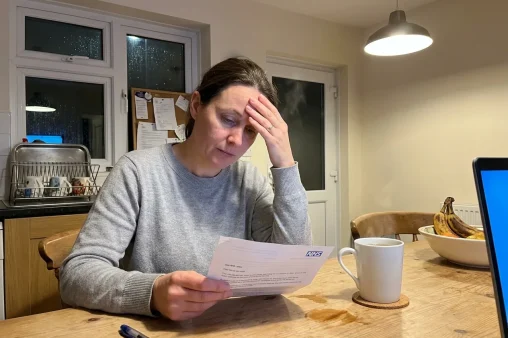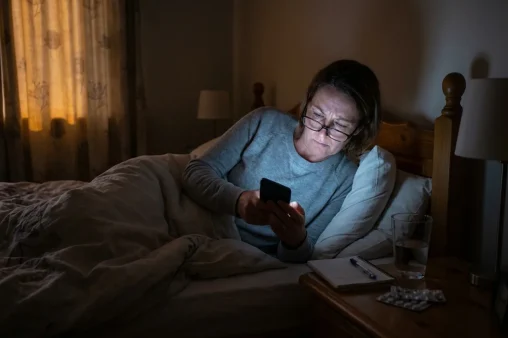











Have you been told your thyroid condition is “just how it is now”? Does your GP treat your gut problems and your anxiety as two completely separate issues?
You’re in the right place.
This guide explains why conditions like thyroid dysfunction, perimenopause, and IBS are so often misdiagnosed. It covers what a root cause approach can realistically offer. And it’s honest about where that approach falls short.
I’m Sameena Khan. I’ve spent 30 years sitting across from women whose bodies were telling a story their blood tests couldn’t hear.
I hold a BSc in Homeopathy from Middlesex University, the highest qualification in the field. It’s no longer offered. I integrate bioenergetic scanning, hypnotherapy, and coaching into a single root cause approach at Rise Radiantly.
That means I have a perspective. You deserve to know that before reading further.
Key Insights from This Guide:
- Standard NHS blood panels test fewer than ten biomarkers, and when they return “normal,” the investigation typically stops. Even when you know something is wrong
- The link between emotional trauma and conditions like IBS is documented in research. It’s not imagined and not “all in your head”
- Thyroid, perimenopause, IBS, and eczema are treated as separate problems. In practice, they often share a single root
- Root cause healing takes time. Conditions with 15, 20 years of medication layers need months, not weeks
- There are situations where this approach is the wrong choice. I name them below
What Do We Mean by “Women’s Hormonal Health”?
Women’s hormonal health covers conditions driven by hormonal, emotional, and stress-related imbalances. Thyroid dysfunction, perimenopause, IBS, chronic skin conditions, PCOS.
These are not isolated diagnoses. They’re signals from a body pushed off track, often years before the first symptom appeared.
What We Will Cover in This Guide:
Why “Normal” Blood Tests Keep Missing What’s Actually Wrong
In 30 years of practice, the most common sentence I hear is this. “They’ve done the blood tests. They just can’t find what’s wrong.”
Standard NHS blood panels test for established disease. Anaemia, diabetes, thyroid failure.
They were never built to detect functional decline. The slow erosion of energy, hormones, and resilience that leaves you exhausted while every marker reads “within range.”
Your TSH can sit at 3.8 and technically pass. But functional practitioners investigate anything above 2.0 to 2.5 in symptomatic women.
Nobody tells you that in a ten-minute GP appointment.Understanding why blood tests return “normal” when you feel terrible is often the first step toward answers. The problem isn’t you. It’s what’s being measured.
One woman had been on levothyroxine for six years. Her doctor told her this was permanent. Full stop.
When we investigated the root, her body began producing its own thyroxine again. Within a year, she was medication-free with normal blood tests.
Not every thyroid case responds that way. I won’t pretend otherwise.
But nobody had ever asked why her thyroid stopped working in the first place.
How Unresolved Emotional Roots Drive Conditions Like IBS and Migraines
A 2024 case-control study found that adults with significant emotional trauma had roughly double the odds of developing IBS. Not slightly elevated. Double.
And yet nobody in the conventional pathway asks when your symptoms started. Or what was happening in your life at that point.
I ask. Every single time.
One woman came to me after 18 years of digestive problems. Naturopaths, other homeopaths, nutritionists. Each helped for a while. Then the symptoms crept back.
When we traced her timeline right back, I found the root. A trusted family friend had been committing fraud against her parents. The betrayal hit her at a level she’d never processed.
She found that really hard to digest. Literally.
I gave her shock remedies linked to digestion. The symptoms cleared permanently. She never needed to come back.
The full evidence behind this connection, including the gut-brain pathways and where the science stands, is covered in our detailed guide on whether emotional trauma can actually cause physical symptoms like IBS and migraines.
That article is worth reading before you dismiss the mind-body connection. Your GP’s ten-minute appointment was never designed to ask the question that changes everything.
The Conditions Nobody Connects
Here’s what frustrates me most. Women arrive carrying three or four diagnoses treated by three or four specialists who never speak to each other.
The gastroenterologist treats the IBS. The GP manages the thyroid. A counsellor addresses the anxiety. Nobody asks whether all three started around the same time.
In 30 years of clinical observation, they almost always do.
| Condition | What the standard pathway does | What root cause investigation asks |
|---|---|---|
| Thyroid (underactive) | Prescribes levothyroxine permanently | Why did the thyroid stop working? |
| Perimenopause | Prescribes antidepressants or HRT | What’s amplifying the hormonal disruption? |
| IBS | Dietary restriction and medication | What was emotionally “indigestible”? |
| Eczema | Steroid creams to suppress symptoms | What is the body expressing through the skin? |
| PCOS | Hormonal contraceptives to manage | What drove the hormonal imbalance originally? |
Thyroid conditions
Levothyroxine is the most commonly prescribed thyroid drug in the UK. Most women are told this is permanent.
Nobody investigates what caused the thyroid to struggle. The sustained stress, the emotional shock, the period of burnout that preceded the diagnosis.
Perimenopause and misdiagnosis
Women experiencing perimenopausal symptoms are frequently prescribed antidepressants. The hormonal fluctuations that cause fatigue, mood changes, and brain fog get labelled as depression.
Nobody connects the dots. The result is years on medication that was never designed for the actual problem.
IBS and the gut-brain connection
Digestive issues are among the conditions I most commonly trace back to emotional origins. “What was indigestible in your life?” isn’t a metaphor. It’s a question I ask every week.
Eczema and chronic skin conditions
A Somalian couple brought me their daughter with severe eczema and food intolerances. The husband was deeply sceptical.
I treated the eczema and desensitised the intolerances together. The child cleared up completely. She walked into her allergy consultant appointment eating a cheese string, her highest intolerance.
That sceptical husband now carries a homeopathic kit everywhere. The most sceptical people convert the hardest.
Children’s conditions and maternal stress
Something most practitioners miss entirely. A child’s symptoms often mirror what the mother carried during pregnancy or is carrying now.
I’ve treated hundreds of cases where addressing the mother’s root cause resolved the child’s condition. What Mum was holding, the child was expressing.
Detailed guides covering each condition individually are in development and will be linked here as they publish.

Why Diet Changes and One-at-a-Time Approaches Haven’t Lasted
You changed your diet. Felt better for six weeks. Then the symptoms crept back.
That’s because the diet was managing the symptom. Not treating the root.
I work with what I call a three-legged stool. First leg is the root cause, going back to when the imbalance started, even decades ago. Second is symptom management, easing what’s happening right now. Third is organ support, putting the scaffolding in to hold your body up while it heals.
Take one leg away and the stool falls over.
Most approaches address one leg at a time. The nutritionist handles your gut. The therapist handles your stress. Nobody connects the food sensitivity to the shock that created it.
You can go to the garden of weeds, right? You can cut them at the top and it looks clean. But until you pull them out from the roots, they keep growing back.
Who This Guide Is and Is Not For
I’d rather lose you now than waste your money.
This guide is for you if:
- You have a diagnosed condition, thyroid, IBS, PCOS, perimenopause, eczema, and medication manages it without resolving it
- Your blood tests return “normal” but you know something is wrong
- You’ve noticed your symptoms correlate with stress, emotional events, or specific periods of your life
- You’re willing to explore whether emotional roots sit beneath the physical diagnosis
This is NOT for you if:
- You need a formal medical diagnosis for insurance or employment. I don’t diagnose. I look at imbalances
- You’re in acute medical crisis. Chest pain, sudden severe symptoms, psychiatric emergency, that’s A&E. Don’t wait for me
- You want someone to fix you without your active participation. There’s no magic pill. There is a process, and it needs you in it
- You expect pharmaceutical-speed results from a condition you’ve carried for 15 years. The honest timeline is months, not weeks
- You have severe untreated psychiatric conditions. I don’t treat schizophrenia or acute bipolar disorder. That boundary is firm
I should be straight about my approach’s limitations too. Some chronic autoimmune conditions respond more slowly and less predictably, even with full compliance. Every committed client sees some shift. The limitation is speed and degree.

Frequently Asked Questions About Women’s Hormonal Health
Can homeopathic remedies be taken alongside thyroid medication?
Yes. I never take anyone off their medication. That’s between you and your GP. I work around the drug layer, not against it. Some homeopaths say you can’t do both. I disagree and have for 30 years.
How long before I’d see improvement with a hormonal condition?
Recent conditions can shift within weeks. Long-standing conditions with years of medication layers? Budget months to 18 months. I won’t give you a number I can’t stand behind.
Do I need to stop seeing my GP?
No. I work alongside conventional care, not instead of it. If you need antibiotics, take them. If you need steroids, take them. I’ll help your body afterwards.
Why do so many women with IBS also have anxiety?
The gut and the brain are connected through the vagus nerve and the HPA axis. Stress suppresses signals that protect your gut lining. Your body isn’t producing two separate problems. It’s expressing one root cause through two systems.
What if I’ve tried holistic approaches before and nothing worked?
Not all practitioners are the same, right? The feedback I hear from women who’ve been to other homeopaths is consistent. They didn’t feel properly listened to. Nobody took the full timeline. Nobody connected the gut to the grief to the nervous system.
That’s the difference. And it’s a big one.
Can my child’s health issues be linked to my own stress?
In my experience, yes. I’ve treated hundreds of cases where addressing the mother’s root cause cleared the child’s symptoms. The eczema, the anxiety, the behavioural issues. What Mum was carrying, the child was expressing.
Your Next Step: Understanding What Your Body Is Telling You
If what you’ve read here sounds familiar, the worst thing you can do is keep circling.
Every month your symptoms go uninvestigated is another month the root cause compounds. Medication layers get thicker. Recovery takes longer.
I offer a free health audit where we talk through your specific situation. No pitch, no pressure. Just an honest conversation about whether root cause investigation fits what you’re dealing with.
If it doesn’t fit, I’ll tell you. I’d rather point you in the right direction than waste your time.Book a free 30-minute health audit
Sameena Khan Founder, Rise Radiantly
All Articles in This Guide
Understanding the Diagnostic Gap
- Why do my blood tests come back normal when I know something is wrong?: What standard panels actually test, why “normal” doesn’t mean healthy, and what to do when the system stops looking.
The Mind-Body Connection
- Can emotional trauma really cause physical symptoms like IBS and migraines?: The research linking trauma to gut and neurological conditions, honest limitations, and a self-assessment to check whether this applies to your situation.
Coming Soon
Detailed guides on thyroid conditions, perimenopause and misdiagnosis, autoimmune conditions, eczema, PCOS, medication reduction, and children’s health are in development. This page will be updated with links as each publishes.