










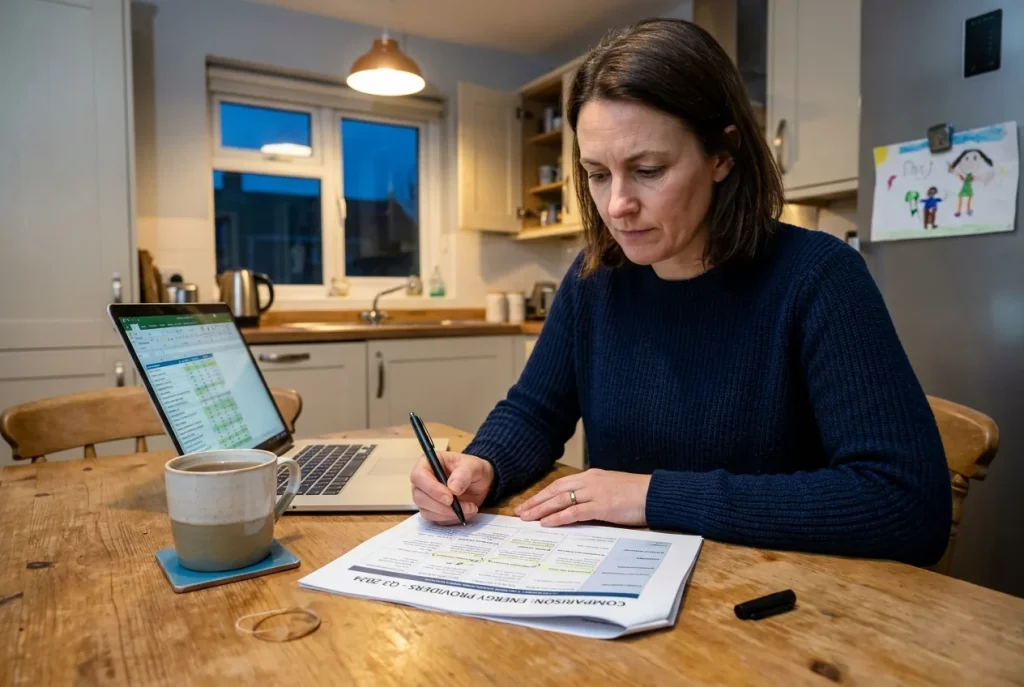
You’ve got three browser tabs open at 10pm. Every practitioner says “holistic.” Every one claims “root cause healing.”
They all sound the same. And your real fear isn’t the money. It’s spending another £2, 000 on the wrong person and ending up exactly where you started.
This guide exists because the holistic health market won’t give you a straight answer. I will.
Even when that answer is “someone else would serve you better.”
What you’ll find in this guide:
- The five criteria that predict results, and why most buyers choose based on the wrong ones
- Why practitioners charging £80 and £10, 000 use identical equipment, and what creates the entire gap
- Side-by-side comparisons of holistic vs conventional, coaches vs therapists vs practitioners, and integrated vs separate specialists
- Honest reviews of what works, what doesn’t, and who this is genuinely not for
Quick Reference: UK Holistic Practitioner Pricing in 2026
| Approach | Typical Cost | Best For |
|---|---|---|
| Standalone homeopath | £80, £200 per session | Recent, single-system conditions |
| Nutritional therapist | £75, £300 initial | Confirmed dietary causes |
| Hypnotherapy session | £80, £250 per session | Specific anxiety or phobias |
| Functional medicine clinic | £300, £620+ initial, plus testing | Lab-data-first buyers |
| Integrated root cause programme | £2, 000, £15, 000 | Complex, multi-year conditions |
Detailed cost breakdowns for each approach below.
What Do We Mean by Comparing Approaches?
Comparing approaches means evaluating holistic health options against each other, and against conventional medicine. Not by marketing claims. By the criteria that actually predict whether you’ll get better.
What we will cover in this 2026 Guide:
- What drives the price gap between holistic practitioners
- The problems and red flags most practitioners hide
- Side-by-side comparisons that help you decide
- Honest reviews of what results actually look like
- Who holistic root cause healing is genuinely not for
- Your next step without the sales pressure
What Drives the Price Gap Between Holistic Practitioners
Five variables explain the entire gap from an £80 session to a £10, 000 programme. Understanding them stops you comparing headline prices that tell you almost nothing.
The first variable is qualification depth across multiple disciplines. A homeopath with a BSc and 30 years of full-time practice sees patterns a weekend-certificate holder simply cannot.
The second is what’s actually included. Some practitioners hand you a supplement list and send you home. Others include bespoke remedies, a strategy session, and follow-up support in a single fee.
The third is consultation time. A 30-minute symptom check is a fundamentally different service from a 90-minute deep-dive covering your full timeline from birth to now.
Fourth is between-session support. Most practitioners’ care stops when the appointment ends. Premium programmes include direct WhatsApp access for real-time guidance when something flares.
Fifth is programme structure. Open-ended sessions with no milestones are a different commitment from an eight-week protocol with measurable checkpoints.Our detailed breakdown of what creates the fee gap covers all five in full. If your budget is tighter, a less expensive practitioner is genuinely the right choice for recent, straightforward conditions.
The total cost matters more than the session price. A woman seeing three separate practitioners at £120 each quietly spends over £4, 400 a year with nobody connecting the dots.
Most women I see have already invested £8, 000 to £25, 000 on scattered treatments before anyone investigated the root cause. Each payment felt small on its own. Nobody ever added them up.
For the full cost picture across every pathway, our guide to holistic healing costs in the UK breaks down three tiers honestly. If you’re weighing medication costs against root cause work, that head-to-head comparison shows how the numbers shift over a decade.
Scan-specific pricing ranges from £85 to over £2, 500. The gap is about interpretation, not the machine. What each scan price tier includes explains why identical equipment produces such different results.
Homeopathy costs vary just as widely. A first consultation runs £60 to £400+ depending on depth and integration. What a premium programme actually includes breaks down every component so you can compare like for like.
And when a programme ends, maintenance costs taper rather than continuing indefinitely. The model is designed for your independence, not your dependency.
What Problems Should You Know About Before Choosing
The biggest risk isn’t a bad practitioner. It’s the structural gap nobody warns you about.
Most single-modality practitioners treat their piece without seeing the full picture. Your homeopath doesn’t know what your hypnotherapist uncovered last week. Your nutritionist has no idea the emotional shock your scanner identified. That fragmentation is why symptoms improve temporarily and then come back.
If you’ve already tried multiple approaches without lasting change, five structural reasons explain why nothing has stuck. Understanding those reasons breaks the cycle.
Every approach has honest limitations. Even integrated root cause healing cannot fix everything. Emergency conditions need A&E. Severe psychiatric conditions need specialist care. Conditions with 15 to 20 years of medication layers may show only moderate improvement in eight weeks.
Then there’s the science question. Bioenergetic scanning measures a real physiological signal. But the diagnostic claims remain unproven. The UK’s advertising regulator has stated it has yet to see evidence these devices diagnose disease. A responsible practitioner tells you that upfront.
Medication compatibility concerns many buyers. Homeopathic remedies can be taken alongside conventional drugs. The belief that they can’t comes from homeopathic tradition, not pharmacology. Any practitioner who demands you stop medication is raising a safety red flag.
Your GP keeps saying “normal.” But when blood tests return fine while you feel terrible, the standard investigation pathway has simply reached its limit. Nobody investigates the emotional and energetic roots those tests were never designed to detect.
Results timelines vary enormously too. Acute conditions can shift in hours. Long-standing chronic conditions may need months to eighteen months. Anyone promising fast results for a twenty-year condition is overcommitting.
How Do the Main Approaches Compare Honestly
Coaching, therapy, and holistic practice address completely different layers of the same problem. Coaching works on your conscious thinking. Therapy processes clinical emotions. Holistic root cause practice investigates the body dimension nobody else examines.
The right choice depends on where your problem primarily lives. Our three-way comparison of coaches, therapists, and holistic practitioners maps each approach against seven criteria with actual UK costs. If your challenge is purely strategic, a coach at £200 per session gets you there faster and cheaper.
When symptoms span body, mind, and subconscious patterns simultaneously, structure matters most. Seeing one integrated practitioner versus multiple specialists determines whether anyone connects the dots. One person holding your full picture is a fundamentally different service from four practitioners who never speak.
The conventional medicine comparison matters equally. Standard blood tests are irreplaceable for catching serious disease. But when they return “normal” and the NHS pathway formally ends at “watchful waiting,” holistic root cause healing investigates what those tests structurally cannot.
The connection between emotional trauma and physical symptoms sits at the heart of this. Research shows adults with significant trauma histories have roughly double the odds of developing IBS. When emotional roots drive physical conditions, no amount of dietary intervention or medication addresses the actual cause.
More detailed modality comparisons, covering specific named practitioners and head-to-head assessments, are being published as they’re completed.
What Do Real Results and Honest Reviews Tell You
In 30 years of clinical practice, every client who did the work experienced a shift. The limitation is speed and degree, not whether change happens at all.
But what does “the work” actually look like? Walking through a first consultation honestly shows the three questions nobody else asks. The emotional depth catches people off guard.
The full eight-week programme walkthrough reveals the difficult middle weeks most practitioners never mention. Weeks two to four are when old emotions surface. Research confirms this mid-programme difficulty is normal and doesn’t predict a worse outcome.
Before investing, most buyers want to know whether root cause healing is genuinely worth it. Five criteria separate a worthwhile health investment from another expensive disappointment. Those criteria work on any practitioner.
For the most direct assessment, an honest review of Rise Radiantly covers who gets results, who should look elsewhere, and the uncomfortable parts. Including when a £80 standalone homeopath would serve you better.
The best holistic practitioners for burnout recovery in the UK compares seven named practitioners against identical criteria. Every profile includes “not for you if” guidance. The author’s own practice is evaluated to the same standard.
Who Is Holistic Root Cause Healing Not For
This is the section most practitioners leave out. I put it in because your time matters more than my booking rate.
You want a single symptom treated in isolation. “Just deal with my digestion.” That’s a different kind of help, and a standalone homeopath at £80 to £200 will serve you better.
You expect a passive fix. If you won’t take remedies, do the breathwork, or examine your emotional history, results won’t materialise. There’s no magic pill. There is a process, and it requires you.
You need a medical diagnosis. Bioenergetic scanning identifies energetic imbalances, not clinical conditions. If you need documentation for insurance or employment, see your GP first.
You’re in an acute psychiatric or medical crisis. A&E first. Always. No holistic practitioner replaces emergency care.
Your burnout is purely situational. If the issue is workload and boundaries, recovery without quitting your career may be possible through simpler means. Understanding why rest hasn’t worked is the place to start.
And if the real barrier is the quiet sense that nothing will ever work, the financial and emotional cost of doing nothing compounds every month you stay stuck. That’s not pressure. That’s maths.

Your Next Step: See Where You Stand
If you’ve read this far, you have something most buyers never get. A framework that works on any practitioner, including the one publishing this guide.
The seven evaluation criteria and three discovery call questions are yours to use whether you ever contact Rise Radiantly or not.
If your blood tests keep returning “normal” but you know something is off, and if you’re done cycling between practitioners who each treat their piece, a free 30-minute health audit is the simplest way to find out whether this approach fits.
No pitch. No pressure. If a £120 homeopath would serve you better, I’ll name one.
Not ready? Save this guide. Come back when the timing is right.
Frequently Asked Questions About Choosing a Holistic Practitioner
How do I check whether a practitioner is properly qualified?
Search the Complementary and Natural Healthcare Council register at cnhc.org.uk. It’s the only complementary therapy register with Professional Standards Authority accreditation. For homeopaths specifically, the Alliance of Registered Homeopaths has a searchable directory.
Can I see a holistic practitioner alongside my GP?
Yes. A responsible practitioner never asks you to stop medication. They work around whatever your GP has prescribed. If someone demands you choose one path, walk away. Our guide on taking homeopathic remedies alongside medication covers this fully.
What if I’ve tried holistic healing before and it didn’t work?
Not all practitioners are the same. The most common reasons are non-compliance or fragmented care. Five structural reasons explain why nothing lasted, and they’re rarely about the modality.
How long before I see results?
Acute conditions can shift in days. Chronic conditions with years of history need months to eighteen months. Anyone promising faster for a deeply layered condition is overcommitting. Our detailed timeline guide breaks this down by condition type.
Is bioenergetic scanning legitimate?
The scan measures a real physiological signal. The diagnostic claims are unproven. Our honest assessment covers the evidence, the disclaimers, and what to ask before booking.
Should I start with the cheapest option?
Sometimes, yes. For a recent, single-system condition, a £80 to £200 session is genuinely the right level. The premium route makes financial sense only when you’ve been cycling for two or more years without resolution.
What if my partner thinks this is a waste of money?
Add up what you’ve already spent on supplements, specialists, and therapists over three years. That number usually changes the conversation. The sceptics become the strongest advocates once they see results.
If anything in this guide made you think “that sounds like my situation,” book a free 30-minute health audit and let’s figure it out together.
All Articles in This Guide
Understanding the Cost Landscape
- How much does holistic healing for burnout cost in the UK?, Three-tier breakdown from £80 sessions to £15, 000 programmes, with hidden costs most buyers miss.
- How much does a bioenergetic scan cost?, Same machine, 25x price spread. What each tier includes and when cheaper is enough.
- How much does homeopathy really cost in the UK?, Per-session and full-journey costs from £60 to £400+, plus follow-up and remedy pricing.
- Why do some holistic practitioners charge ten times more?, Five variables that explain the entire gap, checkable in one phone call.
- What am I actually paying for in a premium programme?, Full component breakdown of an integrated £9, 999 programme versus piecemeal equivalents.
- True cost of seeing a homeopath, hypnotherapist, and coach separately, £3, 100 to £7, 500 for eight weeks, with nobody connecting the dots.
- When is a less expensive practitioner the right choice?, Four situations where £80 to £200 genuinely serves you better.
- Root cause healing vs years of medication, which costs more?, The 10-year comparison across four pathways.
- How much have I already spent trying everything?, A 15-minute self-audit that reveals the number nobody has totalled.
- What does ongoing maintenance cost after a programme?, Costs taper from £1, 111 to £50, £222 per month within 12 months.
Honest Problems and Limitations
- What can holistic root cause healing honestly not fix?, Six specific limitations from 30 years of practice.
- What if holistic healing doesn’t work for me?: Five structural reasons nothing has lasted, and when this approach is genuinely different.
- Is bioenergetic scanning scientifically valid, or pseudoscience?, The measurement is real. The diagnostic claims are unproven. Both are true.
- Can I take homeopathic remedies alongside medication?: The myth comes from homeopathic tradition, not pharmacology.
- Why do my blood tests come back normal when something is wrong?: Standard panels test for disease, not decline. What they miss and what to do next.
- How long does holistic healing take to show results?, Hours to 18 months. Three factors determine your speed.
Comparing Your Options
- Holistic healing vs conventional medicine for chronic fatigue: What each investigates, where each pathway stops, and five questions to decide.
- Mindset coach vs therapist vs holistic practitioner, Each addresses a different layer. Side-by-side with costs and criteria.
- One integrated practitioner vs multiple specialists: Five criteria comparing coordination, cost, and accountability.
- Can emotional trauma cause physical symptoms like IBS and migraines?: The evidence linking emotional roots to physical conditions, honestly examined.
Honest Reviews and Assessments
- Is Rise Radiantly worth it?: Self-review including who gets results, who should look elsewhere, and the uncomfortable parts.
- Is holistic root cause healing worth the investment?: Five criteria to evaluate any practitioner, applied fairly across the market.
- Best holistic practitioners for burnout recovery in the UK, Seven named practitioners compared against identical criteria.
- What actually happens in a first holistic consultation?, An honest walkthrough including the questions that catch people off guard.
- What is a holistic healing programme really like?: Week-by-week reality, including the difficult middle weeks nobody warns about.
Making Your Decision
- How do I choose between holistic practitioners?, Seven criteria and three discovery call questions that predict results.
- Who is holistic root cause healing not a good fit for?, Five profiles where a different approach genuinely serves you better.
- Can I recover from burnout without quitting my job?, Why rest fails and what root cause recovery while working actually requires.
- Why have rest, holidays, and self-care not fixed my burnout?, Your nervous system is stuck in alarm mode. Rest can’t reach it.
- The real cost of doing nothing about burnout: What inaction costs in pounds, career impact, and relationships.
