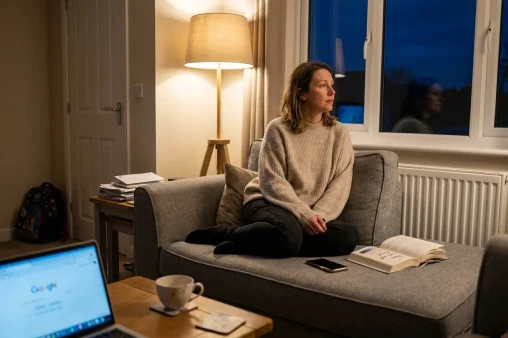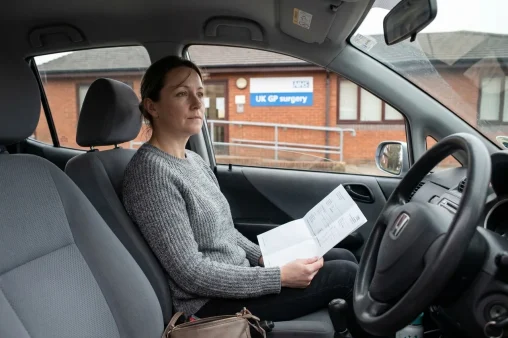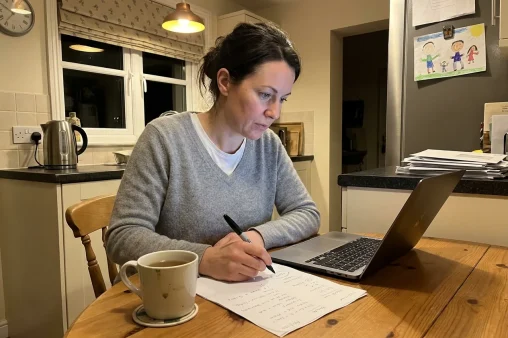

Imagine. It’s Sunday night and you’re already dreading Monday. Not because you don’t love what you’ve built. Because you’re so bone-tired you can barely think past tomorrow.
You’ve Googled “burnout recovery” before. Every article says the same thing. Step back. Take a break. Reduce your hours. And every time, you think the same thing. Who exactly is going to run everything if I do?
I hear you. And here’s the honest answer. Yes, you can recover from burnout without quitting your job. But not through the approaches you’ve probably tried.
Better sleep, a holiday, supplements, schedule adjustments. Those manage the exhaustion. They don’t touch the root cause underneath it. Over half of people who recover from anxiety and depression through NHS talking therapies relapse within twelve months. That’s people who received professional treatment. Not people who took a fortnight off and hoped for the best.
The job was never the real problem. The patterns underneath were.
I should be upfront. I’m Sameena Khan, and I run Rise Radiantly, where I work with women in exactly your situation using bioenergetic scanning, homeopathy, hypnotherapy and coaching. I offer burnout recovery programmes that don’t require stepping away from your career. So I have a perspective on this, and you deserve to know that before reading further.
Here’s what matters most.
Key Takeaways
- Rest doesn’t reset burnout. Your nervous system stays locked in survival mode even when your workload drops. A fortnight in Mallorca can’t undo months of running on fumes.
- Sabbaticals without root-cause work fail. The patterns underneath travel with you wherever you go. New job, same burnout.
- Recovery while working IS possible, but only when you address the roots underneath, not the schedule on top.
- This isn’t for everyone. If you’re in acute crisis or you want someone to fix you without looking at what’s driving it, you need a different starting point. I’d rather tell you that now.
Here for one specific concern?
- Wondering why time off hasn’t made a difference? Start here.
- Took a sabbatical and burned out again? Read this section.
- Want to know if this approach is even possible for your situation? Check here first.
- Ready to understand what genuine recovery looks like? Jump to the framework.
Why does rest and time off not actually reset my burnout?
Your body gets stuck in survival mode when you’ve been running flat out for months or years. And here’s what nobody explains about what’s actually happening inside you.
I was a systems analyst at BT before I became a practitioner, and I think about the body the same way I used to think about corrupted systems. Your brain is the motherboard. It’s programming your body to eat, to sleep, to function. But when you’ve been under chronic stress for long enough, the programming is no longer clear. The signals are scrambled.
Your cortisol, which should rise in the morning and drop at night, goes flat. Stays stuck at one level. Your adrenals are depleted. Your body is producing stress hormones as its default setting, not its emergency response.
A two-week holiday doesn’t rewrite that programming.Research into what chronic stress does to the brain suggests that structural recovery starts one to two years after cortisol normalises. Not after the holiday. After the cortisol pattern itself changes.
That’s a completely different timeline to what most women expect.
That research comes from general burnout populations. Nobody’s specifically studied women running companies at full capacity. But what I see clinically, week after week, lines up.
Women come to me after a “restful” break, confused about why they still feel terrible. And when I run a bioenergetic scan, the adrenal markers are still depleted. Because she was adrenally fatigued, her adrenals were down, that was coming up, which was causing her symptoms. The break addressed the schedule. It didn’t address the body.
Your nervous system doesn’t care that you went to Mallorca. It cares whether the threat signal has actually stopped.
If you’ve been through that cycle of resting and returning to the same exhaustion, I’ve written in more detail about why rest, holidays and self-care haven’t fixed your burnout.
Why do women who take sabbaticals often burn out again within months?
A 2024 UK-based longitudinal study found something that stopped me in my tracks. The ability to psychologically detach from work, not the act of physically leaving it, predicted mental wellbeing a full year later.
Read that again. It wasn’t about being away from the office. It was about having the internal skill to switch off.
And here’s where it gets uncomfortable. A 2025 study published in Frontiers in Psychology found that sickness absence can actually worsen burnout. Being away erodes your sense of purpose, your connection to colleagues, your perceived support. You come back feeling less resourced than when you left.
And the cycle restarts.
Three subconscious patterns drive this. I see them in nearly every client who sits across from me.
Overwork as identity. You don’t just work hard. Working hard is who you are. The moment you stop, you don’t feel rested. You feel worthless. Like you’ve lost the thing that made you valuable.
Guilt about resting. You’re on the sofa and your brain is calculating. How many emails are piling up. What your team is thinking. Whether you even deserve this.
Boundary collapse. You say yes when you mean no. You carry the emotional weight of everyone around you and call it strength. You’ve been doing it so long you’ve forgotten there’s another option.
One woman I worked with embodied all three. She came to me suffering from chronic fatigue, aches and pain that no practitioner had been able to shift. From the outside she looked strong. Capable. In control.
Inside, she was crumbling.
She was in an oppressive relationship where years of emotional and physical suppression had buried themselves deep into her body. The fatigue wasn’t random. The aches weren’t mysterious. Her body was holding everything she’d been taught to swallow. And it was breaking down under the weight.
We didn’t start by addressing her schedule or telling her to rest more. We went to the roots. The suppressed emotions driving her physical symptoms. The beliefs she’d been carrying since childhood about what she had to accept, what she deserved, what a woman was supposed to tolerate.
It wasn’t quick. It wasn’t comfortable. There were weeks where she wanted to stop, where looking at what was underneath felt harder than pushing through. But she stayed with it. And as the remedies gradually built her confidence alongside the physical healing, something shifted that went far beyond her symptoms.
She found the courage to leave. Not because I told her to. I didn’t tell her to throw her husband out or divorce him. I helped her become strong. The strength came from inside, once the roots holding her in that place were finally pulled up.
She told me, “I came to you crawling. You made me walk again.”
That change didn’t come from a sabbatical. It came from addressing what was underneath.
Before I say this next part, don’t beat yourself up. It’s not your fault because you didn’t know any different.
The women who resist this the hardest, the ones who tell me “I just need to fix the fatigue, I don’t want to talk about my past,” are typically the ones whose burnout has the deepest emotional roots. The very trait that made you successful, pushing through, refusing to show weakness, handling everything yourself, is often the same programming that drove you into burnout in the first place.
You can’t willpower your way out of a pattern that was created by willpower.

What happens when burnout is treated as a scheduling problem instead of a mind-body problem?
Your body doesn’t separate your work life from your emotional life. It never has.
That migraine isn’t about your head. Those digestive problems that started the same month you took on the impossible project? Not a coincidence. The insomnia that worsened after the promotion? Not about screen time.
The body keeps score. And until someone goes back and looks at when those symptoms started, what was happening in your life at that point, you’re cutting the weeds at the top while the roots stay buried.
Even the research confirms this. A 2025 Frontiers in Psychology review of 75 burnout intervention trials found that most didn’t produce any lasting change. The ones aimed at reducing sick leave and adjusting schedules? Effects described as “not long-lasting.”
They were targeting the circumstances. Not what the body was holding.
You can go to the garden of weeds. You can cut them and it all looks nice and clean. But until you pull them out from the roots, they’re going to keep on growing. Your body’s the same.
According to the Health and Safety Executive, 22.1 million working days were lost to work-related stress, depression and anxiety in Britain in 2024/25 alone. That’s not a scheduling problem. That’s something much deeper.
And the systems that need examining aren’t organisational. They’re internal.
When is recovering while working genuinely NOT possible?
I’d rather be straight with you now than let you find out the hard way. Recovering while working is not the right path in several specific situations.
If you’re in acute medical crisis. Chest pains, severe psychiatric episodes, active suicidal thoughts with a plan. That’s A&E or your GP. If there’s an emergency, there’s A&E. Don’t wait for me.
If you need specialist psychiatric care first. Severe depression, psychosis, active mania. These need medical stabilisation before root-cause work can begin. I don’t treat these conditions. I’ll tell you straight and point you to someone who can.
If you want to be fixed without doing the work. This is the one most people don’t expect. My approach requires you to show up. Take your remedies consistently. Do the breathwork. Do the journaling. Attend weekly sessions. Examine things from your past that you’d prefer stayed buried.
If you want someone to hand you a pill and send you on your way, a managed medication approach might be the better starting point for where you are right now. I don’t say that to judge. I say it because I’d rather be honest than take your money and watch you disengage.
Honest limitations of this approach
I should be honest about my own approach’s limitations too. For people whose conditions have been layered over 15 to 20 years of chronic stress with multiple medications, eight weeks will start the shift. But you’re more likely looking at four to six months before things genuinely stabilise.
Some autoimmune conditions respond more slowly and less predictably than others, even with full engagement.
Every client who does the work sees some shift. The limitation is speed and degree, not whether change happens.
And I won’t pretend the process is always smooth. Fewer than one in ten people experience what’s called a healing crisis. The body starts clearing what it’s been holding, and sometimes that shows up before it settles. Skin flare-ups. Unexpected crying. Vivid dreams. Old memories surfacing that you thought you’d dealt with years ago.
When it happens, I adjust the remedies and you have direct WhatsApp access to me between sessions. Your job is to tell me what’s coming up. Not to push through it in silence.
A quick self-check before you decide anything
Answer honestly.
- Have you been pushing through exhaustion for more than six months?
- Have holidays or breaks failed to produce lasting improvement?
- Do you feel guilty when you rest, even when you’re genuinely depleted?
- Are you willing to commit roughly three to five hours per week for eight weeks?
- Are you open to examining emotional patterns, not just physical symptoms?
If you answered yes to four or more, root-cause work while continuing your career is likely the right path. If fewer than two feel true, you might benefit from stabilising your immediate symptoms first through your GP, before going deeper.
There’s no wrong answer. Just an honest one.
Who this work is built for
You’re a senior leader or founder who’s tried better sleep, supplements and a mindfulness app, and nothing has lasted. You’re ready to look deeper than the surface.
You’re experiencing physical symptoms, digestive issues, anxiety, unexplained fatigue, migraines, that started around a specific professional or personal event you can still pinpoint. Something happened. And your body hasn’t been the same since.
You’ve already seen a therapist or a coach and it helped with the thinking. But you know something physical is going on underneath that talking alone hasn’t shifted.
If that’s you, root-cause work while maintaining your career isn’t just possible. It’s what this approach was designed for.

What does genuine recovery while working actually require?
Not resting harder. Not scheduling better. Not adding a morning routine. Finding the root.
I think about recovery as a three-legged stool.
First, we go back to where this started. Not last month. Maybe five years ago. Maybe twenty. What was happening in your life when the symptoms first appeared? That’s the root cause.
Second, we address what’s happening right now. The acute fatigue, the digestive issues, the anxiety that floors you by 2pm. That’s symptom management.
Third, we support the systems that are struggling. Your adrenals, your liver, your nervous system. I need to put the scaffolding in to hold your body up while we do the deeper work.
You need all three legs. Otherwise the stool falls over. If you want the full picture of how burnout develops and what the recovery landscape looks like, our burnout and chronic fatigue guide covers everything from root causes to treatment options.
What root-cause recovery looks like in practice
A human rights solicitor came to me through a family referral. The kind of woman who fights other people’s battles for a living but doesn’t fight for herself.
From the outside, formidable. Wins cases. Commands courtrooms. Leads teams.
From the inside, crumbling. Hormonal imbalances that were driving symptoms she couldn’t explain. Emotional roots she’d never had space to address. She was the kind that didn’t really want to talk about the weaknesses in her, because she was this figure, right? Everyone relied on her strength. Admitting anything was wrong would have felt like pulling out the foundation stone.
We didn’t tell her to step back from her caseload. She didn’t take leave. The programme fitted around her professional life, not instead of it.
We went deeper. Homeopathic treatment to address the hormonal imbalances and the emotional roots her body had been holding for years. Coaching to dismantle what her mind had accepted as normal. The beliefs about what she had to carry, what she owed everyone, what she was allowed to need.
The first few weeks were hard. She was used to performing, not unpacking. There were moments she wanted to stop. Looking at what was underneath felt more uncomfortable than the burnout itself.
That’s not unusual. Women who’ve spent their whole career being the strong one often find the examination scarier than the exhaustion.
But she stayed with it. And what shifted wasn’t just her health. She gained the courage and clarity to relocate her entire family to another country. A decision she couldn’t have made from the depleted, crumbling place she started in.
She told me, “It was because of your coaching that it gave me the courage to take that step.”
And then something happened that I see time after time. What I taught her, she brought into her family. She taught her husband and her children the same tools. The change didn’t stay in the consultation room. It rippled through everything.
That’s what root-cause work does. It doesn’t patch the burnout. It changes the conditions that created it.
What it actually looks like, week by week
Roughly three to five hours per week across eight weeks. Sessions, breathwork, journaling, remedies and integration practices. It’s designed around a working woman’s life, not instead of it.
You don’t need to disappear. You do need to commit.
What it actually costs
I should be straight about this. The RootScan Breakthrough Session is £2,222. The full eight-week programme is £9,999.
And for conditions that have been building for 15 to 20 years with multiple medication layers, you may need follow-up beyond that at £1,111 per month. Most clients I work with have already spent more than that across the GPs, specialists, supplements and practitioners who didn’t find the root.
But it’s still a real number. And I’d rather you knew it now than found out on a call. I also only take four clients per quarter for this work, which means there can be a wait of several months.
The Deloitte Women @ Work 2024 report found that two-thirds of women don’t feel comfortable disclosing mental health as a reason for time off. So most of you aren’t going to tell your employer you’re burning out.
And that’s fine. You don’t have to. You just have to decide whether you’re going to address what’s underneath, or keep managing what’s on top.
Every month you push through without addressing the root cause, the debt compounds. I know this because I lived it. I had a minor stroke. I pushed through. Then COVID put me in bed for six weeks, unable to move.
The body doesn’t negotiate. It escalates the signals until compliance isn’t optional.
Exhaustion is not empowerment. Burnout is not success. And self-sacrifice is not leadership.
If any of this sounds like you, there are three ways forward depending on where you are right now.
If you’re still thinking it through. Save this article. Come back to it. Run through the self-check above. There’s no rush, and this page will still be here.
If you want to talk it through. I offer a free 30-minute health audit where I’ll listen to your specific situation and honestly tell you whether I can help. No obligation. No pitch. Just a straight conversation about whether this is the right fit.
If you already know you want to understand what your body is telling you. The RootScan Breakthrough Session is where we start. It maps what’s happening underneath and gives you a clear picture of what needs addressing.
And if none of this feels right for you yet? That’s absolutely fine. Come back when the timing is right.
Sameena Khan
Founder, Rise Radiantly
Frequently Asked Questions
Can I do this alongside my current medication?
Yes. I never take anyone off their medication. I work around the drug layer, not against it. If you need your antidepressants, your thyroid medication, your painkillers, keep taking them. If you need the antibiotics, take them. I’ll help you detox afterwards.
We work with your body, alongside whatever your GP has prescribed.
Do I need to come to London for sessions?
No. About half the people I work with do everything online via Zoom. The bioenergetic scan works remotely. All I need is your name and date of birth. Remedies get posted to you.
The whole programme is designed for women who can’t add another commute to an already packed week.
What if I don’t see results?
No one can guarantee 100% anything. I won’t pretend otherwise.
What I can tell you is that every person who’s done the work, taken the remedies, done the journaling, attended the sessions, has seen a shift. The ones who don’t see results are the ones who didn’t engage. That’s the honest answer.
How is this different from therapy or coaching alone?
Most therapists work with your conscious mind. Most coaches work with your goals and accountability. Neither addresses what your body is physically holding.
I bring scanning to see what’s happening energetically, homeopathy to address the root, hypnotherapy to rewire the subconscious patterns, and coaching to give you tools for life. One person. The full picture.
That’s the difference. And it’s a big one.
If you’re weighing up which type of practitioner suits your situation, our comparison of mindset coaches, therapists and holistic practitioners breaks it down in detail.
How do I choose the right practitioner for this kind of work?
Whether you work with me or someone else, look for someone who asks about your timeline, not just your symptoms. Someone who wants to know what was happening in your life when this started. Someone who takes your case from birth to now, not just from last Tuesday.
If a practitioner gives you a supplement list without taking your full history, they’re cutting the weeds at the top. You want someone who goes to the roots.
Still have questions? Book a free 30-minute health audit l and let’s talk through your specific situation.