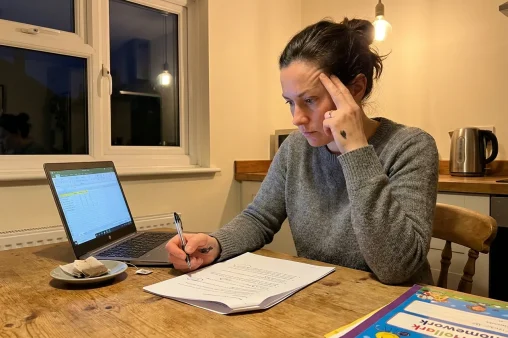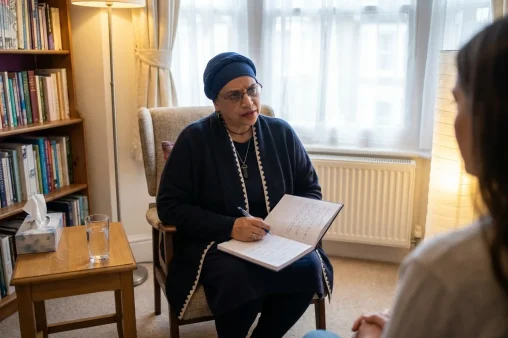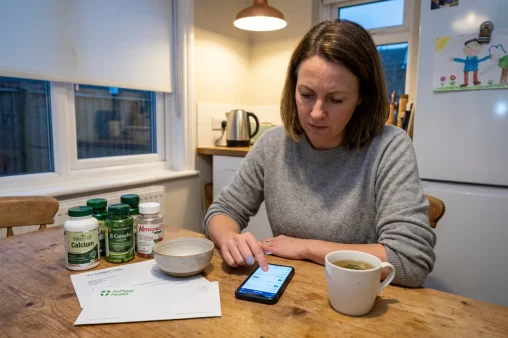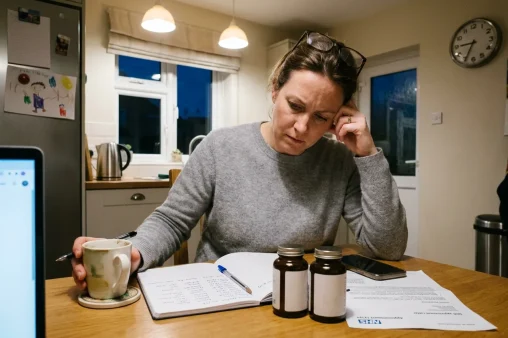
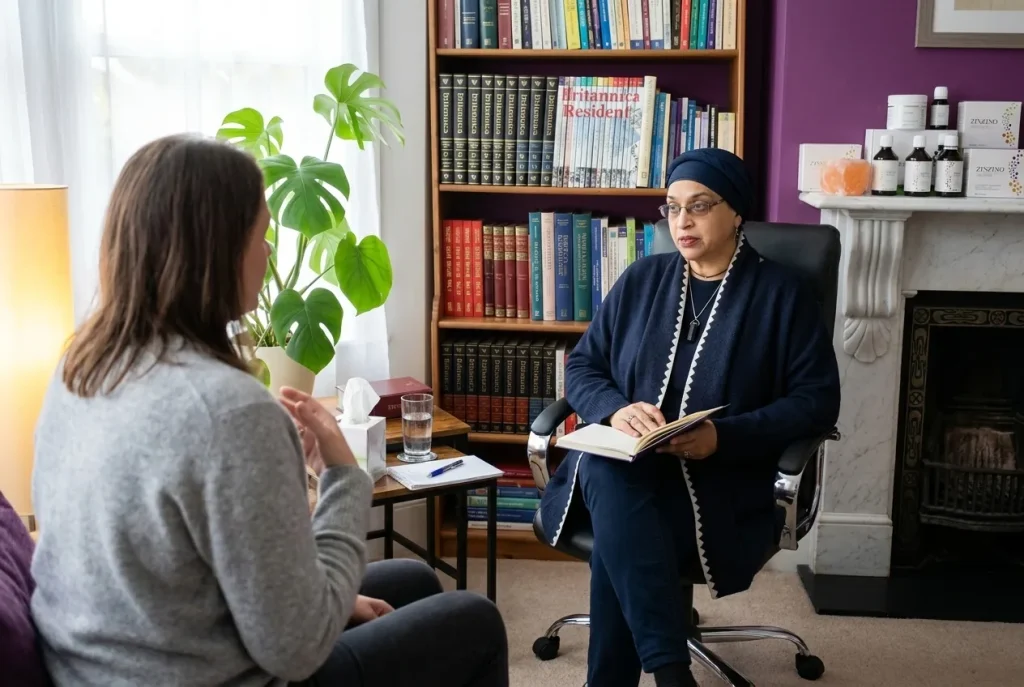
You’ve found the website. You’ve read through the services. Your finger has hovered over the booking link for the third time this week, but you keep closing the tab because you can’t picture what actually happens once you’re sitting in that room.
I’m going to tell you. Not the polished version. The real one. The parts that feel uncomfortable. The questions that catch people off guard. The bits most practitioners would rather you didn’t know about until you’re already in the chair.
A first holistic healing consultation runs 60 to 90 minutes. The average GP appointment in the UK? Roughly 10 minutes, according to NHS England Digital. Most of my time with you isn’t spent examining you or running tests. It’s spent talking.
I take your full history from birth to now. I ask about events you may not have thought about in decades. And I look for the connection between what’s happening in your body today and what happened in your life years ago. You leave with a plain-language report, bespoke remedies, an action plan with 7-day and 30-day milestones, and a follow-up call booked within a fortnight.
Here’s the part I won’t dress up. The first consultation can feel emotionally overwhelming. You come expecting to discuss one symptom and find yourself revealing things about your past you hadn’t planned to share. Some people leave feeling raw before they feel better.
I’d rather tell you that now than have you feel blindsided when it happens.
Key takeaways
- The consultation runs 60 to 90 minutes. I take your full life timeline from birth to now. Not just this week’s symptoms
- You’ll be asked three questions no GP has ever asked, connecting your physical symptoms to emotional events you may never have considered
- The process can feel intrusive. Some people experience two to three days of emotional processing before clarity sets in
- You don’t need a referral and you don’t need to stop any medication. I work alongside your existing treatment, never against it
- You leave with tangible tools. A personalised report in plain English, remedies, an action plan, homework, and a follow-up call within 10 to 15 days
Here for one specific thing?
- Nervous about the personal questions and how they’re handled? Jump to the uncomfortable moments.
- Want to know if this is even right for your situation? See who it’s for and who it’s not.
- Just want to know what you actually take home? Skip to what you leave with.
What do I need to bring to my first holistic consultation?
Nothing. Seriously. Just bring yourself.
Don’t Google your ailments beforehand. Google is saturated with information and most of it will set you off on the wrong track before you’ve even sat down.
Don’t prepare rehearsed answers either. The conversation is narrative-led, which means I guide it based on what comes up naturally, not from a checklist. You don’t need to have your story straight. I just need you to be honest.
If I’ve sent you an intake form, I’ll have reviewed it before you arrive. But the real consultation doesn’t follow a form. It follows you.
The clinic is at my home in Chingford, east London. It’s a calm, private space. No medical waiting room, no fluorescent lighting, no leaflets about diseases you didn’t know existed. About half of my people now come via Zoom, so if you’re not local or you’d feel more comfortable at home, that works too.
If you’re on medication from your GP, keep taking it. I work around what you’re already on, never against it. Some homeopaths won’t treat you if you’re on medication. I disagree with that. Completely.
What happens in the first 15 minutes?
You’re not being examined. You’re settling in.
The first thing most people notice is that this doesn’t feel like a doctor’s appointment. There’s no receptionist. No waiting room. It’s just you and me, with enough time to actually talk.
I start by explaining what the session involves. How long it’ll take. The kinds of questions I’ll be asking and, more importantly, why.
I’ll tell you upfront that some questions will feel personal. More personal than anything a GP has ever asked. And that you can say “I’d rather not answer that” at any point. That isn’t a throwaway line. UK government trauma-informed practice guidance requires practitioners to establish safety and explicit consent before going into sensitive history. I follow that because it matters, not because somebody told me to.
Most people who sit across from me have spent years in the NHS system where nobody had the time to explain why they were asking a question. And it isn’t the GP’s fault. They estimate they need roughly 16 minutes at minimum just to deliver basic care. They’re given 10.
Even functional medicine appointments, which can stretch to 60 or 120 minutes, often depend on lab results that take weeks to come back. Cognitive behavioural therapy (CBT) typically needs several sessions before deeper patterns surface.
You shouldn’t have to spend years in a system where nobody has the time to ask what was happening in your life when your health fell apart.
That’s what the next 60 minutes are for.
How does the deep case-taking work, and why does it go back to birth?
This is the core of the consultation. Roughly 60 minutes of talking. And it’s the part most first-timers don’t expect.
I’m not interested in what label you’ve been given. IBS, migraines, anxiety, chronic fatigue. Those are the tip of the iceberg. What I want to know is what’s underneath.
To find that, I go back. Right back. Birth to now. I’m like a detective. Everything along your timeline. Childhood, school, relationships, pregnancies, bereavements, career changes. Because somewhere along that line, something knocked your body off track. My job is to find the point where it happened.
There are three questions that consistently catch first-time people off guard.
“When did this first start?”
Not “when did it get worse.” Not “when did you first see a doctor about it.” When did it first start? Most people have lived with their condition so long they can’t remember a time without it, and nobody has ever made them pin down the actual origin.
That moment matters. It’s the entry point for everything I do next.
“What was happening in your life at that point?”
This is where it gets personal. I’m looking for the emotional event that coincided with the physical symptom. The shock. The grief. The betrayal. The stress that nobody connected to the body.
And this isn’t me being nosy. A systematic review published in BMC Medicine found that each additional Adverse Childhood Experience increases the odds of developing multiple long-term health conditions by roughly 13%. The questions I’m asking are clinically essential. They just don’t sound like it at first.
A BT engineer came to me once with severe hay fever. Couldn’t work outdoors. Thoroughly sceptical about the whole process. He wanted acute treatment, nothing more. Give me something for my streaming eyes and let me get on with it.
I said, you’ve booked an hour. I’m going to need to take your case. Oh, do I have to? Yep.
So we went back. When did it start? What was happening at that time? And I found his root. His daughter had died. He had never properly grieved her.
The streaming eyes, the running nose. His body was doing the crying he’d never allowed himself to do. I gave him a high-strength grief remedy, which happens to also be a classical hay fever remedy. Within a month, his hay fever cleared.
Twenty years later, he phoned by accident. I asked about the hay fever. He said he hadn’t had it since.
If you asked that engineer what he’d tell someone in the same position, it would be this. Stop assuming the symptom is the whole story. The one question that changed everything for him wasn’t about his nose or his eyes. It was the question nobody else had ever asked. The one that connected his streaming eyes to the grief he’d been carrying for years. That single question turned a lifelong condition into a memory.
That’s why I ask about your life, not just your symptoms.
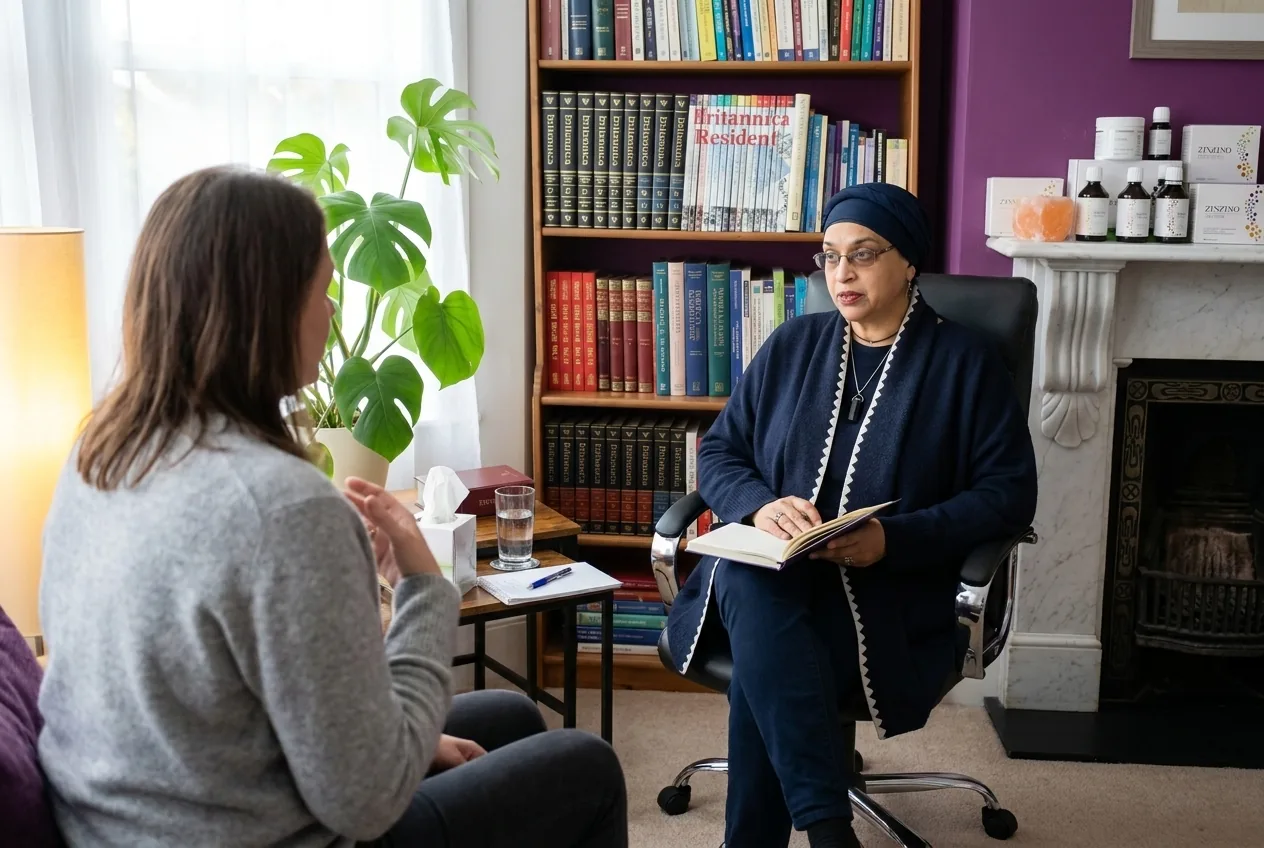
“How do you DO your anxiety, fatigue, or pain?”
Anxiety is an umbrella word. So is fatigue. So is pain. What does anxiety mean for you? Do your hands shake? Does your stomach drop? Do you get a tightness in your chest at 3am? Do you cancel plans and then feel guilty about it?
I need to understand how you individually experience the thing you’ve been labelled with, because your version will be different to the next person’s, and the remedy that fits your version won’t fit theirs.
One size doesn’t fit all. That’s the clinical reality of root cause work, not a slogan.
What happens when it gets uncomfortable?
Somewhere during this consultation, you will probably think, I came here for my cough. Why is she asking about my childhood?
I hear this often. And I understand why.
You went to the GP. You got a test, a label, a prescription. Nobody connected what happened in your life to what’s happening in your body. That’s the gap.
But the body keeps score. And when I find the connection, I don’t let it go. I’ll go back years. Decades, if I have to.
Before I say something that might land hard, I always wrap it first. “Before I say this, don’t beat yourself up, and it’s not your fault because you didn’t know no different.” That’s not a script. It matters to me that you hear the truth without it feeling like a punch.
Sometimes the connection between a physical symptom and an emotional event sounds strange until you hear it. A man came to me who loved apples. Ate them regularly, no problems. One day he was eating an apple while reading something on a train that shocked him. Truly shocked him. And after that, he couldn’t touch apples.
Every time he tried, his body reacted. A GP would’ve said food intolerance. Avoid apples. Done.
But the intolerance wasn’t about the apple. His body had linked the apple to that moment of shock on the train. Once we found the root, which was the emotional shock itself, and addressed it, the intolerance cleared.
Nobody had ever asked him, “What was happening when you first couldn’t eat this?” The insight he’d pass on to anyone in a similar position is simple. If a symptom appeared suddenly and nobody can explain why, stop looking at the symptom. Start looking at what was going on around you when it first showed up. That’s where the answer lives.
Research into why people attend one therapy session and don’t return points to the same thing, again and again. Unmet expectations. They expected a quick discussion about their symptoms and got an emotional investigation instead.
I’d rather you know that upfront than have it be the reason you never come back.
Some people describe the post-consultation feeling as raw. You might have vivid dreams that night. Old memories might surface. You might cry on the way home. Not because something went wrong, but because something shifted.
The Federation of Holistic Therapists Code of Conduct requires practitioners to screen for vulnerability, offer the right to pause or stop at any point, and have clear referral pathways to GPs or NHS mental health services if acute distress surfaces. Those safeguards matter.
But the rawness itself? That’s often the beginning of something moving, not the sign of a problem.
When it doesn’t work out
Not everyone comes back. I need to be straight with you about that.
I’ve had a woman sit in that chair expecting the scan to give her a medical diagnosis she could hand to her GP. Something with a name. Something definitive. But the scan doesn’t do that. It reveals energetic imbalances, not clinical conditions. She left feeling the process hadn’t given her what she came for. And honestly? She was right to feel that way. What she needed was a diagnostic tool. What I offer is a root cause investigation. Different things entirely.
I’ve also had people who found the emotional depth too much. They came for a physical complaint, and when I started connecting it to events they hadn’t spoken about in years, they decided this wasn’t for them. That’s OK. Even within NHS talking therapies, the majority of people referred don’t complete the full course. It’s not a failure. It’s a signal that the timing or the approach wasn’t right for that person at that point.
If you want the full picture before committing, our article ‘What Can Holistic Root Cause Healing Honestly Not Fix (the Real Limitations)?‘ covers what this approach can and cannot do.
And then there are the people who take the remedies home and come back three weeks later saying nothing’s shifted. When that happens, I don’t shrug. I review the case, adjust things, and I’ve provided additional remedies at no extra cost more than once.
But I’ll be honest about the pattern. In almost every case where early results are slow, it comes back to one thing.
The remedies sat in the bag. The breathwork got skipped. The journaling didn’t happen.
There’s no magic pill, but there is a magic process. And it only works if you do the work between sessions. I can find the root and give you the right remedy. But if the homework doesn’t get done, the process stalls.
If you’ve got a high-stakes week ahead, a board presentation, a court hearing, a pitch to investors, think about your timing. The first consultation opens things up. Give yourself the space to process what comes out.
Who is this consultation genuinely NOT suited for, and who is it perfect for?
This is not the right fit if
- You want a single symptom treated in isolation. If you want me to deal with your digestion and not talk about your emotions, your sleep, your stress, or what’s going on at home, you’re in the wrong space. A standard homeopath at £80 to £150 per session who focuses on symptom-level prescribing would be a better and cheaper match.
- You’re expecting a confirmed medical diagnosis. The scan reveals energetic imbalances. It doesn’t tell you whether you’ve got cancer, diabetes, or a thyroid condition. If you need a formal diagnosis to take to your GP or your employer, see your GP first, get the tests done, rule out anything serious, and then bring the results to me. That’s a better order for both of us.
- You want something that works as fast as paracetamol. There’s no magic pill. There is a process, but it needs your participation, your honesty, and your patience. If you’re after a quick fix, I’m the wrong person.
- You’re not ready to be honest about your emotional past. The investigation only works if you let me in. If there are things you’re not willing to share yet, that’s fine. But the root cause work depends on your honesty. The more you give me, the deeper I can go.
This IS the right fit if
- You’ve had your blood tests done, been told “everything’s normal,” and you know something’s off
- You’ve tried other practitioners, homeopaths, nutritionists, therapists, and nothing has lasted
- You’re willing to go back, look at the whole picture, and do the work between sessions
- You want to understand why your body is doing what it’s doing, not just be handed a remedy and sent home
If burnout or chronic fatigue is what brought you here, our guide to burnout and chronic fatigue recovery covers the full picture, from why it develops to what actually works.
Five questions to ask any holistic practitioner before you book
These apply to me and to anyone else you’re considering. I’d ask them all.
- How long is the first appointment? Anything under 60 minutes isn’t deep enough for root cause work. The Helen Campbell Homeopathy Foundation confirms that initial homeopathy consultations typically run 60 to 90 minutes.
- Do they take a full history from birth to now, or just ask about current symptoms? If they only focus on what’s happening right now, they’re treating the tip of the iceberg.
- Will they explain why they’re asking each question? If you leave without understanding the “why,” you haven’t been empowered. You’ve been processed.
- Do they work alongside existing medication? If somebody insists you stop your antidepressants or your thyroxine before starting, walk away.
- What do you physically take away? A good practitioner gives you a written report, an action plan, and a follow-up. Not just a bag of remedies and a “good luck.”
What do you actually leave the consultation holding?
The thing people consistently tell me they didn’t expect isn’t a remedy. It isn’t a report. It’s the understanding of why.
Not another “your tests are normal.” Not another label with no explanation behind it. I’ve had people spend 18 years going round in circles. Specialists, naturopaths, nutritionists, other homeopaths. And the one thing nobody ever gave them was the why.
That understanding changes everything. Not because it’s a miracle. But because once you know the root, we can work with it. And once we switch the switch off at the source, the thing doesn’t come back.
The tangible tools are built around that understanding. You get bespoke homeopathic remedies custom-blended by me, matched to your specific imbalances, with a dosing card explaining what to take and when.
You get a personalised energy blueprint report written in plain language so you can see what your body is telling us and what we’re doing about it. Not clinical jargon. Plain English. You also get an action plan with 7-day and 30-day milestones.
Specific homework includes breathwork exercises, a gratitude journaling practice, and the DHEA (dehydroepiandrosterone) smile protocol, which I’ll teach you during the session.
And there’s a follow-up integration call booked within 10 to 15 days. You’re not left alone to figure out whether things are shifting. We check in. We adjust. We keep going.

I’ll be honest about what comes next, too. The first month of remedies is the beginning of a process, not the end of one. If you want to understand what the complete healing programme involves, our article ‘What Is It Really Like Going Through a Holistic Healing Programme From Start to Finish?‘ covers everything beyond this first session.
Some conditions that have been building for 15 years won’t shift in four weeks. I can’t control the pace your body chooses to heal. What I can tell you is that every person who did the work saw a shift. The speed varies. The direction doesn’t.
What do people actually experience in the first 48 hours?
The most common reaction isn’t relief. It’s a lightbulb moment.
“I didn’t realise that was connected.” I hear that more than anything else.
People leave and suddenly see the thread. Between a bereavement and their hay fever. Between a betrayal and their gut problems. Between a decade of overwork and the anxiety that showed up alongside it. The dots connect. Something clicks.
I had a woman come in for her first appointment. A complete stranger. She was stressed, tense, her head heavy, her husband beeping outside in the car. At the end of the session I said, give me five minutes. Let me just do a little stress management relaxation.
When she came out, she said, “My head feels lighter. That was amazing. Can I come back just for that?”
She booked her sister in the following week.
And if you’re wondering whether all of this is just the placebo effect of being properly listened to, that’s a fair question. But being deeply heard isn’t just comforting. There’s real evidence behind it. Research suggests that the quality of the therapeutic relationship between you and your practitioner drives roughly 30% of improvement in health outcomes. That’s a bigger contributor than any single technique. Not the remedy. Not the method. The fact that someone is actually listening.
The most sceptical people are often the ones who convert the hardest. They arrive suspicious, guarded, expecting to be disappointed.
And when something shifts, when the root cause clicks into place, when the remedy does what 20 years of antihistamines couldn’t, they don’t just come back. They send their partners. Their mothers. Their colleagues.
That’s not marketing. That’s 30 years of watching it happen.
You now know the three questions nobody else is asking, what the room feels like, and what you take home. You’re in a different position to where you were ten minutes ago.
Every month you delay booking because you can’t picture what happens in the room is another month of pushing through symptoms that blood tests can’t explain.
The women who eventually sit in that chair almost always say the same thing. “I wish I’d done this two years ago.”
Two years of managing migraines, fatigue and anxiety while the root cause compounds silently. That’s not caution. That’s the cost of an unanswered question.
If you’re not ready for a conversation yet, that’s fine. Our article ‘Can Emotional Trauma Really Cause Physical Symptoms Like IBS and Migraines?‘ goes deeper into the evidence behind the questions you’d be asked. Start there.
And if reading this has made you think “I want to know what my body is trying to tell me,” a free 30-minute health audit is the simplest way to find out whether this approach fits your situation. No obligation. No pressure. Just an honest conversation about what might help.
Sameena Khan
Founder, Rise Radiantly
Frequently asked questions
Is everything I share in the consultation confidential?
Completely. What stays here stays with me. Even if your mum asks, even if your husband asks, I won’t discuss your case without your explicit permission.
Practitioners registered with bodies like the Complementary and Natural Healthcare Council are bound by a code of conduct requiring confidentiality, and client records must be kept securely for eight years.
Do I need to stop my medication before the consultation?
No. I will never ask you to stop medication. If you’re on antidepressants, thyroxine, blood pressure tablets, anything at all, keep taking them. I work around the drug layer, not against it.
Reducing medication is something we can discuss later, with your GP involved, if and when it becomes appropriate. That’s their call to make alongside yours, not mine.
Can the scan diagnose what’s wrong with me?
No. The scan shows energetic imbalances. Where your body is out of balance. It helps me build a treatment plan. But it doesn’t diagnose cancer, diabetes, or any clinical condition.
If you need a medical diagnosis, see your GP first and bring the results. If you want to understand what a bioenergetic root scan actually involves before your first appointment, that page walks through the full process.
What if I get emotional during the consultation?
It happens. And it’s OK.
I won’t push you somewhere you’re not ready to go. If you need to pause, we pause. If something feels too much, you tell me and we move on. I won’t judge you. Whether it’s tears, anger, or just feeling overwhelmed, I’m not here to judge. I’m here to help. That’s part of the process, and I’m trained to hold that space safely.
How long before I notice any change?
It depends on you, your condition, and how long you’ve been carrying it. Acute things, a bad cold, a recent flare-up, can shift within days. Long-standing conditions with years of medication layers may take several months.
I won’t promise you a timeline. But I can tell you this. Every person who did the work saw a shift. The speed varies. The direction doesn’t.
If you want a fuller answer, our article ‘How Long Does Holistic Healing Actually Take to Show Me Real Results?‘ covers what a single FAQ answer can’t.
Still wondering whether this is right for you? Book a free 30-minute health audit and let’s talk it through. It’s the quickest way to find out if I can help.