
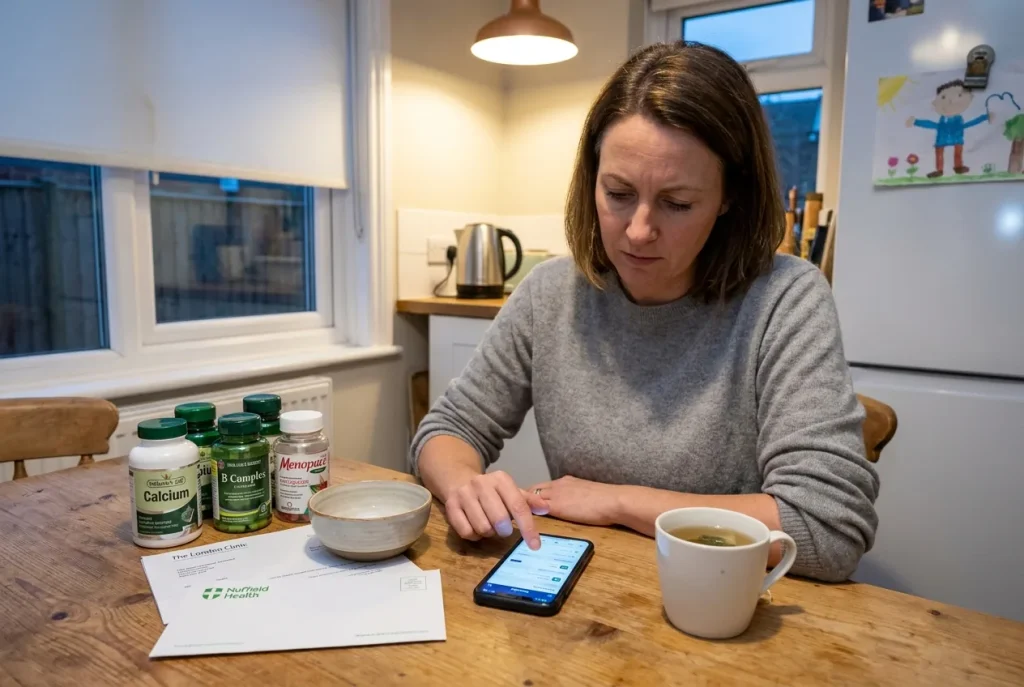
You’ve seen the GP four times, the endocrinologist twice, and the nutritionist for six sessions. There are seven supplement bottles on your kitchen shelf costing you £140 a month, and you’re not entirely sure any of them are doing anything.
Most clients I work with have spent between £8,000 and £25,000 across their health journey before they ever sit across from me. That total is scattered across private specialist consultations at £200–£500 a visit, monthly supplements at £30–£150, therapy sessions at £50–£150 each, wellness programmes and courses that run from £200 to £2,000, and diagnostic tests that pile up at £80–£500 a time.
The number almost always shocks them, because nobody ever added it up. Not the GP, not the specialist, not the nutritionist.
I should be upfront here. I offer root cause healing programmes, so I have a stake in this conversation. But this article isn’t about my fees. It’s about the number you’ve never calculated.
Key Takeaways
- Most people have already spent £8,000 – £25,000 on specialists, supplements, therapists and tests without ever totalling the bill
- Nobody adds it up for you. Each provider sees their own invoice, not your cumulative total
- A root cause programme becomes a redirection, not an addition once your accumulated spending passes £5,000 – £8,000
- If your symptoms are recent or your current treatment is working, this reframe doesn’t apply yet. Finish those pathways first
Here for one specific thing?
- Want to see the actual spending breakdown? Jump to the cost table.
- Already know roughly what you’ve spent and want to compare it to programme pricing? See the crossover calculation.
- Not sure this applies to your situation? Read who this doesn’t apply to.
- Ready to do the maths tonight? Go straight to the self-audit.
What does the average UK woman actually spend on managing chronic symptoms?
£140 a month on supplements feels manageable. A £300 endocrinology appointment feels like a one-off. Six therapy sessions at £80 each feels reasonable.
But when you’ve been doing all three for four years, nobody hands you a receipt for the total.
Here’s what the real numbers look like across a typical UK health journey.
Estimated UK health spending by category over five years for women managing chronic symptoms
| Spending category | Typical per-unit cost | Typical frequency | Conservative 5-year total |
|---|---|---|---|
| Private specialist consultations (endocrinologist, gynaecologist, dermatologist, gastroenterologist) | £200 – £500 per visit | 2–4 visits per year | £2,000 – £10,000 |
| NHS prescriptions (or Prescription Prepayment Certificate) | £9.90 per item; PPC £114.50/year | 2–3 items per month | £570–£1,800 |
| Monthly supplements (vitamin D, magnesium, B-complex, probiotics, adaptogens) | £30–£150 per month | Ongoing | £1,800 – £9,000 |
| Private therapy or counselling | £50 – £150 per session | 6–12 sessions per year | £1,500 – £9,000 |
| Wellness programmes, courses, or retreats | £200 – £2,000 each | 1–2 per year | £1,000 – £20,000 |
| Diagnostic tests (food intolerance panels, hormone tests, private scans) | £80 – £500 each | 1–2 per year | £400–£5,000 |
| Nutritionist or dietitian consultations | £100–£250 initial; £80 – £200 follow-up | 4–8 sessions per year | £1,600 – £10,000 |
| Acupuncture or complementary therapy sessions | £50 – £120 per session | 6–12 per year | £1,500 – £7,200 |
The conservative five-year total sits between £5,000 and £15,000. Over a decade, that climbs past £20,000.
I don’t want you to just take my word for it. Private consultant fees average around £183 across the UK, and specialists like endocrinologists charge £225–£340 just for a first appointment. The NHS prescription charge stays frozen at £9.90 per item through 2026/27.
And what I see across the board is that women are spending more on supplements year on year. Five years ago, the UK supplement market was worth considerably less than the £3 billion-plus it is now. That tells you something about how many people are self-medicating without resolution.
Each individual cost still looks reasonable on its own. That’s the trap.
Why does this spending keep accumulating without resolving anything?
This is the part that frustrates me. Not with you. With the system.
The NHS is structured around single-specialty referrals. Your GP sees the fatigue, refers you to the endocrinologist. The endocrinologist checks your thyroid, says it’s “within range,” sends you back.
The GP notes the irritable bowel syndrome (IBS), refers you to gastroenterology. They run their tests, prescribe something for your gut. Meanwhile, nobody is asking what happened in your life five years ago that might have triggered both.
Even the medical world is catching up to this. A study across four European countries found that patients with persistent physical symptoms are being bounced through fragmented systems with nobody joining the dots. I could have told them that twenty years ago.
And the BMJ’s CountMEIn survey of over 8,800 myalgic encephalomyelitis/chronic fatigue syndrome (ME/CFS) patients found that the most common time to diagnosis was one to two years, with nearly 13% waiting more than ten years. That’s a long time to be paying for appointments that keep circling back to the same place.
I had a woman come to me who’d been on levothyroxine for years. Not months. Years. She’d been told, as most thyroid patients are, that once you have a thyroid issue that’s it. Go on the medication. Full stop. She accepted that, because why wouldn’t you? Your doctor told you there was nothing else.
But the levothyroxine wasn’t the end of the story. It was the beginning of a cascade. The side effects of that medication started creating new symptoms. So her doctor prescribed another drug to manage those. And then the second drug brought its own problems, which meant a third prescription. She walked into my clinic carrying what I can only describe as a small pharmacy’s worth of medication, each one prescribed to manage the consequences of the last. She wasn’t getting better. She was getting more medicated.
What struck me most was that she genuinely didn’t know there was another path. Nobody had ever asked her why her thyroid was struggling in the first place. Not once, across all those appointments and all those prescriptions. The entire conversation had been about replacing what her body wasn’t producing, never about what was stopping it from producing it. When we started working together, we went back to that question. Not to throw the medication in the bin. You never do that. But to look underneath, at the imbalance that had been driving the condition all along. And gradually, working alongside her GP, the body started doing more of the work itself once we dealt with what was underneath.
She’d spent years paying for prescriptions, paying for the appointments to review those prescriptions, paying for the blood tests to monitor those prescriptions. All of it accumulating, month after month, with no endpoint in sight. Not because her doctors were negligent, but because the system is built to manage what’s happening now, not investigate what started it.
That’s the bit nobody had looked at before.
You can go to the garden of weeds, right? You can cut the weeds that look nice and clean. But until you pull them out from the roots, they’re going to keep on growing. And every time you pay the gardener to cut them again, the bill goes up. But the garden never actually gets clear.
I know this personally, too. When my daughter was a baby, she developed a severe skin condition that no specialist could diagnose. I spent thousands of pounds on London dermatologists. They ran test after test, prescribed without connecting anything to the whole picture.
It wasn’t until one homeopathic intervention looked at everything that things shifted. That was the moment I knew I was going to spend the rest of my life doing this work.
When does a root cause programme become cheaper than continuing to manage symptoms?
Here’s where this gets real.
If you’ve already spent £8,000 – £15,000 across the last five years on specialists, supplements, therapists, and tests that haven’t resolved your symptoms, the question isn’t whether you can afford a root cause programme. It’s whether you can afford another five years of what you’ve already been paying for.
At Rise Radiantly, the RootScan Breakthrough Session costs £2,222 (or two payments of £1,111). The eight-week Rooted Radiance Immersion costs £9,999 (with payment plan options of two or three instalments). Yes, that’s more per transaction than any single appointment in your accumulated total. I won’t pretend otherwise.
But there’s a fundamental difference. Every appointment you’ve had so far was designed to manage one symptom, one time. These programmes are designed to find the root, address it, and give you tools for life. One has an endpoint. The other doesn’t.
If you want to see our article ‘Root Cause Healing Vs Years of Medication – Which Costs Me More Long-term?‘, we lay out the forward-looking numbers separately.
I should be honest about something, though. There’s no completed UK study that proves root cause programmes cost less over a lifetime than continuing with symptom management. The UK government has actually commissioned a £1.4 million study to answer that exact question, which tells you even they don’t have the data yet.
What I can tell you is the structural difference. One approach is open-ended with no resolution date. The other is time-limited with a specific goal. That’s a logical argument, not a clinical one. And I’d rather give you the honest version than dress it up as proven fact.
I had a 72-year-old man come to me who’d been managing diabetes with medication for years. The prescription costs, the monitoring appointments, the blood sugar testing strips. It adds up, month after month, year after year, with no end in sight.
He was disciplined. Whatever I told him to do, he did it. And through root cause work, addressing the imbalances driving the diabetes rather than just managing the blood sugar, he came off all his medication entirely. All of it.
He still brings his blood sugar readings to every appointment on a little slip of paper. Stable. Drug-free.
That is the difference between managing a condition indefinitely and addressing why it’s there.
I need to be honest, though. Resolution is never guaranteed. Some chronic autoimmune conditions respond more slowly than others, even with full commitment. Conditions with 15–20 years of medication layers may show only moderate improvement in eight weeks.
Every fully engaged client sees some shift. The variable is speed and degree, not whether change happens at all.
Who is this not for?
Before I say this, don’t beat yourself up if you’re reading this and realising you’re not quite there yet.
If your symptoms started less than 18 months ago, finish your GP investigations first. Get the blood tests done. Let them rule out the serious stuff. That’s what the NHS is for, and it’s low cost. A Prescription Prepayment Certificate caps your costs at £114.50 a year.
If your condition is genuinely responding to your current treatment, stay the course. The accumulated-spending reframe only applies when the pattern of spending-without-resolution is already well established.
If you’re looking for a like-for-like replacement at the same per-visit price, a root cause programme isn’t that. A nutritional therapist at £100–£250 per session or a standard homeopath at £60–£120 might be exactly right for where you are.
I’d rather you make the right decision for your situation than the decision I’d prefer. We wrote a full guide on our article ‘When Is a Less Expensive Holistic Practitioner Actually the Right Choice for Me?‘.
And if you’re in an acute medical situation, go to A& E. Don’t wait for me.
I always say this. Go and see your GP, get yourself a diagnosis, get some blood tests done. Let’s rule out the serious stuff. And then come and see me.
How do I calculate what I have actually spent?
I’ve sat across from hundreds of women while they do this exercise. Nearly every single one says the same thing halfway through. “I had no idea it was this much.”
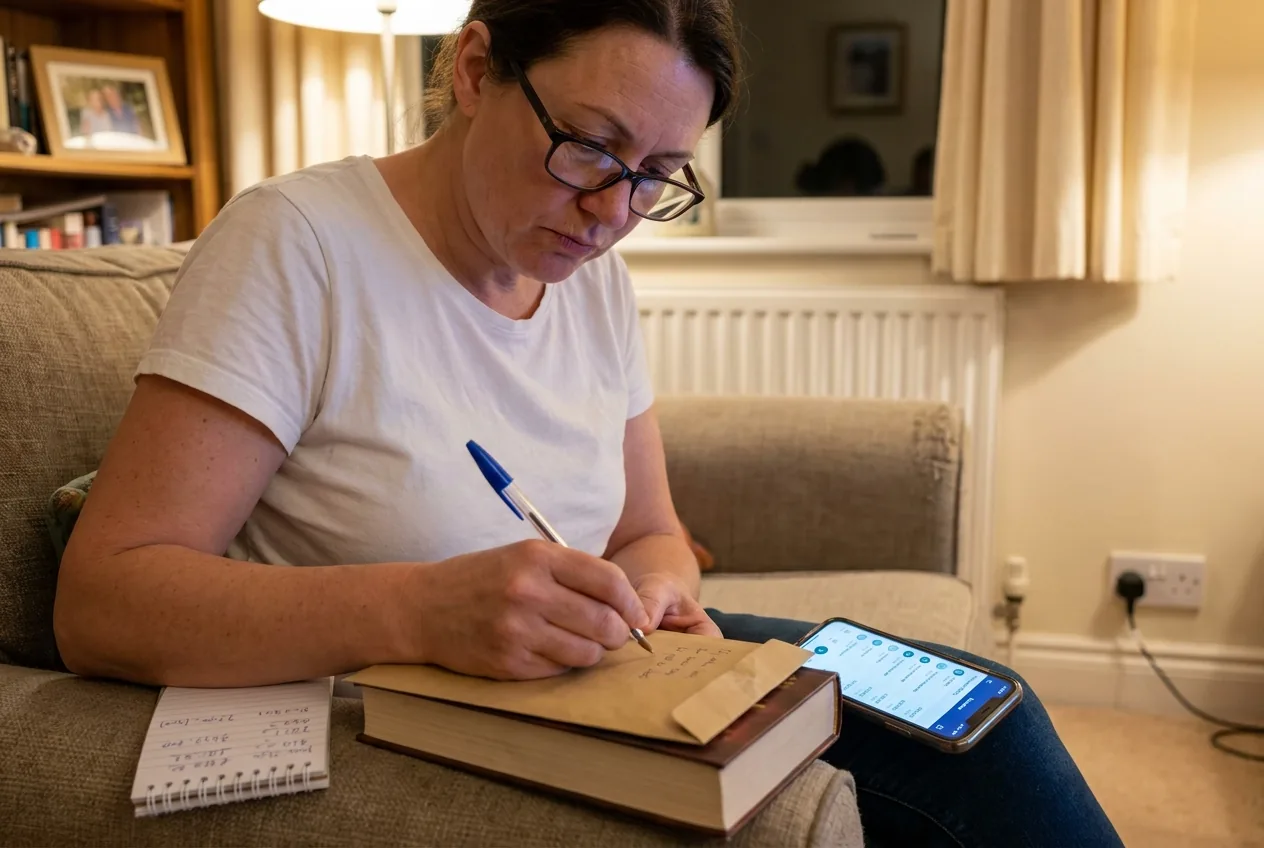
This takes 15 minutes. Grab your phone, open your banking app, and work through these eight categories for the last three to five years.
1. Private specialist appointments. How many, and what did each cost?
2. Monthly prescriptions. Are you paying per item or using a prepayment certificate?
3. Supplements. Add up your monthly spend and multiply by the number of months you’ve been taking them.
4. Therapy or counselling. How many sessions, at what rate?
5. Wellness programmes, courses, or retreats. Every workshop, every online course, every detox programme.
6. Diagnostic tests. Food intolerance panels, hormone tests, private blood work, scans.
7. Nutritionist or dietitian appointments. Initial consultations and follow-ups.
8. Complementary therapy sessions. Acupuncture, osteopathy, reflexology, anything you’ve tried.
Write each one down with an approximate cost. Then total them.
The reason this number will surprise you is simple. It’s like having five direct debits going out of five different bank accounts, right? Each one looks fine on its own. But nobody’s looking at the total leaving your household.
Your brain filed each appointment and supplement order as a separate, reasonable decision, because individually it was. But across separate providers, separate invoices, separate months, the total stayed invisible.
Nobody aggregated them. Until now.
How do I talk about this number with someone I trust?
Once you’ve done the self-audit, you’re sitting with a figure that probably surprised you. And if you’re anything like most of the women I work with, the next step isn’t booking anything. It’s having a conversation.
If you’re sharing this decision with a partner, a friend, or a colleague, show them the total from your self-audit. The conversation changes completely when the question isn’t “can we afford this new thing?” but “look what we’ve already spent without resolution.”
Walk them through the table. Show them the maths.
The questions they’ll raise are valid. “What if this doesn’t work either?” “Why is the upfront cost so much higher than a single appointment?” The answers are in this article. Let them read it too.
And here’s the part that’s harder to talk about. Every month you continue without addressing the root cause, you’re adding roughly £150–£350 in supplements, prescriptions, and scattered appointments to a total that has no endpoint. Over the next 12 months, that’s another £1,800 – £4,200 invested in managing symptoms that remain unresolved.
The pattern either changes or it compounds.
If you’re making this decision on your own, the self-audit still does the same job. Run through the numbers, sit with them, and ask yourself whether the pattern you can now see clearly is one you want to continue.
If the number on the back of that envelope is bigger than you expected, that’s not a reason to feel foolish. Every appointment was a reasonable decision at the time. The problem isn’t you.
The spending either has an endpoint or it doesn’t.
If you want to explore whether a root cause approach could be the endpoint to that spending, book a free 30-minute health audit and bring your numbers. Let’s look at this together honestly. No obligation, no pressure. Just a straight conversation about whether this is the right fit for where you are.
If you’ve already done the maths and want to understand what a structured programme includes, our article ‘What Am I Actually Paying for in a Premium Holistic Healing Programme?‘ breaks it down so you can compare it to your accumulated total.
Not ready to talk yet? That’s fine. Keep the self-audit. Or if you want to keep reading, our burnout and chronic fatigue articles cover the full picture of what root cause recovery looks like. No phone call required.
And if the numbers tell you this isn’t the right time, trust that. Come back when the pattern is clear.
Sameena Khan
Founder, Rise Radiantly
Frequently Asked Questions
“Isn’t this just another expense on top of everything I’ve already spent?”
If your accumulated total is under £3,000 and your symptoms are recent, it probably is an additional cost, and you might not be ready for it yet. But if your total is already north of £8,000 and your symptoms persist, this isn’t an addition. It’s a redirection.
The spending was going to continue anyway. The question is whether it continues going towards management or towards resolution.
“What if it doesn’t work either?”
No one can guarantee 100% anything. I won’t pretend otherwise. What I can tell you is that this approach works differently from what you’ve tried before. It addresses the root, not just the symptoms.
And the programmes include follow-up structure so we’re not leaving you to figure it out alone. If results underwhelm on the RootScan, the Double Down Guarantee means you get additional remedies and another call at no extra cost.
If you’ve been burned before and need to understand our article ‘What If Holistic Healing Does Not Work for Me, and I Have Already Tried Everything?‘, we address that fear directly.
“Do supplements count if they’re cheap individually?”
They’re the most invisible cost of all. £35 a month doesn’t feel like much. Over five years, that’s £2,100.
If you’re taking three or four different supplements, which most of the women I see are, you’re looking at £4,000 – £9,000 across five years on pills you’re not even sure are working.
“Should I stop seeing my GP?”
Absolutely not. I never take people off their medication and I never replace the GP. If you need to take antibiotics, take them. If you need to see a specialist, see them. I’ll help you with the detox afterwards.
Root cause healing works alongside conventional medicine, not instead of it.
Still weighing it up? Book a free 30-minute health audit. Fifteen minutes, no cost, and I’ll tell you honestly whether I can help.