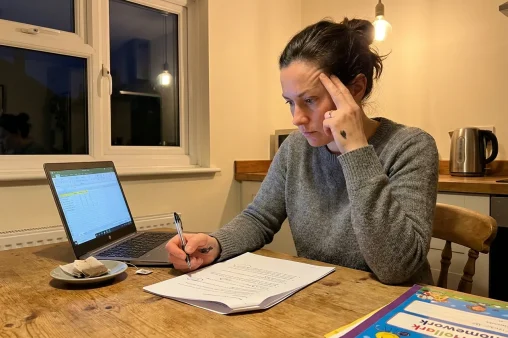

You’ve got two browser tabs open. One is a local homeopath at £150 for a first appointment. The other is an integrated healing programme at over £2,000.
And you genuinely can’t tell whether your situation needs the deeper work or whether the £150 option would do the job perfectly well.
A practitioner charging £80 to £200 per session is the right choice when your condition is recent, single-system, and has a clear trigger. Seasonal hay fever that started this spring. A digestive complaint linked to something you ate. Pre-exam anxiety. Your very first time exploring whether holistic approaches resonate with you at all. For those situations, you’d save somewhere between £1,500 and £8,000 compared to entering an integrated programme you don’t actually need.
But when symptoms have been circling for years across multiple body systems, and you’ve already sat across from three or four different practitioners without lasting resolution, the maths flips entirely.
I should be honest with you. I run an integrated root cause practice. My programmes aren’t cheap. But I’d genuinely rather you saw a respected colleague at a fraction of my price than spent money with me when a simpler approach would serve you just as well. I refer people elsewhere regularly. This article shows you exactly when that’s the right call and when it isn’t.
What frustrates me is that most premium practitioners won’t tell you when a cheaper option would do the job. You shouldn’t need to become an expert in holistic health pricing just to figure out whether your situation calls for a £150 appointment or a £2,000 programme. So I’ll lay it out for you.
Key Takeaways
- A practitioner at £80 to £200 is the right match for recent-onset, single-system conditions and first-time exploration. You’ll save £1,500 to £8,000.
- Three red flags tell you cheaper is costing more. Symptoms bouncing back within weeks. The same condition persisting for two-plus years. Three or more body systems affected at once.
- UK holistic practitioner fees range from £50 per follow-up to £9,999 for a comprehensive programme. The “best for” column matters more than the price column.
- The cumulative cost of piecemeal care often hits £5,000 to £12,000 over three years, with nobody connecting the dots between symptoms and root cause.
- If your situation is straightforward, I name the specific colleagues I’d send you to instead.
Not sure which part applies to you?
- Wondering whether your situation is simple enough for a standard-rate practitioner? Start with the four scenarios.
- Want to check whether the cheaper route is actually costing you more? See the three red flags.
- Need to compare actual UK prices across practitioner types? Go to the pricing table.
- Ready to add up what you’ve already spent? Jump to the cumulative cost calculation.
When does a standard-rate holistic practitioner genuinely make more sense?
A practitioner charging £80 to £200 is the right call in four situations. The savings compared to entering an integrated programme range from £1,500 to over £8,000.
Your condition is recent, the trigger is obvious, and you’re not on a stack of medication. Your hay fever started this spring. You developed a cough after a cold three weeks ago. Headaches kicked off after a stressful house move.
No long-term medication layers, no symptoms spreading across multiple systems. A good homeopath or hypnotherapist can address this directly in one to three sessions. You don’t need someone going through your entire life timeline for a condition that started six weeks ago.
Estimated cost. £150 to £450.
Has your GP confirmed a deficiency? Is your issue clearly dietary? Then what you need is a qualified nutritional therapist, not the full shebang.
A randomised clinical trial found that a dietitian-led elimination approach called low-FODMAP produced lasting symptom relief in over 60% of irritable bowel syndrome participants. For a clearly defined gut issue where the trigger is food, a three-to-six-month nutritional therapy course at £300 to £1,200 is the right match. You don’t need bioenergetic scanning and hypnotherapy for a validated iron deficiency.
You’ve never tried any of this before. People sometimes ask me whether they should jump straight into an integrated programme. And I say, have you ever sat in a homeopathic consultation? Ever taken a remedy? Ever experienced what this kind of work actually feels like?
If not, spending thousands before you know whether the approach even resonates doesn’t make sense. Book a single session at £80 to £200. See how your body responds. If it clicks, you’ll know. And if it doesn’t, you’ve spent £150, not £2,000.
You’ve already done the root cause work. Your condition’s resolved. You just need a periodic check-in or an acute remedy when life throws something new at you. A standard-rate follow-up at £50 to £120 is entirely appropriate here. Re-entering a full programme for a minor flare-up, that’s not the right call.
In my own practice, I charge £20 for acute prescriptions through my WhatsApp advice group. For simpler needs, I refer people to colleagues I trust. That’s not a marketing line. That’s what I actually do, every week.
What are the warning signs that choosing cheaper is actually costing me more?
Most people never run this calculation. They should.
Three patterns tell you that a standard-rate practitioner, however good they are at their job, simply can’t get to what’s really going on. I’ve seen each one hundreds of times across 30 years of practice.
Red flag 1. Your symptoms come back within weeks of each appointment. You see a homeopath. You feel better for a fortnight. Then it’s back. You try a nutritional therapist. Same pattern. The treatment is managing the symptom. Nobody is finding the root.
A 2024 survey by Versus Arthritis documented exactly this frustration among patients. Repeated spend on treatments that delivered short-term relief but never lasting resolution.
Red flag 2. The same condition has persisted for two or more years across multiple practitioners. This is the pattern that breaks my heart, because I see it constantly.
One woman came to me after *eighteen years* of digestive problems. She’d been to naturopaths, other homeopaths, nutritionists. She’d improve for a while, genuinely feel like it was shifting, and then the symptoms would creep back in. Each new practitioner approached the problem through their own lens. The nutritionist adjusted her diet. The homeopath prescribed a remedy for the gut symptoms. Nobody asked what had happened eighteen years ago.
When she sat across from me, I said, “If you’ve had this for 18 years, I need to start from 18 years ago. Let’s go back. Let’s go back. Let’s go back.”
It turned out the root was an emotional shock in Singapore. A family friend had been charging her parents double for university fees and pocketing the difference. When she discovered the fraud, she couldn’t process it. As she described it to me, she found it really hard to take in.
Hard to take in. Hard to *digest*. Her body had been doing what her conscious mind had filed away for eighteen years.
Once we addressed that original shock with remedies matched to the emotional root, not just the digestive symptoms, the condition cleared.
She didn’t need to come back.
Eighteen years. Thousands of pounds. Multiple practitioners, each one competent in their own field. The problem wasn’t that any of them was bad at their job. It was that no single-modality practitioner had connected her digestion to an emotional root cause from nearly two decades earlier. Each one treated what was in front of them. Nobody traced the thread back to where it started.
That’s the mind-body connection. The body keeps score.
Red flag 3. Three or more body systems are affected at the same time. Your digestion is off. You can’t sleep. Anxiety is creeping in. Your hormones feel all over the place. When I see this combination, it almost always points to something deeper connecting all of them.
A nutritionist treats the gut. A hypnotherapist treats the anxiety. A GP manages the hormones. Nobody is looking at the full picture. It’s like having five clocks in your house and only fixing one of them. When one’s off, it has a knock-on effect on everything else.
The stepped-care model used in NHS mental health services supports the principle that lower-intensity, lower-cost interventions are the correct first step for straightforward, single-system presentations. But when complexity builds, integrated care consistently outperforms fragmented single-modality treatment.
If two or more of these red flags describe your situation, the cheaper option probably isn’t cheaper at all. It’s just slower and more expensive in the end.

How much do different types of holistic practitioners actually charge in the UK?
UK holistic practitioner fees range from £50 per follow-up session to £9,999 for a comprehensive programme. The tier that’s right for you depends entirely on which “best for” column matches your situation, not on which price looks most comfortable.
UK holistic practitioner pricing by tier, showing price ranges, best-fit situations, and trade-offs for each level of care (2024–2025)
| Practitioner tier | Price range | Best for | What you sacrifice | Typical duration |
|---|---|---|---|---|
| Standard homeopath | £80–£200 first, £50 – £120 follow-up | Acute single-system conditions, first-time exploration, maintenance | Multi-system investigation, hypnotherapy, coaching, energetic data | 1–6 sessions |
| Nutritional therapist | £75–£300 initial, £45 – £150 follow-up | Validated deficiencies, confirmed intolerances, structured dietary guidance | Emotional root cause work, homeopathic prescribing, subconscious reprogramming | 3–6 months |
| Standalone hypnotherapy | £80 – £250 per session | Situational anxiety, specific phobias, IBS with strong gut-brain component | Physical symptom investigation, nutritional assessment, remedy prescribing | 6–12 sessions |
| Basic bioenergetic scan (nutrition-focused clinic) | £50 – £300 | Screening-level energetic assessment, food sensitivity mapping | Integrated follow-through, emotional root cause work, coaching | 1–3 sessions |
| Integrated root cause programme (Rise Radiantly) | £2,222 (RootScan) to £9,999 (8-week programme) | Complex chronic conditions spanning 2+ years, multi-system involvement, prior single-modality treatment failures | Lower upfront cost, ability to test one modality before committing, modular flexibility | 1 session to 8 weeks |
Pricing sourced from UK practitioner directories and published clinic rate cards (2024–2025). Cancer Research UK notes homeopathic consultations range from around £30 to £125. The Hypnotherapy Lounge estimates the UK average at £80, ranging from £50 to £150 outside London. From what I’ve seen across the sector, fees have risen broadly in line with wider inflation over the past few years.
What the table can’t show you is that the “best for” column matters more than the price column. Ten times more.
I learnt this the hard way. When my daughter was a baby, she developed a severe skin condition no specialist could explain. I spent thousands on London dermatologists. They ran test after test, couldn’t agree on a diagnosis, and eventually prescribed a litre of antibiotics four times a day for four months. For a baby.
Homeopathy, at a fraction of the cost, cleared her condition.
The price wasn’t what mattered. Finding the right approach was. That’s the principle behind this entire article. For a deeper look, our article ‘Why Do Some Holistic Practitioners Charge Ten Times More Than Others?‘ maps the variables that go beyond what any pricing table can capture.
Who genuinely does not need a premium integrated programme?
If you’ve read the scenarios above and you’re in one of the simpler categories, here’s where I’d actually send you.
For straightforward homeopathic needs, I’d point you to someone like Hilary Dorrian. She’s a respected homeopath I trust. If your condition started recently, the trigger is clear, and you need a well-chosen remedy without the full integrated investigation, she’ll look after you well. You’re looking at £80 to £200 for a first consultation, with follow-ups at £50 to £120. We cover this in more detail in our article ‘How Much Does Homeopathy Really Cost in the UK?‘.
For dietary and nutritional work, I’d recommend someone like Malika Guechoul. If your primary concern is a confirmed deficiency, a specific intolerance, or structured dietary guidance, she specialises in exactly this. A full course typically runs £300 to £1,200. That’s the right tool for a clearly defined nutritional need.
For a first exploration of holistic approaches, any well-qualified practitioner will give you a genuine sense of whether this kind of work resonates with you. Spend £80 to £200. Feel what it’s like. If it clicks, you’ll know. And if your situation turns out to be more layered than you expected, you can always come back to explore the integrated route later.
I name these colleagues and recommend them because this is how I actually practise. Not everyone needs me. That’s the truth.
One thing I want to be honest about, though, for those who *do* come to me. Even for committed people who follow the programme fully, some chronic autoimmune conditions with 15 to 20 years of medication layers respond more slowly and less predictably than other presentations. The eight-week programme may produce moderate improvement rather than complete resolution for the most deeply layered conditions.
Every person I’ve worked with shifts. But the speed and degree vary. I won’t pretend otherwise.

What is the real cumulative cost of seeing multiple practitioners separately?
Here’s the calculation nobody runs until they’re sitting across from me wondering why nothing has worked.
Say you’ve been dealing with fatigue, digestive issues and anxiety for three years. You’ve taken the piecemeal route, one practitioner at a time.
- Nutritional therapist. £200 initial plus £120 per month for 12 months = £1,640
- Homeopath (separate practitioner). £150 initial plus £80 per month for 12 months = £1,110
- Hypnotherapist. £250 per session, six sessions = £1,500
- Life coach. £300 per session, four sessions = £1,200
Three-year running total. Roughly £5,450. And that’s conservative. Add supplements, private blood tests, and the appointments that led nowhere, and you’re looking at £7,000 to £12,000 without anyone ever connecting the dots between your physical symptoms and their emotional roots.
We break down the full arithmetic in our article ‘What Is the True Cost of Seeing a Homeopath, Hypnotherapist, and Coach Separately?‘.
Wait, let me fix the redundancy.
If you want to see the full arithmetic, we break it down in our article ‘What Is the True Cost of Seeing a Homeopath, Hypnotherapist, and Coach Separately?‘.
One woman I worked with shows you what those numbers look like in a real life.
She’d been on Levothyroxine for years. Not a few months while things stabilised. *Years.* Her GP had told her, as GPs typically do with thyroid conditions, that this was simply how it would be from now on. Take the medication, monitor your levels, come back every few months. That was the deal.
But the medication hadn’t made her well. It had stabilised one reading on a blood test while the rest of her kept unravelling. The fatigue was still there. The brain fog. The feeling that her body had stopped producing what it needed and she’d just accepted that verdict without anyone questioning whether it was actually permanent.
Here’s what got me. In all that time, across all those monitoring appointments and prescription renewals, nobody had asked the one question that mattered. *Could her body resume producing its own thyroxine?* Or had everyone, herself included, simply decided this was her life now?
That’s what she was weighing up when she found me. Not “should I try something alternative?” but “has anyone actually investigated whether my thyroid can do this on its own?”
When I took her full case, going right back through the timeline, the picture that emerged was of a body that hadn’t failed. It had *shut down* because of a sustained period of stress that nobody had connected to the thyroid collapse. The medication had masked what was happening underneath. The root cause sat there, untouched, year after year, prescription after prescription.
Through an integrated approach, we addressed that root cause while putting the scaffolding in to support the organ itself. Stimulated her body to do what everyone had assumed it could no longer manage. She went from a lifetime of medication dependency to her body making its own thyroxine again.
There you go. That’s your root.
And when you compare the lifetime cost of those prescriptions, the monitoring appointments, the GP visits, the blood tests, the supplements she’d tried alongside the medication, to one programme that got to the underlying cause, that’s the comparison nobody makes until they’ve already spent years on the medication route. If you’re weighing that comparison yourself, our article ‘Root Cause Healing vs Years of Medication – Which Costs Me More Long-Term?‘ maps it out in a full side-by-side analysis.
Most people who find me have already spent £15,000 to £30,000 across years of symptom management before finding root cause work. That’s the pattern I’ve observed consistently across 30 years and over a thousand clients.
Grab your phone calculator. Add up what you’ve spent in the last three to five years on practitioners, supplements, tests and prescriptions for the same unresolved condition. The number usually startles people.
Talking this through with someone you trust
The first question that comes up, and I hear this all the time, is the partner conversation. “What will my husband think?” or “How do I explain this to my family?”
My advice is always the same. Don’t lead with the price. Lead with the maths.
Sit down together and add up what you’ve each spent, or what you’ve spent as a household, on practitioners, supplements, tests and prescriptions over the last three to five years for the same unresolved condition.
When the number is sitting there on the screen, the conversation changes. You’re not defending a big investment any more. You’re showing that you’ve *already* made a big investment, just spread across years where nobody noticed it adding up.
If they ask what happens if it doesn’t work, that’s a fair question. I can’t guarantee specific outcomes. What I can tell you is that in every case I’ve seen where results were limited, the limiting factor was compliance, not the approach. Not taking remedies as prescribed. Not doing the simple homework I’d set.
So the real question to ask together isn’t “will it work?” It’s “am I ready to commit to doing the work?”
If you’re weighing this up on your own, running through those same numbers solo will clarify your thinking faster than anything I could say.
Every month you stay on the piecemeal route for a complex, multi-system condition, the costs keep building and the root cause sits there untouched. I’ve watched too many women arrive having spent a decade and tens of thousands of pounds on approaches that managed symptoms without ever asking *why*.
If burnout or chronic fatigue is what brought you here, our burnout and fatigue articles cover the full recovery picture beyond just the pricing question.
You now know the four situations where a standard-rate practitioner is the right call. You can test your own symptoms against the red flags. You can run your own cumulative cost calculation with real numbers.
That’s a different position from where you were half an hour ago, staring at two browser tabs with no way of choosing between them.
If you’ve read this and you’re still not sure whether your situation needs integrated root cause work or whether a standard practitioner would handle it perfectly well, that’s exactly what the free 15-minute health audit is for. Fifteen minutes where we figure it out together, honestly.
If your situation is straightforward, I’ll tell you. And I’ll point you to someone who can help at a fraction of my price.Book a free 30-minute health audit and let’s have that conversation.
If you already recognise your situation in the red-flag patterns above, the RootScan Breakthrough Session is designed as a standalone diagnostic that maps what’s happening and why. You don’t need to commit to a full programme to find out whether this approach fits.
Or if you’re not ready to talk to anyone yet, take your phone calculator, add up what you’ve spent across the last three to five years on the same unresolved condition, and sit with that number for a day. Sometimes the maths does the deciding for you.
Sameena Khan
Founder – Rise Radiantly
Frequently asked questions about holistic practitioner costs
Can I start with a cheaper practitioner and move to an integrated programme later if I need to?
Yes. And for many people that’s the smart approach. If your condition is recent and single-system, starting with a standard-rate practitioner at £80 to £200 makes sense. The red flags above will tell you if you need to step up.
The NHS Talking Therapies model is built on exactly this principle. Start with the least intensive intervention that fits your needs. Escalate only if you need to.
Do cheaper practitioners have lower qualifications?
Not necessarily. A homeopath charging £90 may hold the same qualifications as one charging £400. The difference is usually what’s *included*, not who’s sitting across from you.
A standard-rate appointment covers a single-modality consultation. A premium integrated session includes scanning, multiple modalities, bespoke remedies, coaching and ongoing support. You’re comparing one tool from the toolbox to the full toolbox.
Are payment plans available for the premium programmes?
Yes. The eight-week Rooted Radiance Immersion can be split into two or three payments, and the RootScan can be split into two. I’d rather you spread the cost and do the right programme than choose a cheaper option that won’t get to the root.
What if I’ve already spent thousands and nothing has worked?
That’s precisely when to reconsider the *approach*, not just the practitioner. If you’ve been rotating through individual specialists for two or more years without lasting resolution, adding another single-modality practitioner to the list is unlikely to give you a different result.
You can go to the garden of weeds and cut the tops every week. It looks neat from a distance. But until you pull them out at the root, they keep growing back. If you want to see the numbers, we explore them in our article ‘How Much Have I Already Spent Trying Everything Before Finding Root Cause Healing?‘
Is the RootScan fee credited if I progress to the full programme?
Yes. If you start with the RootScan and decide to continue into the eight-week Rooted Radiance Immersion, the fee is credited toward the programme total. You’re not paying twice.
Still not sure which tier fits your situation? Book a free 30-minute health audit and we’ll figure it out in fifteen minutes. No pressure. Just an honest conversation.