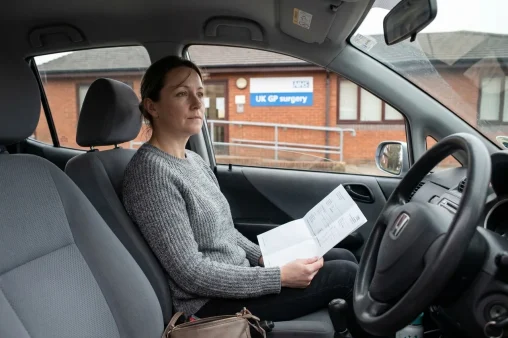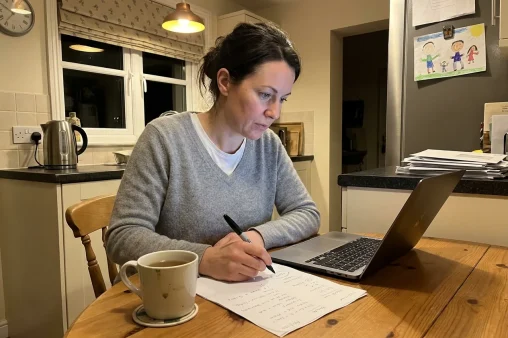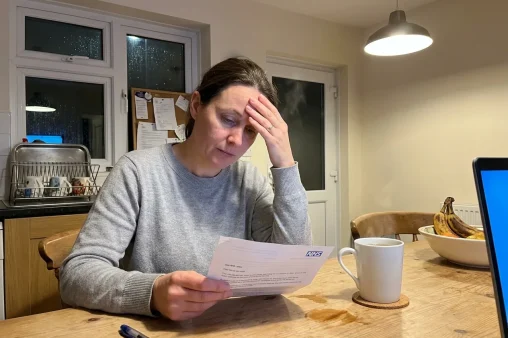

Imagine.
It’s 6pm and you’re still at your desk.
You stopped being productive two hours ago. You’re staring at your inbox, too exhausted to work and too guilty to close the laptop, and somewhere in the back of your mind the same sentence is playing on repeat.
I’ll deal with this once things calm down.
Things don’t calm down. That’s what burnout and chronic fatigue actually do to you. They don’t plateau and wait politely until you’re ready.
They compound.
By the time a client finally sits across from me, they’ve usually spent somewhere between £15,000 and £30,000 on the problem they kept putting off. GP appointments, private specialists, supplements by the carrier bag, therapy sessions, sleep aids, lost working days. And that’s just the money they can count.
Across the UK, 22.1 million working days were lost to stress, anxiety, and depression in 2024/25 alone, averaging nearly 23 days per person affected. You’re somewhere inside that number right now, whether or not anyone’s named it yet.
Before we go any further, I should be upfront. I’m Sameena Aziz Khan and I run Rise Radiantly, a root cause healing practice combining bioenergetic scanning, homeopathy, hypnotherapy, and coaching. I have a stake in this conversation and you deserve to know that. What follows is as honest as I can make it, including the parts where investing in healing is genuinely the wrong call.
Here’s what this article comes down to.
Key Takeaways
- Most people spend £15,000 to £30,000 managing symptoms before anyone looks at the root cause. That money buys management, not resolution. There’s a big difference.
- Burnout doesn’t plateau. It compounds. It rewires your stress response and makes recovery harder with every passing month.
- Some burnout genuinely does improve with extended rest and real lifestyle change. If you can remove the stressor, try that first. I won’t pretend otherwise.
- My approach requires real commitment. Three to five hours per week. And conditions that have been building for 15 or 20 years may show only moderate improvement in an initial eight-week timeframe.
Here for one specific thing?
- Wondering how much you’ve already spent on appointments and supplements that didn’t last? Start with the financial picture.
- Want to understand what burnout is doing inside your body while you push through? Read about the health escalation.
- Worried about what this is costing your career or your family? See the career cost or the relationship cost.
- Ready to decide whether now is the right time to act? Take the self-assessment.
How much have you already spent without realising it?
The financial cost of untreated burnout isn’t one GP visit or one bottle of supplements. It’s everything you’ve spent across years of managing symptoms that keep coming back, without anyone asking why they started.
People ask me, “Is it worth investing in this?” And I say, do you know what you’ve already invested?
Private GP visits at £90 to several hundred pounds each. Therapy sessions at £70 to £173 in London. Supplements, blood panels, the functional medicine tests you paid for because the NHS couldn’t find anything wrong. Stack it up. It’s more than most people think.
And to be fair, some of that spending does help. NHS Talking Therapies achieves genuine improvement for roughly two thirds of people referred, and most access it within six weeks. For straightforward anxiety or depression, that pathway works.
The gap opens when the picture is more complicated, right? When the fatigue sits alongside hormonal shifts, digestive issues, and brain fog that won’t lift, and the blood tests keep coming back normal. They’re the one who falls between the cracks. And they keep spending.Benenden Health’s national survey of 10,000 women, submitted as evidence to Parliament, found that 45% had struggled to receive a diagnosis, with 31% experiencing delays of more than a year. During that year, the bill is growing.
Deloitte estimates poor mental health costs UK employers around £51 billion annually, with £23.8 billion from presenteeism alone. That’s you, dragging yourself to work on willpower and caffeine, operating at a fraction of what you’re capable of.
Here’s what I see across 30 years of sitting with clients in exactly your position. By the time they reaches me, they can usually name eight to ten practitioners they’ve already seen.
Not because they were bad at their jobs. Because none of them were looking at the full picture.
The supplements helped for a bit. The therapy sessions helped for a bit. The specialist said everything looked fine. And they go home still feeling wrong.
That spending doesn’t buy resolution. It buys management. The fatigue comes back. The migraines come back. Because nobody went looking for the root.
The longer you manage instead of resolve, the more it costs. That’s the bit nobody puts on the bill.
What is burnout actually doing to your body while you push through?
Burnout isn’t just tiredness with a professional label. It’s a physiological process that rewires your stress response over time, making recovery harder the longer you leave it. Most people don’t know this part. And it changes the whole calculation.
I think of your body as running on a motherboard. I used to be a systems analyst at BT before all this, and the way I explain it hasn’t changed. The HPA (hypothalamic-pituitary-adrenal) axis controls your cortisol, your fight-or-flight response, the whole cascade of hormones touching everything from sleep to periods to immune function. When chronic stress runs through that system month after month, the programming corrupts.
At three months, it looks like tiredness. You push through. You tell yourself it’s just a busy patch.
At 12 months, your body’s adapted to stress as its new normal. Cortisol rhythms have shifted. Hormonal disruption is settling in. You’re not just tired anymore. You’re wired and tired. The kind where sleep doesn’t restore you, where you wake up feeling like you haven’t been to bed. You start collecting labels. Thyroid. IBS. Anxiety.
At three years and beyond? That’s when clients start arriving with what I call a carrier bag of drugs. Each prescription managing the side effects of the last. Each layer making the next harder to unpick.
Research published in the International Journal of Molecular Sciences links chronic HPA disruption to immune imbalance and a heightened risk of autoimmune conditions in predisposed individuals. I’m careful with that claim because a direct causal chain from burnout to autoimmune disease isn’t established yet. What the science does show is that prolonged stress creates a pro-inflammatory state that makes the body more vulnerable. And what I’ve seen across hundreds of cases over 30 years is consistent with that pattern.
I should be straight about something else, because you deserve the full picture. The integrated approach I use doesn’t have large-scale clinical trial evidence behind it the way CBT does. What it has is 30 years of clinical observation and the patterns I’ve documented across hundreds of cases. You deserve to know both of those things.
A 2024 study published in BMC Psychology, following people years after an exhaustion disorder diagnosis, described recovery as “a long and rocky road,” with many still experiencing fatigue, cognitive difficulties, and sleep disturbance up to seven years later.
The longer you leave it, the deeper the roots go. That’s not meant to alarm you. It’s meant to help you see the timeline clearly.

What is this costing your career that nobody is counting?
Nobody measures the career cost of burnout. It doesn’t show up on a spreadsheet or in a performance review.
But you know it. You feel it at 2pm when your brain turns to cotton wool. When you’re in a meeting and the words go straight through you. When a decision that used to take ten minutes now takes an hour, and you’re still not sure you got it right.
That’s what burnout does to your working life. Not dramatically. Not where anyone can see. Quietly, month after month, like a programme running in the background eating up all your processing power.McKinsey’s Women in the Workplace 2025 report documents that women remain underrepresented at every level of the corporate pipeline for the eleventh consecutive year. At senior levels, 84% of women seek promotion compared to 92% of men.
That gap doesn’t reflect a lack of ambition. It reflects depletion dressed as a career choice.
No woman should have to choose between the career she’s built and the body she’s building it in. But that’s the trade-off burnout forces, and it never shows up anywhere you can point to and say, *that’s what it cost me*.
I had a woman come to me who showed me exactly what this looks like. A human rights solicitor in her thirties. Two or three kids. From the face front, a powerful figure. Fighting cases in court, strong, capable.
From inside? Crumbling.
Hormonal imbalances were building. Cancer markers were starting to show. And she kept thinking mechanically. I have this issue, I need this drug. Full stop. That’s how high achievers deal with it, right? Manage it. Push through. Sort it out later.
But it kept getting worse. Something else would pop up. Then something else.
When she finally came, we combined homeopathy with my coaching programme. The homeopathy addressed why her body was breaking down. Not just the hormones. The root. The coaching went deeper than that. What are your goals? What’s your vision? Where’s the real you underneath the professional mask?
She called me afterwards and said, “It’s because of you. You helped me think that I can do this. You helped me think differently.”
She left the country with her family. A new life.
If she’d just seen a coach, she’d still have been in pain. If she’d just taken remedies, she might not have found the courage. It was both together. That’s the difference. And it’s a big one.
What does your depletion cost the people closest to you?
Before I say this, I’m not here to pile guilt on top of what you’re already carrying. You’ve got enough of that.
But the relationship cost of untreated burnout is the one most people never calculate. Your children notice. Your partner notices. The people closest to you are absorbing the impact of your depletion even when you think you’re hiding it well.
A 2024 systematic review examining over 31,000 children found clear links between parental stress and children’s emotional difficulties, with smaller but real connections to behavioural problems too. Not every stressed mother has a struggling child. But the pattern holds across the research, and it runs in both directions.
In my clinical experience, I’ve treated hundreds of cases where addressing the mother’s root cause resolved the child’s condition. The eczema. The anxiety. The sleep disruption. What Mum was carrying, the child was expressing. Not every time. But often enough that I stopped being surprised by it years ago.
And then there are the relationships that don’t survive.
One woman came to me suffering with chronic fatigue, aches, pains, the lot. As I took her case, I could see she was being suppressed in every way. Physically. Emotionally.
She was being oppressed by her husband, and the fatigue and the relationship were so intertwined you couldn’t separate them. Her physical depletion had stolen her capacity to protect herself, to stand up, to function as the person she used to be.
I gave her remedies for the fatigue, the pain, the confidence. Because this work addresses the mind-body connection, the remedies didn’t just help her physically. They helped her find herself again.
She stood up for herself. She stopped the abuse.
She said something to me I carry with me to this day.
“I came to you crawling. You made me walk again.”
That’s what burnout and chronic fatigue cost when they go unaddressed for years. Not just energy. Not just health.
Identity. Agency. The ability to show up as yourself in the relationships that matter most.
Why is ‘later’ always more expensive than ‘now’?
The cost of doing nothing doesn’t freeze while you wait.
Before I say this, it’s not meant to frighten you. It’s meant to give you the numbers so you can make a real decision.
At three months of burnout, recovery typically requires a few weeks of focused work. The body’s been signalling, but it hasn’t rewired yet. Catch it here and the path back is short.
At 12 months, the stress response has set new baselines. Hormonal patterns have shifted. Recovery takes months, not weeks. The investment is larger. The work goes deeper.
At three years and beyond? Medication layers. Relationship damage. A body that’s compensated for so long the compensation itself has become the problem. You can go to the garden of weeds and cut the tops. They look neat. But until you pull them out from the roots, they keep growing. And by year three, the roots are deep.
In my experience, conditions with 15 to 20 years of medication layers take materially longer than eight weeks, and may show only moderate improvement in that initial timeframe. That isn’t a failing of any particular approach. That’s the reality of what years of accumulated stress and pharmaceutical layers do to a body.
Some women arrive at that point and the honest answer is that the path back is long, uncertain, and will require patience that feels unfair given how long they’ve already waited.
One woman came to me after 18 years of paying for treatments that never got to the root. Eighteen years. Naturopaths, other homeopaths, nutritionists. She’d get better, get so far, and then it would all come back. Every single time.
When we finally traced it to the root cause, the condition resolved.
But those 18 years of spending and going in circles? That was the price of “later.”
The cost doesn’t freeze while you wait. It compounds. That’s the uncomfortable truth about the decision you’re weighing right now.
Who should genuinely not invest right now
I’d rather be honest with you now than take your money when the timing is wrong.
If you’re in acute medical crisis. Chest pain, severe psychiatric symptoms, anything that feels like an emergency. You need A& E and your GP immediately. Not a bioenergetic scan. Not me. Go now.
If you haven’t had basic blood tests. See your GP first. Get your bloods done. Let’s rule out the serious stuff before you invest in root cause work. I will always tell you to get your medical baseline first.
If the investment would cause genuine financial hardship. The eight-week Rooted Radiance Immersion is £9,999. The RootScan Breakthrough Session is £2,222. These are real numbers. If spending this would put you in genuine distress rather than being a stretch, the timing isn’t right. Healing requires stability as its foundation.
If you want a passive fix. My approach requires three to five hours per week of active participation. Sessions, remedies, journaling, breathwork. If you want something you take and forget about, this will frustrate both of us. There’s no magic pill. There is a process, and it needs you in it.
Before you invest, ask yourself these five questions
You can do this tonight, on your own, without speaking to anyone.
- Have your blood tests come back “normal” despite symptoms that are clearly not normal to you?
- Have you been managing fatigue, anxiety, or unexplained symptoms for more than three months?
- Have you spent money on supplements, specialists, or therapy that helped for a bit but didn’t last?
- Are you currently pushing through your days on willpower rather than genuine energy?
- Could you invest in your health without it causing genuine financial hardship?
If you answered yes to four or five, you are exactly the woman this article is written for. The cost of another 12 months of pushing through isn’t neutral. It’s compounding.
If you answered yes to two or three, worth paying attention. But you may benefit from starting with your GP or making real lifestyle changes first. Not everyone needs professional root cause support.
If you answered yes to one or fewer, you probably don’t need this right now. Keep listening to your body and come back if things change.
The person this article is actually written for is the one who reads those five questions and scores four or five without hesitating. They’re not in crisis. They’ve had their blood tests. The money would stretch but not break them.
The only thing still stopping them is the belief that their health comes after everyone else’s needs.
That belief just got harder to defend.
If you’re not ready to book anything, the five questions above are yours to sit with. And the free actions I describe in the FAQ below cost nothing and need no appointment.
If what you’ve read sounds like your situation, if you’ve been pushing through the fatigue, managing symptoms nobody can fully explain, telling yourself you’ll sort it once things calm down, you don’t have to keep figuring it out alone. I offer a free 30-minute health audit where we talk through what’s going on and I can honestly tell you whether I can help. No cost. No obligation. Just a conversation.
If you already know you need answers about what your body is telling you, the RootScan Breakthrough Session is designed to give you that map in a single session.
And if neither of those feels right today, that’s fine. This article will still be here when you’re ready.
Sameena
Sameena Aziz Khan, Founder, Rise Radiantly
Frequently Asked Questions
How do I know my burnout is serious enough to invest in?
If your GP says your blood tests are normal but you know something isn’t right, that’s your signal. The body speaks before the blood work catches up. You don’t need a label to justify taking yourself seriously.
What if I genuinely cannot afford healing right now?
Then now isn’t your moment, and that’s genuinely okay. What you can do that costs nothing is start paying attention. Write down what your body is doing. Notice the patterns. When is the fatigue worst? What was happening in your life when it all started?
That awareness is the beginning of root cause work, and you don’t need me for it.
Can burnout resolve on its own without intervention?
Sometimes, yes. If you can genuinely remove the primary stressor, take extended rest, and make real changes to how you’re living, some burnout does improve.
But a 2025 longitudinal study tracking 70 untreated women found that natural remission was less common than remaining ill over 12 months. Resting without removing the cause is like cutting the weeds at the top. It looks neat for a while. But the roots are still there, and the weeds grow back.
How quickly could I see improvement if I acted now?
Honestly? It depends on how long the condition has been building. Recent burnout, a few months old, can shift within weeks of focused work. Long-standing conditions with years of medication layers take longer. Sometimes months. One size doesn’t fit all, and that’s true for the condition and for the timeline.
If anything in this article made you think “that sounds like me,” book a free 30-minute health audit and let’s talk through your specific situation. No cost. No obligation. Just an honest answer about whether I can help.