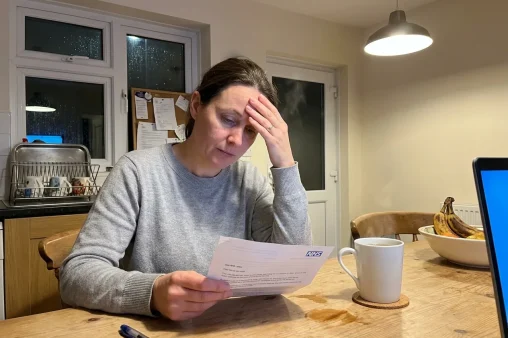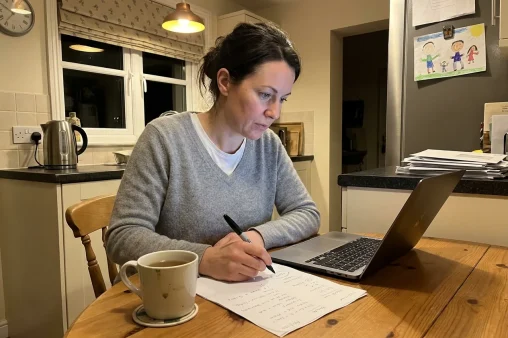
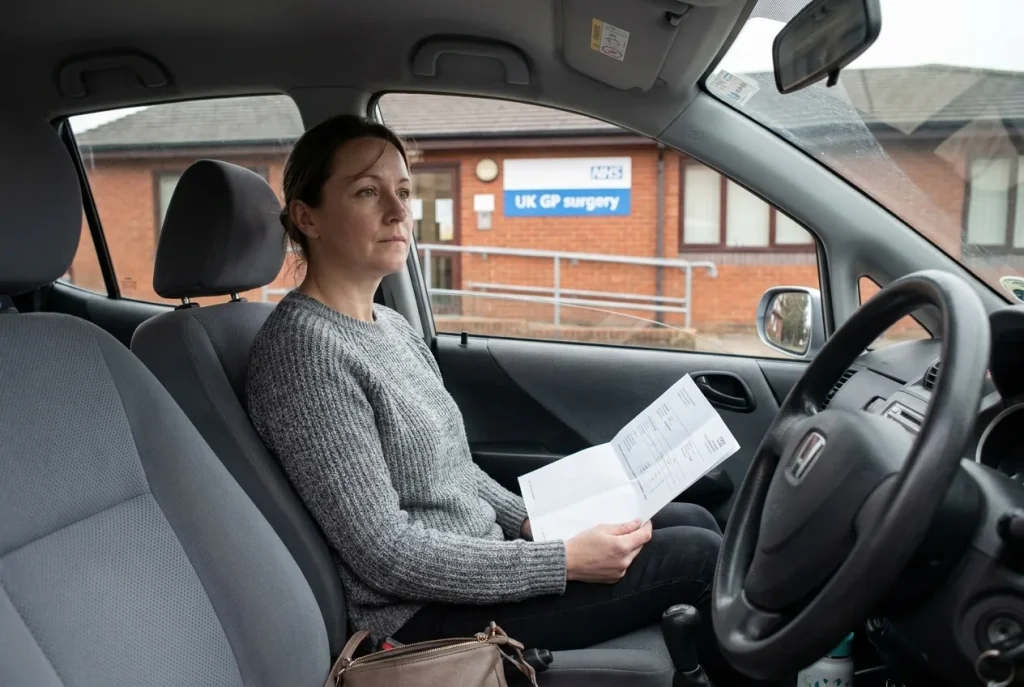
Your GP ran the blood tests. Everything came back “normal.” But you’re still exhausted by 3pm, still dragging yourself through the afternoon on caffeine and willpower, and nobody can tell you why.
Right, so here’s the thing. Conventional medicine and holistic root cause healing investigate fundamentally different things. Your GP tests blood chemistry. That’s irreplaceable for catching thyroid disease, anaemia and autoimmune conditions.
But when those tests come back “normal” and you don’t meet the criteria for Myalgic Encephalomyelitis/Chronic Fatigue Syndrome (ME/CFS), the NHS investigation pathway formally concludes with “watchful waiting” and a review appointment. No further routine investigation. For you, that means the system has decided there’s nothing more to look for.
Holistic root cause healing investigates what blood tests structurally cannot. When the fatigue started. What was happening in your life at that point. Whether your body is carrying an emotional shock, grief or sustained stress that never got resolved.
Neither approach is universally better. The right one depends entirely on where you are now.
I’m Sameena Khan. I’m a clinical homeopath with 30 years of practice, and I specialise in holistic root cause healing through bioenergetic scanning, homeopathy, hypnotherapy and coaching. So yes, I’m biased towards this approach.
But here’s what I’ll also tell you. If your fatigue came on suddenly, if you’re experiencing new or alarming symptoms, or if you’ve never had a basic blood panel done, your GP is the right first step, not me. I’d say that to your face during the free 30-minute health audit. I’ve turned people away for exactly this reason, and I’ll explain one of those situations later in this article.
Holistic root cause healing is for the woman whose medical investigations have reached a dead end but whose body is still telling her something is wrong.
Key Takeaways
- Conventional medicine tests blood chemistry and rules out serious disease. That step is irreplaceable and should always come first
- When standard tests return “normal,” the NHS fatigue pathway formally ends at “watchful waiting,” with no further routine investigation
- Holistic root cause healing investigates the emotional, energetic and lifestyle origins that no blood marker can detect
- The right choice depends on whether you have a medical baseline, whether your investigations have hit a dead end, and whether your fatigue correlates with a specific life event
- Five self-assessment questions at the end will tell you which path to take first
Looking for a specific part of this comparison?
- Want to understand exactly what your GP tests and where that pathway stops? Start with the conventional medicine section.
- Trying to understand what holistic root cause healing actually does differently? Read how the holistic investigation works.
- Just want the side-by-side comparison? Jump to the comparison table.
- Ready to decide which path fits your situation? Go straight to the five decision questions.
What does conventional medicine actually investigate when you report chronic fatigue?
Fewer than ten biomarkers. That’s what the NHS fatigue blood panel actually tests. And when they all come back “in range,” the investigation is essentially over.National Institute for Health and Care Excellence (NICE) guidelines lay out the panel. Full Blood Count (FBC) for anaemia. Thyroid function tests. HbA1c for diabetes. Ferritin for iron stores. C-reactive protein (CRP) or erythrocyte sedimentation rate (ESR) for inflammation. Urinalysis.
Each one matters. If your thyroid isn’t working properly, a blood test catches it. If you’re severely anaemic, it shows.
Conventional medicine does this well, and it does it free on the NHS.
But here’s what nobody in that GP appointment explains to you. The “normal” ranges those results are measured against are population averages. Not personalised thresholds for the individual woman sitting in that consulting room. Your thyroid function or iron stores could be technically “in range” but functionally suboptimal for your body, and the standard pathway has no mechanism to catch that.
And this is the bit that frustrates me.
If those tests come back “normal,” your GP should consider whether you meet ME/CFS criteria. There’s no specific test for ME/CFS. It’s diagnosed based on symptoms and by ruling other conditions out. If you meet the criteria, NICE recommends referral to a specialist team. But NHS England data from December 2025 puts the median specialist wait at 13.4 weeks, with one in twelve patients waiting over 40 weeks.
And if your tests are normal but you don’t meet ME/CFS criteria? The pathway formally ends. “Watchful waiting.” Self-management advice. A review appointment.
Let me translate that. The system says there’s nothing more to investigate.
What the standard panel doesn’t test is covered fully in our article ‘Why Do My Blood Tests Come Back Normal When I Know Something Is Wrong?‘. No diurnal cortisol profile, which maps your stress hormone rhythm across the day and reveals whether your adrenal system is depleted. It doesn’t include a comprehensive perimenopausal hormone panel. NICE only recommends follicle-stimulating hormone (FSH) testing in very specific circumstances for women aged 40 to 45. No gut microbiome analysis. No dehydroepiandrosterone (DHEA) assessment. No investigation of the Hypothalamic-Pituitary-Adrenal (HPA) axis that governs your entire stress and energy response.
A 2024 qualitative study in the British Journal of General Practice found that women aged 35 to 59 with chronic fatigue universally reported feeling dismissed when their results were normal. Every single participant said the same thing. They needed to feel believed.
The blood tests do what they’re designed to do. But they’re designed to catch disease. Not to investigate why you feel this way.
What does holistic root cause healing investigate that blood tests cannot?
When someone comes to sit across from me, the first thing I ask isn’t about their diagnosis. It’s this. When did this start? What was happening in your life at that point?
In 30 years of practice, that question is the one that most often opens everything up.
Your GP tests what’s in your blood right now. I investigate the timeline, going back months, years, sometimes decades, to find the moment your body went off track.
The body keeps score. Whatever you went through, a bereavement you never properly grieved, a betrayal that was emotionally indigestible, a year of relentless pressure you pushed through, your body stored it. And it’s been running on that disrupted programming ever since. This connection between emotional trauma and physical symptoms is something I see every single week in practice, and it’s something we explore in depth in our article ‘Can Emotional Trauma Really Cause Physical Symptoms Like IBS and Migraines?‘.
I work with what I call a three-legged stool. First leg is the root cause. Going back to when the imbalance first started, even if that’s 20 years ago. Second is symptom management, alleviating what’s happening right now so you can actually function. Third is organ support, putting the scaffolding in to hold up whichever systems have been under strain.
All three legs need to be in place. Miss one, and the stool falls over.
From my toolbox I use bioenergetic scanning, which maps what’s happening at the energetic level, things no blood test is designed to see. Constitutional homeopathy tailored to you as a whole person. Conversational hypnotherapy working with the subconscious patterns running your stress response. And coaching to help you understand the *why* behind your body’s signals.
One woman came to me who was, in her own words, crawling. Chronic fatigue. Aches everywhere. Pain that had no medical explanation. She’d been to the GP, had the blood tests, been through the referrals. Everything came back normal.
But she could barely get through the day.
When we went back, really went back, what we found wasn’t in her blood chemistry. It was in her life. She was in an oppressive relationship. The emotional suppression, the abuse she’d never spoken about. Her body was carrying all of it.
The fatigue wasn’t a mystery. It was a message.
We treated the root causes alongside the physical symptoms. Remedies to support her organs. Gradually, alongside the physical healing, remedies that also built her confidence. Coaching to help her understand *why* her body had been doing what it was doing.
She started to shift. Not because I fixed her. I can’t fix anyone. Because she understood the *why*, and we gave her the tools to change it.
Over time she found the courage to leave her abuser. I didn’t tell her to throw her husband out or divorce him. I helped her become strong. The rest was her.
When the root was addressed, the shift didn’t stay with her alone. Her whole family dynamic changed.
She told me, “I came to you crawling. You made me walk again.”
That sentence still stops me. Because it wasn’t the remedies alone and it wasn’t the coaching alone. It was the fact that somebody finally looked at the whole picture, the body and the life it was living in, and treated both at once.
I’ve seen this pattern many times. I’ve worked with women who spent 18 years going between conventional and alternative practitioners before someone finally asked the right timeline question and everything shifted. That’s what root cause healing investigates. Not your blood markers. Your story.
Side-by-side comparison – conventional medicine vs holistic root cause healing
I’ve put the whole comparison into one table. Screenshot it. Use it tonight.
Comparison of conventional medicine and holistic root cause healing for chronic fatigue by investigation method, treatment approach, cost and limitations in 2026
| What’s being compared | Conventional Medicine (NHS) | Holistic Root Cause Healing |
|---|---|---|
| What gets investigated | FBC, thyroid function, HbA1c, ferritin, CRP/ESR, urinalysis | Emotional timeline from birth to present, bioenergetic field mapping, mind-body connection patterns |
| How investigation happens | GP consultation, blood draw, lab analysis, specialist referral if threshold met | 60-90 minute case-taking consultation, bioenergetic scan, constitutional assessment |
| Treatment approach | Energy management and pacing, medication for identified conditions, specialist multidisciplinary care if ME/CFS criteria met | Bespoke homeopathic remedies, hypnotherapy for subconscious patterns, nutritional guidance, coaching |
| Typical timeline | Blood results within days. Specialist referral wait median 13.4 weeks (NHS England, December 2025) | Acute conditions within days to weeks. Chronic conditions with medication layers, months to 18 months |
| UK cost to the patient | £0 via NHS. Prescriptions at £9.90 per item | RootScan consultation at £2,222. 8-week integrated programme at £9,999. Private hormone panels from £133 to £213 |
| What it genuinely cannot do | Cannot investigate emotional root causes, diurnal cortisol rhythm, HPA-axis dysregulation, or the mind-body connection behind persistent fatigue | Cannot identify clinical conditions. Cannot prescribe medication. Cannot replace GP investigation for ruling out serious disease |
| Best starting scenario | New or persistent fatigue with no prior medical baseline. Red flag symptoms present such as unexplained weight loss, night sweats, or new lumps | Blood tests returned “normal” at least twice. Fatigue correlates with a specific life event. Currently on medications managing side effects of other medications |
The conventional pathway is free, fast for blood results, and irreplaceable for catching serious conditions. The holistic pathway costs real money, takes longer, and requires your active participation. Neither is complete on its own for every person.
When is conventional medicine genuinely the better first step?
I’ll tell someone to see their GP before they come anywhere near me. And I do it regularly. This isn’t a gesture of balance. It’s how I actually practise.
Your fatigue came on suddenly in the last few weeks. Sudden-onset exhaustion, particularly with new symptoms, needs medical investigation. NICE red flag symptoms include unexplained weight loss, persistent fever, night sweats, new lumps, shortness of breath and chest pain. These require urgent GP assessment. No bioenergetic scan replaces that.
I’ve had women contact me describing sudden fatigue alongside symptoms they hadn’t experienced before. Unexplained weight loss. Night sweats that soaked through the sheets. New pain that didn’t match anything in their history.
Those cases, I don’t take on. My response is the same every time. “Go and see a GP, get yourself a diagnosis, see what he says, get some blood tests done. Let’s rule out some serious stuff. And then come and see me.”
One woman got in touch convinced her exhaustion was emotional. She’d been through a terrible year and assumed burnout was the obvious explanation. Everything about her story pointed that way. But something about the speed of onset didn’t sit right with me. The fatigue had come on in a matter of weeks, not months. I told her to see her GP first and get the bloods done before we went any further.
Her blood tests caught something that needed immediate medical treatment. Something a bioenergetic scan from me would never have found.
That’s exactly why the medical baseline has to come first. If I’d taken her on without insisting on that step, she’d have been sitting across from me doing root cause work while a treatable condition went undiagnosed. That outcome would have been on me.
That’s how I practise. It costs me appointments. It turns away people who are ready to book and pay. But I’ve been doing this for 30 years, and the woman who needs her GP first is not the woman who needs me first. Getting that the wrong way round helps nobody.
And if it’s an emergency? “There’s A&E. Don’t wait for me.”
You’ve never had a basic blood panel. You need the baseline. You need to know whether your thyroid is functioning, whether you’re anaemic, whether there’s an inflammatory process happening. Without that, you’re guessing. And so am I.
I’ve worked alongside conventional medicine for 30 years. Not against it. I never take people off their medication. If you need antibiotics, take them. If you need steroids, take them. I’ll help you detox afterwards.
When is holistic root cause healing the stronger path?
Now here’s when the conversation shifts.
Your blood tests have come back “normal” at least twice, and you’re still exhausted. The conventional pathway has done its job, right? It’s ruled out what it can test for. But nobody has asked when the exhaustion started or what was happening in your life at that point. That’s where root cause investigation begins.
Your fatigue started during a specific period you can pinpoint. A bereavement. A divorce. A year of sustained pressure at work. If you can trace the onset to an event or a season of your life, that’s often the piece nobody in the conventional system is designed to look for.
You’re on medications managing side effects of other medications. I see this regularly. People come to me with carrier bags of drugs. The original symptom got a prescription. The side effects of that prescription got another prescription. And another. Nobody went back to ask why the original symptom appeared in the first place.
The honest limitations of holistic root cause healing
Root cause healing takes time. Conditions with 15 to 20 years of medication layers don’t shift in a week. That’s just the reality.
Some chronic autoimmune conditions respond more slowly and less predictably, even with full compliance. Every fully engaged person I’ve worked with has seen shifts, but the limitation is speed and degree.
And the evidence base for bioenergetic scanning doesn’t carry the large-scale trial data that pharmaceutical interventions have. I won’t pretend otherwise. I’ve laid all of this out in our article ‘What Can Holistic Root Cause Healing Honestly Not Fix (the Real Limitations)?‘ if you want the complete picture.
If you want purely lab-driven investigation, a functional medicine clinic running comprehensive private panels may be a better fit as your next step.
There’s no magic pill. But there is a process, and if you’re willing to do the work together, that process moves.
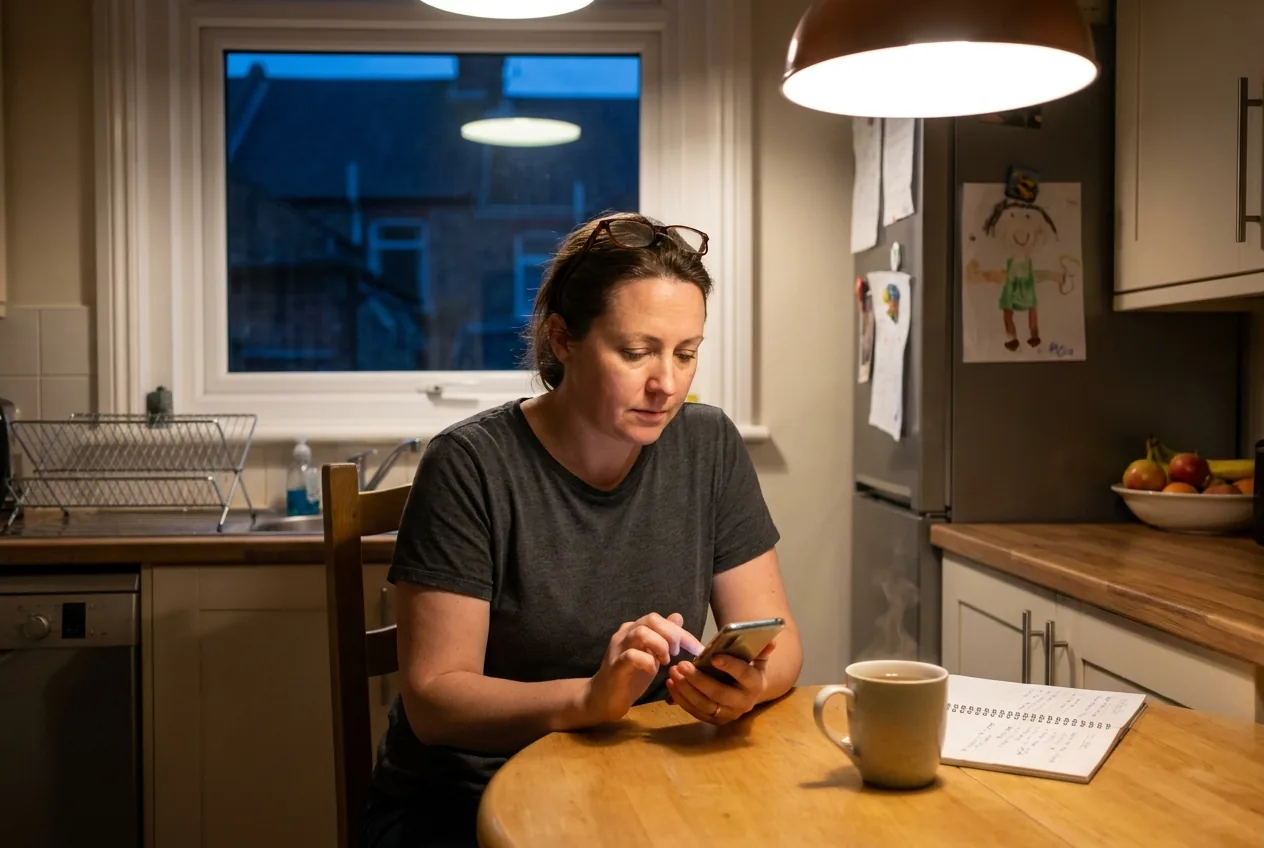
Five questions to help you decide which path to take first
Right. Let’s make this practical. Answer these tonight and your next step becomes clear.
1. Is your fatigue sudden-onset, or accompanied by unexplained weight loss, night sweats, or new lumps?
If yes, contact your GP urgently. These are red flag symptoms. They need medical investigation first. Not me.
2. Have you had a basic blood panel done in the last 12 months?
If no, start with your GP. The medical baseline comes first. Always.
3. Have your blood tests returned “normal” at least twice, yet the fatigue persists?
If yes, root cause investigation is likely where your answers lie. The conventional pathway has done what it can test for.
4. Can you pinpoint when the fatigue started and what was happening in your life at that point?
If yes, root cause investigation is likely where your answers lie. That timeline is often the key nobody has thought to turn.
5. Are you currently taking medication that manages symptoms without anyone having investigated why those original symptoms appeared?
If yes, root cause investigation is likely where your answers lie.
If you answered yes to questions 1 or 2, your next step is your GP. Full stop.
If you answered yes to questions 3, 4, or 5, the conventional pathway has likely done what it can. Root cause investigation, whether through a holistic practitioner or a functional medicine clinic, is where the next answers are.
Our honest recommendation
If you’re recognising yourself in the “normal bloods, still exhausted” pattern, I want you to know something.
Every month you stay in that limbo, pushing through, compensating, telling yourself it’ll pass, your body is adjusting to a state that isn’t sustainable. In my clinical experience, the women who come to me within two to three years of their fatigue starting respond faster and more completely than those who wait ten or fifteen years. The body’s signals don’t quieten down. They get louder. Our complete guide to burnout and chronic fatigue covers every root cause and recovery option if you want the full picture.
You now know what conventional medicine tests, where its pathway formally stops, what holistic root cause healing investigates that blood tests can’t, and which path fits your situation based on five questions you can answer tonight. That’s a different position to where you were ten minutes ago.
If you want to start without speaking to anyone, the five questions above will point the way. If you’d rather understand what the bioenergetic RootScan actually involves before making any contact, that page walks you through exactly what’s included.
And if you’re ready for a conversation, booking a free 30-minute health audit is the simplest way to find out whether I can help with your specific situation. No pressure. And if I can’t help, I’ll tell you that too.
Sameena Khan
Founder, Rise Radiantly
Frequently Asked Questions
Can I do both conventional medicine and holistic healing at the same time?
Yes, and I’d encourage it. I never take anyone off their medication. I work alongside whatever your GP has prescribed. If you need antibiotics, take them. I’ll help you detox afterwards. These aren’t opposing choices. They investigate different things.
Is holistic root cause healing scientifically proven?
Honest answer. The evidence base varies by modality. Bioenergetic scanning doesn’t carry the large-scale trial data that pharmaceutical interventions have. What I offer is 30 years of clinical observation and a method that’s helped over a thousand people. If you want purely lab-based investigation, a functional medicine clinic running comprehensive private blood and hormone panels may be a stronger starting point for you.
How long does holistic root cause healing take?
It depends on how long the condition has been present and how many medication layers are involved. Acute conditions can shift in days. Long-standing conditions with 15-plus years of history typically need months. I’ll give you an honest estimate during a free 30-minute health audit.
What if I’ve tried other holistic practitioners and nothing worked?
Not all practitioners are the same, just as not all GPs are the same. My approach combines bioenergetic scanning, homeopathy, hypnotherapy and coaching under one practitioner who connects the dots between them. Most people who come to me from another homeopath say the same thing. They didn’t feel properly listened to. I take a full case from birth to now because the root is often decades old.
Will you tell me if holistic healing isn’t right for my situation?
Yes. If someone contacts me and their symptoms suggest something conventional medicine needs to investigate first, I direct them to their GP. If I don’t think I can help, I’ll say so. It wastes both our time if I don’t.
Still unsure which path fits? Go back to the five decision questions and let your answers point the way. If you’d like to talk it through, a free 30-minute health audit is there when you’re ready.