The practitioner with the longest list of qualifications on their website and the most polished testimonial page isn’t necessarily the one most likely to actually help you. And if you’re choosing between holistic practitioners right now, the criteria you’re probably using are almost certainly the wrong ones.
For people who need laboratory-backed biochemical data driving their treatment, Anna Marsh is the strongest option evaluated in this guide. For complex chronic conditions that have resisted years of both conventional and alternative approaches, the criteria point toward an integrated root-cause practitioner.
What actually separates these options comes down to seven things you won’t find on most homepages. Active years seeing patients regularly, not years since they qualified. Whether they investigate root causes or manage symptoms. Where their qualifications sit in the real hierarchy. Whether they’ll work alongside your medication. What support exists between appointments. Whether they integrate multiple approaches or offer one discipline. And whether they’ll honestly tell you who they can’t help.
Full disclosure. I’m Sameena Khan, founder of Rise Radiantly, and I’ve included my own practice as one of five UK practitioners evaluated in this guide. I’ve applied identical criteria to my own entry, including where I’m not the strongest choice. If your priority is laboratory-verified biochemical data and functional medicine testing, Anna Marsh is a stronger fit for you than I am.
The trust here doesn’t come from leaving myself off the list. It comes from letting you see exactly how every option, including mine, measures up.
By the end, you’ll have a seven-criteria framework, a comparison of named UK practitioners, and three questions that’ll reveal more in a 15-minute discovery call than hours of website browsing.
Key Takeaways
- The criteria most buyers use (website polish, qualification list length, testimonial volume) predict marketing budget, not whether the practitioner will actually find your root cause.
- Active clinical years with a full caseload matters more than years since qualification. Two practitioners using identical scanning equipment can reach completely different conclusions depending on their clinical depth.
- A practitioner who won’t work alongside your current medication is a safety red flag, not a philosophical choice.
- For recent, straightforward conditions, a standalone homeopath at £80 to £200 per session may genuinely be the better and more affordable choice.
- Three specific questions on a discovery call will tell you more about a practitioner’s approach than anything on their website.
Here for one specific thing?
- Already comparing practitioners and want a side-by-side evaluation? Jump to the comparison table.
- Just need questions to ask before you book? See the three discovery call questions.
- Not sure you even need a premium practitioner? Read when a cheaper option is genuinely better.
Why do most buyers choose holistic practitioners based on the wrong criteria?
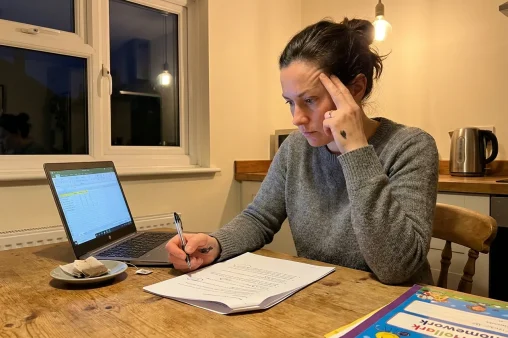
You’ve got three browser tabs open. Three practitioner websites, all professionally designed, all claiming root-cause healing, all featuring glowing testimonials from women who sound exactly like you.
You scroll between them and you genuinely can’t tell what separates one from another.
That frustration isn’t your failing. It’s an industry problem.
There’s currently no legal regulation of homeopaths in the UK, which means anyone can call themselves a holistic practitioner after a weekend course. The Advertising Standards Authority (ASA) has actively enforced against practitioners making unsubstantiated health claims on their own websites. So a polished homepage with bold promises may actually signal non-compliance rather than quality.
And most “best holistic practitioner” lists online? They’re either affiliate-funded recommendation pages or thinly disguised self-promotion. You can check this yourself in thirty minutes. Look at whether any list you’ve found discloses affiliate relationships, mentions a single honest trade-off, or names a scenario where the recommended practitioner isn’t the right fit.
The three mistakes I see women make most often
Choosing by website aesthetics. A beautiful site costs money, not expertise. I’ve seen practitioners with stunning websites who’ve been qualified for years but see a handful of people a month. And I’ve seen practitioners with the plainest website you’ve ever visited who’ve sat across from thousands of clients and done the deep work. One of those gives you a better chance. It’s not the one with the graphic designer.
Choosing by qualification list length. A string of letters after someone’s name can mean anything from a four-year supervised clinical degree to a weekend certificate. Without understanding the hierarchy, a longer list can actually obscure a thinner foundation. Three weekend certificates don’t equal a Licentiate. I’ll explain what that means shortly.
Choosing by testimonial volume. The ASA requires robust evidence to support health improvement claims in marketing materials. If a practitioner’s website is full of testimonials implying they cured named conditions, that tells you more about their attitude to advertising regulations than their clinical skill.
The criteria that actually predict outcomes are almost never on the homepage. You have to know what to look for.
What are the seven criteria that actually predict whether a holistic practitioner will help?
I’ll walk you through these from most important to most commonly overlooked.
1. Active clinical years with a regular caseload
This isn’t years since qualification. It’s years of actually sitting across from people, taking cases, following up, week after week.
A practitioner who qualified 20 years ago but sees three clients a month has fundamentally different clinical pattern recognition from one qualified 10 years ago who’s been full-time with a full caseload, right? Twenty years of part-time practice from a spare room is not the same as ten years of being in it every single day.
No UK professional body publishes caseload data, so you can’t verify this from a register alone. The Professional Standards Authority (PSA) requires accredited registers to monitor continuing professional development (CPD) and activity as a proxy for sustained competence. But the register can’t tell you whether someone’s been practising full-time or pottering about. That gap only a direct conversation can fill.
2. Root-cause investigation depth
This is the one that separates good from genuinely exceptional.
I saw this vividly when I attended Qest4 bioenergetic scanning training in Utah. Every practitioner in the room used identical equipment. Same machine. Same software. Same readouts.
But the interpretations were worlds apart.
The psychiatrists focused on mental-emotional patterns. The nutritionists zeroed in on deficiencies. The kinesiologists looked at movement. I was the only homeopath in the room, and I was looking at the full timeline, the mind-body connections, the root-cause patterns that 30 years of clinical case-taking trains you to see.
Same machine. Completely different depth.
I’ve seen this play out with clients too. A woman came to me having already been to another practitioner for a similar scan. She walked away with four or five supplements. Lots of money spent. But nobody took a proper case history. Nobody asked when her symptoms started. Nobody asked what was happening in her life at that point.
When she came to me, we went deeper. We looked at the timeline. We looked at what the scan was really saying underneath the surface data. I didn’t just read the numbers. I read *her*. The difference wasn’t the technology. It was who was reading it.
She booked her sister in for the following week.
3. Qualification hierarchy
Not all qualifications are equal, right? In UK homeopathy, a Bachelor of Science degree (BSc (Hons)) in Homeopathy sits at the top. I hold one myself, from Middlesex University. They don’t offer it any more.
Below that is the Licentiate of the Centre for Homeopathic Education (LCHE). That’s three to four years of seeing real patients under supervision. The Alliance of Registered Homeopaths (ARH) requires graduation from a course accredited by the Independent Homeopathy Association (IHA) for membership.
Below that are diplomas of varying depth. And at the bottom are weekend certifications that wouldn’t get you through the door of any serious professional register.
Three weekend certificates don’t equal a Licentiate.
And here’s the piece most people miss. “Qualified for 20 years” doesn’t tell you “practising actively for 20 years.” A practitioner can qualify, see a handful of clients a year, and still list two decades of experience on their website. I’ll show you how to check what you can in the verification section below. But some gaps? Only a direct conversation can fill those.
4. Willingness to work alongside medication
This is a non-negotiable safety criterion.
Some homeopaths won’t treat patients on medication. I disagree with this completely. If you need to take the antibiotics, take them. If you need the steroids, take them. I’ll help you support your body afterwards.
Any practitioner who demands you stop prescribed medication before they’ll work with you is creating a genuine safety risk. General Medical Council (GMC) guidance on decision-making and consent is clear on this point. And frankly, it tells you something about their clinical confidence. If they can only work with you when you’re not on anything else, that’s a limitation of their approach, not a requirement for healing.
5. Structured support between appointments
Most of the real work happens between sessions. Does the practitioner give you homework? Can you reach them if something comes up? Is there an action plan you walk away with? Or do you leave the door and hear nothing until your next appointment in four weeks?
I give people tools. Breathwork. Journalling. Specific things to watch for. Because the consultation is just the beginning. What you do with it between sessions, that’s where the shifts actually happen.
6. Multi-modality integration versus single discipline
A practitioner who combines scanning, homeopathy, hypnotherapy and coaching under one roof sees connections that a single-discipline practitioner working alone can’t. Which setup actually gets results, though, depends on how well that integration is coordinated — something we examine in our article ‘One Integrated Practitioner vs Multiple Specialists – Which Actually Gets Results?‘.
Complexity isn’t automatically better.NHS guidance on myalgic encephalomyelitis/chronic fatigue syndrome (ME/CFS) explicitly warns that inappropriately tailored multi-component approaches can cause harm. Integration is powerful when it’s coordinated and bespoke to you. It’s risky when it’s a scattergun of modalities thrown at the wall to see what sticks.
7. Honest self-disqualification
This is the criterion most buyers never think to check. And it tells you the most.
I learned this one through an experience I’ll never forget. Early in my practice, a man with schizophrenia was referred to me. His wife had arranged the appointment. I didn’t know the full picture of his condition going in, and nothing in my training had prepared me for what happened during that session.
Partway through, he became severely agitated. He refused to leave the house. He went to the porchway and started banging his head against the wall. Hard. Repeatedly. I was home alone. There was nobody to call in from the next room.
In that moment I was genuinely frightened. Not just for my safety, but because I was acutely aware that nothing in my clinical toolbox could stabilise what was happening in front of me. This man needed psychiatric care. Not homeopathy. My continued involvement would have been dangerous for both of us.
Afterwards, his wife and a close friend came back separately to beg me to keep seeing him. They were desperate. They’d seen how hard it was to get him through the door of any practitioner at all, and they were terrified of losing that foothold. I understood their desperation completely.
But I refused. I had to. Not because I didn’t care about his suffering, but because treating him was beyond my competence, and pretending otherwise would have been the most harmful thing I could do.
That experience drew a permanent line in my practice. From that point on, I’ve been explicit. I don’t treat schizophrenia or severe bipolar disorder. I refer those cases to psychiatric professionals. If there’s an emergency, there’s Accident and Emergency (A&E). Don’t wait for me.
A practitioner who claims to help with everything is either inexperienced or selling confidence they haven’t earned. The willingness to name what you won’t treat, and explain why, is one of the most reliable signals of genuine clinical maturity. It means they’ve encountered their limits and have the integrity to honour them.
How do named UK holistic practitioners compare against these criteria?
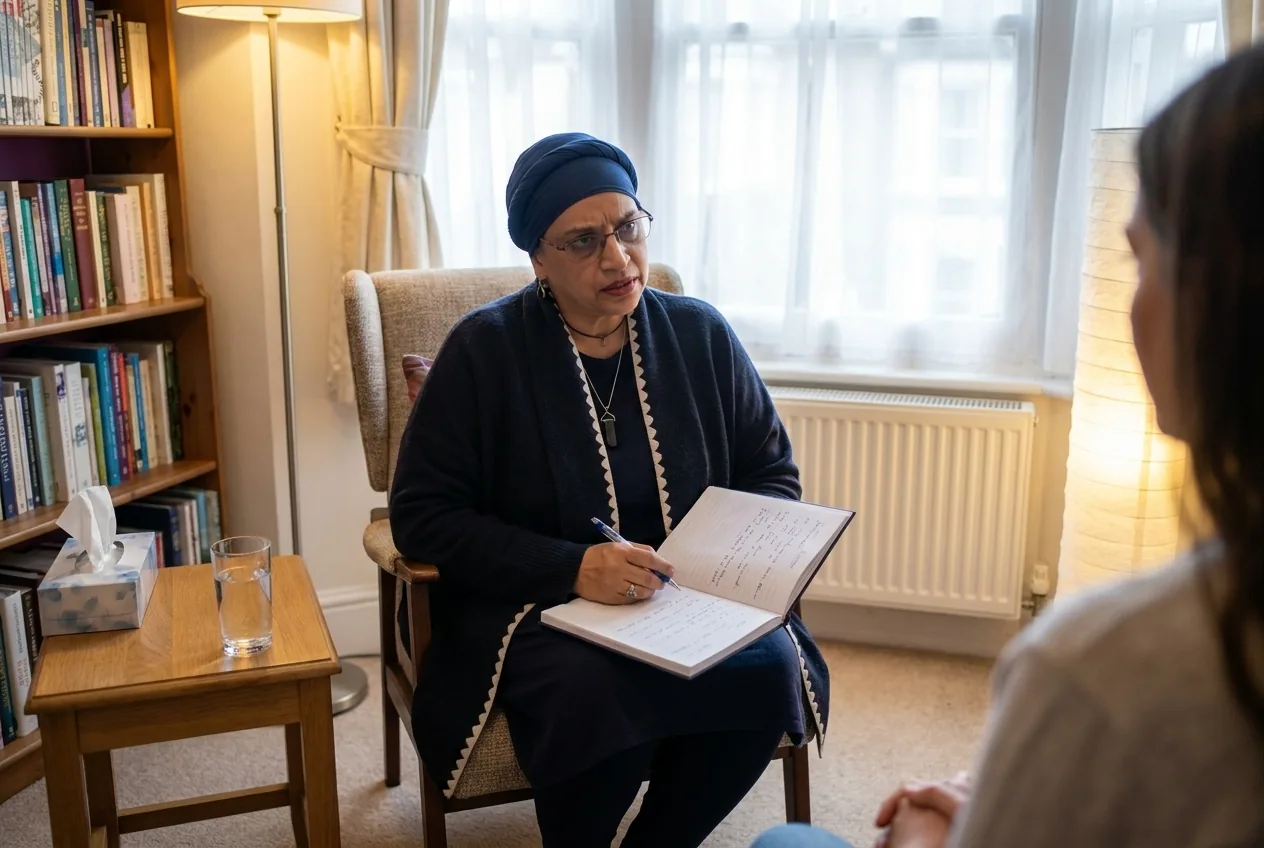
Five UK practitioners, including myself, evaluated against the criteria above. Every claim here is drawn from publicly available information. Where I couldn’t independently verify something, I’ve said so.
Comparison of five UK holistic practitioners against evaluation criteria, based on publicly available information (2026)
| Criterion | Anna Marsh | Lauren Vaknine | Simone Thomas Wellness | Lisa Strbac | Rise Radiantly (Sameena Khan) |
|---|---|---|---|---|---|
| Primary approach | Functional medicine, somatic coaching, NES Health scanning | Classical homeopathy, coaching, RISE membership | Not independently verifiable from public sources | Homeopathy education, courses, Healy device, Human Design | Clinical homeopathy, Qest4 bioenergetic scanning, Paul McKenna-trained hypnotherapy, coaching |
| Pricing published on website | No. Discovery call required | No. Waitlist-based | Not independently verifiable | Variable. Seasonal booking model | Yes. £2,222 (RootScan), £9,999 (8-week programme) |
| Highest stated qualification | MSc Personalised Nutrition (First Class), Institute for Functional Medicine (IFM) certified, BSc Biochemistry | Not prominently displayed on reviewed public materials | Not independently verifiable | LCHE plus BSc(Hons) Homeopathy | BSc Homeopathy (Middlesex University), Licentiate to Practise |
| Medication policy stated publicly | Yes. “Medicated sleep is better than no sleep at all” | Not found in reviewed public materials | Not independently verifiable | Medical disclaimer present. “Not a substitute for medical care” | Yes. “I never take people off medication” |
| States conditions they don’t treat | Focuses specifically on ME/CFS, fibromyalgia, Postural Tachycardia Syndrome (PoTS) | Not found in reviewed public materials | Not independently verifiable | Disclaimer noting she is “not a Medical Doctor” | Yes. Names specific exclusions (schizophrenia, severe bipolar). Refers to GP for undiagnosed symptoms |
Anna Marsh is the strongest choice on this list if you want hard biochemical data driving your treatment. Her IFM certification and Master’s in Personalised Nutrition mean she can order and interpret lab tests, Dried Urine Test for Comprehensive Hormones (DUTCH) panels and gastrointestinal (GI) mapping. Nobody else here offers that.
She also brings over 200 hours of trauma training and Somatic Experiencing. If you need that scientific validation to feel safe before you commit, Anna wins this criterion outright.
The limitation? Pricing opacity. You won’t know the full cost until after a discovery call, and functional medicine testing she recommends can add significant cost on top of the consultation.
Lauren Vaknine brings a powerful personal healing story. She recovered from wheelchair-bound juvenile arthritis through homeopathy, and that lived experience creates real credibility with women stuck in chronic illness.
Her approach combines classical homeopathy with coaching. Of the five practitioners here, it’s the closest in philosophy to my own. The distinction is that I layer scanning and hypnotherapy on top of the homeopathy, while Lauren works within the classical tradition.
The gap is transparency. I couldn’t find published pricing, a stated medication policy, or documented scope boundaries from her public materials. That doesn’t mean they don’t exist. It means you can’t evaluate them before making contact.
Simone Thomas Wellness appears frequently in UK holistic practitioner searches, with reported Harley Street and Bournemouth locations. When I researched this guide, I wasn’t able to independently verify their qualifications, services, approach to medication, or treatment philosophy from publicly available sources.
If you’re considering them, you’d need to gather that information directly. The fact that it isn’t publicly accessible is itself useful evaluation data.
Lisa Strbac holds the LCHE plus BSc(Hons) in Homeopathy. That puts her at the very top of the UK qualification hierarchy. Her model is fundamentally education-focused. She teaches families to use homeopathy at home through courses, books, and her Academy of Integrative Homeopathy.
If you want to learn to handle everyday acute situations yourself, rather than relying on a practitioner for every sniffle, Lisa’s approach is genuinely the better fit. She isn’t the right choice if you need bespoke clinical case-taking for a complex chronic condition that’s persisted for years. That’s a different skill set.
Rise Radiantly is my practice. I combine clinical homeopathy, Qest4 bioenergetic scanning, conversational hypnotherapy (I trained with Paul McKenna) and coaching into a single integrated approach. Everything works together under one roof with one practitioner who understands the full picture.
The limitations are real. It’s expensive. The RootScan starts at £2,222 and the 8-week programme is £9,999. I take only four clients per quarter for the immersion, so availability is limited.
And I don’t offer laboratory testing. If you need biochemical data before you’ll trust a treatment direction, Anna Marsh is the stronger starting point.
Who each option is not for
Anna Marsh is not the right fit if you need to know exactly what you’ll spend upfront. Her pricing isn’t published, and functional medicine testing adds significant cost beyond the consultation itself.
Lauren Vaknine is not the right fit if you need to evaluate a practitioner’s medication stance, scope boundaries and pricing before committing to initial contact. That information wasn’t publicly available when I researched this guide.
Simone Thomas Wellness is not the right fit if you need to verify a practitioner’s credentials independently before booking.
Lisa Strbac is not the right fit if you need bespoke clinical case-taking for a complex, long-standing condition. Her strength is education, not one-to-one chronic case management.
Rise Radiantly is not the right fit if your budget is under £2,000, you need laboratory testing as part of your assessment, or you need an appointment within the next few weeks. I’m expensive, I don’t do blood tests, and my availability is genuinely limited.
How do I actually check what a practitioner is telling me?
You’ve got the criteria. Now the practical question. How do you verify any of this before you book?
Start with the registers. Go to the Complementary and Natural Healthcare Council (CNHC) website and search by name or location. The CNHC is the only complementary therapy register accredited by the PSA, which means its members have met national occupational standards, carry professional insurance and are bound by a complaints process.
If someone’s on that register, it’s the strongest independent quality check available for a complementary practitioner in the UK.
For homeopaths specifically, the ARH has its own searchable register. Membership requires graduation from an IHA-accredited course.
Here’s what those registers can confirm. Qualifications. Insurance. Adherence to a code of conduct.
Here’s what they can’t. How many clients someone actually sees week to week. Whether they’ve been practising full-time for decades or part-time for two years. Whether they investigate root causes or hand out a supplement list and send you home.
I’m on the ARH register. I’ve held the BSc and the Licentiate for years. But honestly? If I was only seeing three clients a month, my registration wouldn’t flag that. No register would.
For those gaps, you need the discovery call. Our article ‘What Actually Happens in My First Holistic Healing Consultation (an Honest Walkthrough)?‘ covers what to expect and what questions to ask. The registers get you to a shortlist. The three questions in the next section get you to the right practitioner.
When should I choose a simpler, less expensive practitioner instead?
An integrated practitioner charging £2,000 to £10,000 isn’t automatically better than a skilled standalone homeopath at £120 per session. As we explore in our article ‘Is Holistic Root Cause Healing Actually Worth the Investment?‘, the answer depends entirely on your situation. Sometimes the criteria point you away from a premium option entirely.
If your condition is recent and straightforward. You developed symptoms three months ago, you know what triggered them, and you haven’t been through years of failed treatments. A standalone registered homeopath at £80 to £200 for a first consultation is proportionate and may sort it quickly. The premium integration adds complexity you don’t need.
If your issue is primarily dietary. A nutritional therapist registered with the British Association for Nutrition and Lifestyle Medicine (BANT) can design targeted protocols for around £90 per session. If food is genuinely the driver, that’s the most direct route.
If you have new or potentially serious symptoms. A GP is the only correct first step. No holistic practitioner, regardless of how many criteria they score well on, replaces that clinical baseline.
If someone tells me they’ve got symptoms they haven’t had checked, I say the same thing every time. Go and see your GP first. Get the bloods done. Rule out the serious stuff. Then come and see me.
A less expensive option is only the wrong choice if the practitioner still isn’t applying the criteria that matter. Remember the woman I mentioned earlier? She didn’t need a more expensive scan. She needed someone who asked when her symptoms started and what was happening in her life at that point. A good practitioner at any price point should be doing that.
When should you look beyond this list entirely?
Sometimes none of us is the right answer.
If you’re in acute crisis. Mental health emergencies need statutory mental health services. If you’re in danger, that’s A&E and your GP. Not me. Not any of us on this list.
If the problem is structural, not personal. If your burnout comes from a toxic workplace with an unsustainable workload, individual healing programmes can’t fix what needs an organisational solution. I can help you with the physical and emotional fallout, but no amount of root-cause work changes a 70-hour week with a manager who’s making your life impossible.
If you need a formal medical diagnosis. For insurance claims, employment purposes or legal reasons, you need a GMC-registered doctor. A bioenergetic scan doesn’t produce a medical diagnosis, and any practitioner who implies otherwise is overstepping their scope.
Even when holistic healing is the right approach, it comes with honest limitations worth understanding before you commit.

What three questions should I ask on a health audit call?
These three questions will tell you more in 30 minutes than three hours of scrolling through someone’s website – book a free 30-minute health audit here.
“What conditions do you refuse to treat, and why?”
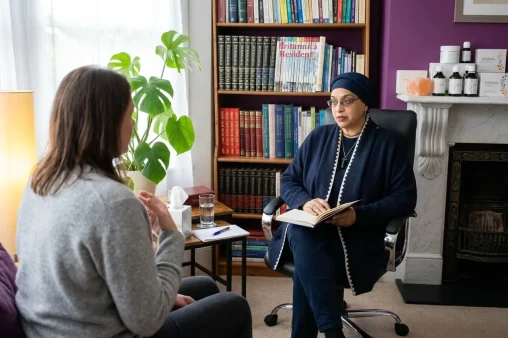
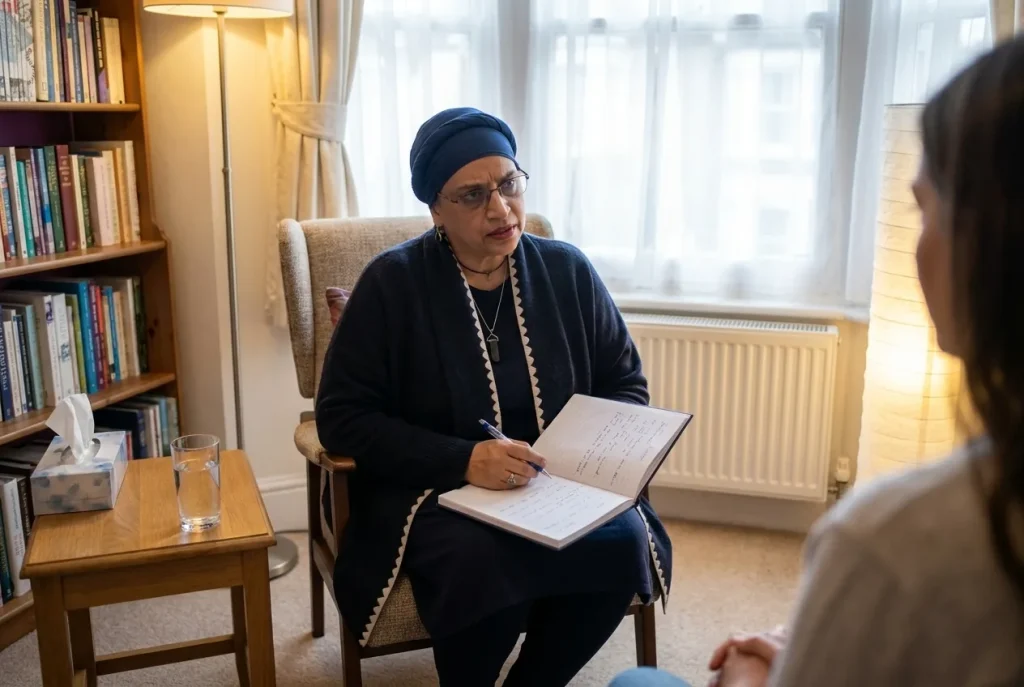
A good answer names specific conditions with clinical reasoning. “I don’t treat schizophrenia or severe bipolar because those require psychiatric oversight, and I refer to appropriate specialists.” That tells you the practitioner knows their limits. They’ve encountered the edge of what they can safely do, and they respect it.
A concerning answer is any version of “I can help with everything.” A practitioner without clear boundaries is either inexperienced or hasn’t yet had the clinical encounter that teaches you where your line is.
“Do I need to stop my current medication to work with you?”
A good answer is unequivocal. “No. I work alongside your medication. Any changes to prescribed drugs happen through your GP, not through me.”
A concerning answer conditions treatment on stopping medication or implies your medication is “blocking” the healing. This isn’t a philosophical disagreement. It’s a safety issue. I’ve been saying this for 30 years. I never take people off their medication. If you need the antibiotics, take them. I’ll help you detox afterwards.
“If two women came to you with the same IBS diagnosis, how differently would you treat them?”
A good answer lights up. You can hear it in their voice. They’ll explain that the same label can have entirely different underlying drivers, so the treatment would be completely different for each person. “Your IBS remedy would be different to your colleague’s because you are a different person with a different history and a different root cause.” One size doesn’t fit all. It never has.
A concerning answer describes a standard protocol applied to all IBS clients. Same supplements, same dietary sheet, same follow-up schedule regardless of who’s sitting across from them. That’s cutting the weeds at the top. It looks tidy for a while. But the roots are still growing underneath.
Which practitioner type fits my specific situation?
One size doesn’t fit all here either. Your situation is different from the next woman’s, and the right practitioner type depends on where you actually are right now.
Recently diagnosed, exploring for the first time
Start with your GP to establish a clinical baseline. Then consider a standalone registered homeopath or nutritional therapist.
Your priority criteria at this stage are relevant clinical qualifications, safety awareness and straightforward access. A premium integrated programme isn’t warranted yet. Save your money for something more targeted to where you are.
Chronic condition for years, nothing has worked
I see this all the time. A woman comes to me having already spent years seeing different practitioners. She gets so far, then the symptoms come back. She’s done the supplements, the elimination diets, the talking therapy. She arrives exhausted and half-expecting to be disappointed again.
For her, the priority criteria shift to root-cause investigation depth, multi-modality integration, and demonstrated experience with complex cases. This is where a practitioner who can combine scanning, remedies, subconscious work and coaching is most likely to find what others have missed.
Be prepared to invest more. Financially and in personal commitment. Because if you’ve been dealing with this for years, the roots go deeper than a single modality on its own can reach.
Approaching burnout, no formal diagnosis
See your GP first to rule out anaemia, thyroid issues and other physical causes. I’ve been in that place myself. Burnout doesn’t announce itself with a formal diagnosis. It creeps up while you’re busy being the strong one, holding everything together, telling yourself you’re fine.
If you want the broader picture first, our burnout and chronic fatigue articles cover the full landscape of causes and recovery.
Once the GP has done the bloods, consider a practitioner who combines clinical assessment with coaching. The coaching element matters as much as the clinical one here. You need practical tools for between sessions. Not just a remedy and a follow-up appointment in four weeks.
Every month you spend choosing based on website polish rather than clinical depth is a month your root cause stays unaddressed.
In my 30 years, I’ve sat across from women who spent 12 to 18 months, and thousands of pounds, on practitioners who managed their symptoms without ever asking when those symptoms started. That isn’t just money lost. It’s time you can’t get back. And it’s one more round of “I’ve tried everything” eroding your belief that anything ever will work.
This framework won’t make the decision risk-free. No framework can. Every therapeutic relationship has an element of “will this work for *me* specifically?” that you can’t know until you’re in it. But you can dramatically reduce the odds of spending another six months and another two thousand pounds on the wrong practitioner.
You now have the seven criteria, the comparison, and the three questions.
The framework itself is your first tool. You can apply it to any practitioner you’re considering without speaking to anyone. If you want to apply it in a conversation, I offer a free 30-minute health audit where you can ask me those same three questions and hear my honest answers. If I’m not the right fit, I’ll tell you. I’d rather point you to the right practitioner than waste both our time.
What matters is that you stop scrolling between three identical-looking websites at 10pm and start asking the questions that actually tell you something.
Sameena Khan
Founder, Rise Radiantly
Frequently asked questions
Can I check a practitioner’s registration online?
Yes. Go to cnhc.org.uk and search by name or postcode. If they’re listed, you’ll see their registered therapies, practice location and whether they offer remote sessions. The CNHC is the only complementary therapy register with PSA accreditation. For homeopaths specifically, try the ARH register at a-r-h.org. Neither register tells you how actively someone is practising. That’s still a question for the discovery call.
Should I ask to see case studies or before-and-after evidence?
You can ask, but be cautious about what it tells you. The ASA requires robust evidence to support health improvement claims in marketing. A practitioner who readily shares extensive “miracle cure” testimonials might be telling you more about their marketing approach than their clinical outcomes. I’d rather you asked for an honest description of a typical case and how long results tend to take. That tells you far more.
What if I’ve already started with one practitioner and it isn’t working?
That isn’t failing. It’s data. Apply the seven criteria to your current practitioner and identify where the gap is. If the approach has been symptom-focused without root-cause investigation, that’s likely what’s missing. A good new practitioner will want to understand what you’ve already tried and build from there, not start from scratch as if nothing came before.
Will my private health insurance cover holistic consultations?
In most cases, no. Some Bupa and Vitality policies include complementary therapies as an optional extra, but conditions are restrictive. Bupa explicitly excludes reimbursement for homeopathic remedies and products, even when the consultation itself might be covered. The practical reality is that most holistic consultations in the UK are privately funded. Plan accordingly.
What if I’m unsure whether I need a GP or a holistic practitioner?
See your GP first. Always. Any new, unexplained or worsening symptoms need clinical investigation before any complementary approach begins. I say this to every person who contacts me with something that hasn’t been checked. A responsible holistic practitioner will tell you the same thing. If someone discourages you from seeing a doctor, that’s one of the clearest red flags there is.
Still have questions about your own situation? A free 30-minute health audit is the simplest way to find out whether I can help, or whether someone else would be a better fit. No cost, no obligation, just a straight conversation.