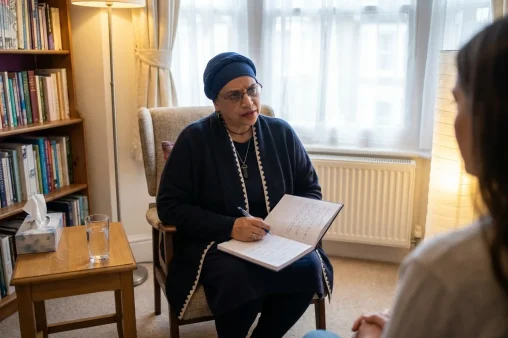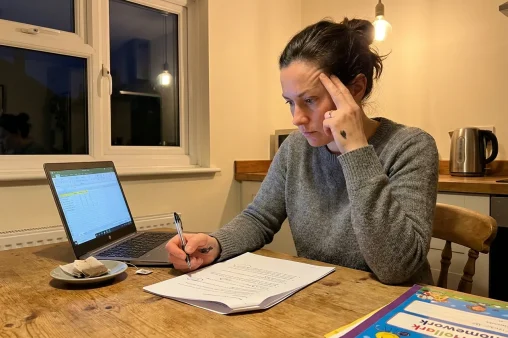

The woman paying £95 a month for holistic treatment is almost certainly spending more than the woman who invested ten thousand.
I know that sounds backwards. But I’ve watched it play out for 30 years. A woman sees a homeopath for her skin at £120 a month. A hypnotherapist for her anxiety at £100 a month. A nutritionist for her energy levels at £150 a month.
That’s £4,440 a year, with nobody connecting the dots. And the 10x gap between practitioners? It comes down to five specific variables. Most of them have nothing to do with the label on the door.
Her gut, her anxiety, her fatigue. Three separate problems being treated by three separate people who have never spoken to each other. Meanwhile, the woman who chose a comprehensive programme paid more upfront, finished in eight weeks, and worked with a single practitioner who took her full timeline from birth to now.
By the end of this article, you’ll know what each variable is, what the different price tiers look like in the UK right now, and whether the premium approach makes sense for your situation. Or whether the £95 session is genuinely the right call.
I run a practice at the premium end of this market, so I’ll be straight about that. But what I’m about to share applies whether you ever work with me or not.
Key Takeaways
- Five variables explain the entire price gap from a £75 session to a £10,000+ programme. You can check all five in one phone call before you commit a penny.
- A basic session runs £50-£200. A structured programme is £2,000-£15,000+. And yes, there are situations where the cheaper option is genuinely the better choice.
- If you’re seeing separate practitioners, add up your last twelve months. The number usually shocks people. Fragmented care often costs more than a comprehensive programme, with nobody connecting the physical symptoms to their emotional roots.
Here for one specific thing?
- Already doing the maths on what you’ve spent across separate practitioners? Jump to the hidden annual cost.
- Want to know what each price level actually gets you? See the three UK tiers.
- Just want the five questions you can take to any practitioner? Here they are.
What are the five variables that actually create the price gap?
Five factors explain why one practitioner charges £75 and another charges £2,000+ for what looks like a similar service on paper. Once you see them clearly, the pricing stops feeling arbitrary.
1. Qualification depth and breadth
A diploma in one modality and a degree-level qualification across multiple disciplines are not the same thing, even if both practitioners use the word “holistic.” According to Prospects.ac.uk, a typical UK homeopathy consultation runs between £60 and £135.
But that range shifts the moment a practitioner also holds qualifications in hypnotherapy, counselling, nutritional therapy, energy healing, and mind-body connection work.
A single-modality practitioner at £75-£135 sees your symptoms through one window. Add a second discipline and the fee typically moves to £120-£250 per session. Add scanning, counselling, and coaching nutritional expertise on top, and you’re looking at £250-£600 at the mid-range or £2,000+ for a structured programme.
Each one adds another lens. So instead of seeing your gut in isolation, the practitioner is connecting your digestion to your stress, your stress to something that happened in your childhood, your childhood to why you can’t sleep now.
I’ll be upfront about this. No robust UK study directly links higher formal qualifications to better patient outcomes in complementary medicine. The Professional Standards Authority’s accreditation reports set minimum entry requirements, but nobody has published research comparing outcomes at diploma level versus degree level.
What I see in practice, though, is that experience counts for more than certificates. Years of active clinical work, thousands of people sat across from you. The premium isn’t the qualification on the wall. It’s what happens when decades of cross-disciplinary experience combine in a single consultation.
2. Consultation time and case-taking thoroughness
I can’t tell you how often people say to me, “I didn’t feel listened to by my last practitioner.” And when I ask what the appointment actually looked like, it’s almost always the same thing, right? Thirty minutes. Describe your symptoms. Here’s a remedy. Off you go.
A 30-minute symptom-focused appointment typically costs £60-£90. A 90-minute session that goes from birth to now, connecting your childhood to your current symptoms, runs £120-£225. That extra hour adds roughly £60-£135 to the session fee.
But it’s not about the time. It’s about the quality of the questions being asked. When did it start? What was happening in your life at that point? What had you just been through?
That’s the difference between treating what’s showing up today and understanding why it showed up in the first place.
3. Number of integrated modalities under one practitioner
A practitioner offering homeopathy alone gives you homeopathy. At £75-£135 per session, that’s fair for a single lens.
A practitioner who weaves together homeopathy, bioenergetic scanning, hypnotherapy, coaching, and nutritional guidance into one consultation gives you something completely different. That integration typically runs £250-£600 per session or £2,000-£15,000+ as a programme.
The trade-off with separate specialists? Nobody connects the dots. Your homeopath doesn’t know what your hypnotherapist uncovered last week. Your nutritionist knows nothing about the emotional shock your homeopath identified. You end up becoming the project manager of your own health, and that’s exhausting when you’re already running on empty.
4. Between-session support
You’ve just started a new remedy and three days later something flares up. At the basic tier, you’ve got no way to reach your practitioner until your next appointment. So you sit with it. You Google it. You worry.
Three weeks later you finally get to ask, and by then the moment’s passed.
At the premium end, you send a voice note or WhatsApp message and get guidance the same day. That kind of access typically adds £50-£150 to the per-session fee, or it’s built into the programme price. That might sound like a lot until you think about the worry, the wasted appointment time catching up, the momentum lost between visits.
5. Programme structure versus open-ended sessions
Most holistic practitioners work on a pay-as-you-go model. You book, you attend, you rebook when you feel you need to. At £75-£200 per session, there’s no treatment plan, no milestones, no way to measure whether things are actually moving.
A structured programme at £2,000-£15,000+ puts everything under one roof. You’ve got a plan. You’ve got milestones. And you know what “done” looks like.
The real difference isn’t the price. It’s whether anyone has actually designed a route to getting you better, or whether you’re just buying time in someone’s diary.
What does each price tier actually look like in the UK?
UK holistic health pricing falls into three tiers. A basic single-modality session runs £50 to £200. Mid-range integrated consultations sit at £250 to £600. Comprehensive multi-modality programmes start around £2,000 and go past £15,000.
Here’s what you actually get at each level, who it suits, and what you give up.
| Criterion | Basic (£50-£200 per session) | Mid-Range (£250-£600 per session) | Comprehensive (£2,000-£15,000+ programme) |
|---|---|---|---|
| What’s typically included | Single-modality session. 30-60 minute appointment. Standard remedy or recommendation. | Extended consultation (60-90 mins) with deeper case-taking. May combine one or two modalities. Some follow-up guidance. | Multiple modalities integrated under one practitioner. Structured programme over weeks. Bespoke formulation. Between-session support. Measurable milestones. |
| Best for | Straightforward acute issues. Testing whether a modality resonates. Maintenance top-ups after root-cause work is done. | Clients wanting more depth with one or two modalities. Conditions with moderate complexity. | Long-standing, complex conditions that haven’t shifted with simpler approaches. Burnout, chronic fatigue, anxiety with physical symptoms, conditions spanning mind and body. |
| What you sacrifice | No root-cause investigation. No cross-modality insight. No between-session support. No milestones. | Potentially fragmented care if the practitioner lacks breadth. May still miss root causes sitting in a different discipline. | Significant upfront investment. Requires genuine commitment over weeks. Not suited to simple acute issues. |
If you shop around, the Association of Professional Hypnotherapists and Psychotherapists puts standard UK hypnotherapy sessions at £50 to £120. Homeopathy initial consultations sit anywhere from £75 to £225 depending on location and experience, with follow-ups between £60 and £145.
Do you know what? Those aren’t bad prices for what they are. A nutritionist at £50 to £150 per hour is perfectly fair for a single-modality appointment. These are the building blocks of the basic and mid-range tiers. The question is what happens when you need more than one building block.
Over the past five to ten years, holistic health fees in the UK have risen broadly in line with inflation, roughly 3-5% per year for individual sessions. But the bigger shift is at the premium end.
More practitioners are moving from per-session models to programme-based pricing. They’re bundling multiple modalities, between-session support, and structured milestones into a single fee. The pandemic accelerated this. Demand for anxiety, burnout, and fatigue support surged, and remote delivery via Zoom opened the market to practitioners who’d previously been limited to their local area.
The gap between the cheapest session and the most comprehensive programme has widened considerably compared to a decade ago.

When is a cheaper practitioner genuinely the right choice?
I’m not going to sit here and tell you the premium option is always the answer. It isn’t.
A £75-£120 single-modality session is the right choice in three situations.
You’ve got a straightforward acute. A recent cough. Seasonal hay fever. A bout of insomnia that started last week. These don’t need a birth-to-now timeline investigation. They need a well-matched remedy from a competent practitioner.
Choosing a single session at £75-£120 instead of committing to a programme at £2,000+ saves you £1,900-£9,900 upfront. And if the issue is genuinely acute, that saving is entirely justified. I tell people this all the time. Try homeopathy on a cold first. You’re not spending loads of money. See what happens.
You’re testing whether a modality resonates. You’ve never tried homeopathy or hypnotherapy and you want to see if it feels right before you go further. A single exploratory session at £75-£135 is the sensible first step, not a multi-thousand-pound commitment before you know whether the approach suits you.
Your root-cause work is already done. The deep investigation happened. The shifts occurred. Now you need periodic maintenance. A follow-up session every month or two at £60-£145 costs roughly £360-£870 per year. A fraction of a comprehensive programme fee.
If any of those describe where you are, the cheaper option isn’t second-best. It is the right option. Paying for an intensive programme when a straightforward acute is all you need wastes money on depth the situation doesn’t require.
What is the real cost of seeing multiple separate practitioners?
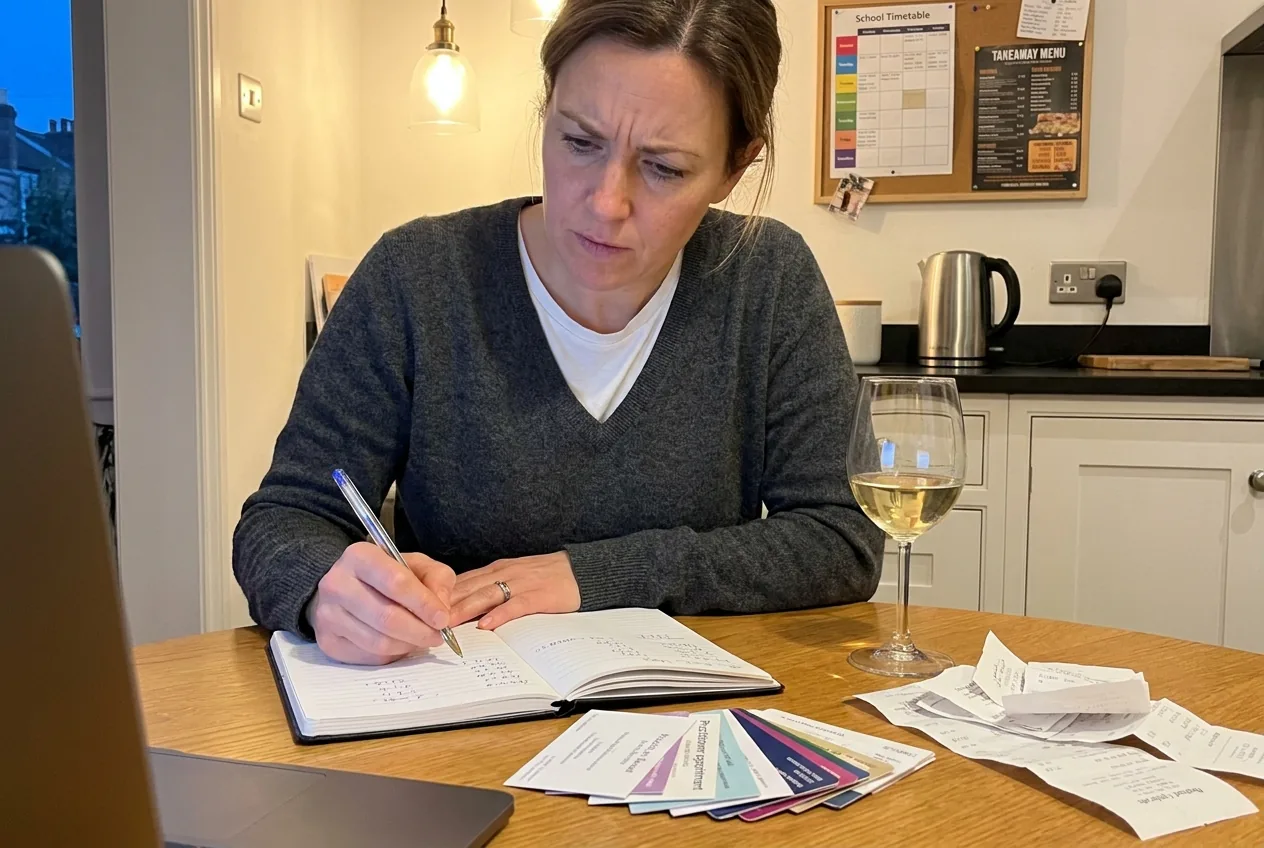
Seeing three separate holistic practitioners costs roughly £4,440 per year with nobody connecting the dots between your symptoms. Most people have never sat down and added it up. When they do, the number is almost always higher than they expected.
A homeopath at £120 a month. A hypnotherapist at £100 a month. A nutritionist at £150 a month. That’s roughly 36 separate appointments across three disciplines. Zero cross-referral between any of them.
Not one of those practitioners taking a combined timeline. Her homeopath never asked about the panic attacks her hypnotherapist was treating. Her nutritionist had no idea the digestive issues traced back to an emotional shock from eight years ago, because nobody had ever asked about what was happening in her life when the symptoms started.
You can go to the garden of weeds. You can cut them down and it all looks lovely for a while. But until you pull them out from the roots, they keep growing back.
That’s what fragmented care looks like. Each practitioner trims their own patch. Nobody is pulling the roots, because nobody can see the whole garden.
After a year, she feels “a bit better” in pieces. The skin calms down, then flares. The anxiety lifts, then returns. The gut improves on a restricted diet, then crashes when she eats normally.
And now she’s into year two. Same three practitioners. Same monthly fees. The total crosses £8,000. Still no root-cause resolution.
Nobody in this industry sits you down and says, “Before you book with me, add up what you’ve spent across all your practitioners in the last twelve months.” That’s not right. You deserve that information before you commit another pound.
I’ll be honest about something else, too. I can show you the maths of why fragmented care costs more over time. What I can’t point you to is a published study comparing the two approaches in a complementary medicine setting, because nobody has done one yet.
What I can show you is 30 years of watching clients arrive having spent more on separate practitioners than a programme would have cost, with none of the root causes addressed. That pattern is consistent enough for me to stand behind it.
UK out-of-pocket healthcare spending reached £46 billion in 2024, according to the Office for National Statistics. A meaningful portion of that goes to complementary and alternative therapies. The money is being spent. The question is whether it’s getting to the root.
If your partner asks why you’re considering a programme at several thousand pounds, show them the annual maths above. Then ask them to run the five questions at the end of this article against the practitioners you’ve already tried. That usually shifts the conversation from “why is this so expensive?” to “why have we been paying three people to do half a job each?”
What hidden costs should you watch for?
Three costs catch people out regularly in holistic health. None of them appear on the original price list.
Supplements prescribed without explanation. The practitioner runs a scan or takes your case, then recommends three to five supplements at £20-£50 each per month. That’s £60-£250 on top of the session fee, every single month, often without anyone explaining why your body needs them or how long you’ll be taking them.
I’ve seen people spend more on supplements in a year than they’d have spent on a programme that addressed the root cause.
Repeat sessions with no treatment plan. At the basic tier, there’s often no defined endpoint. So you keep booking. And booking. At £75-£200 per session, that’s £900-£2,400 per year for a single modality with no milestones to tell you whether things are actually shifting.
Nobody says, “Here’s where we’re heading. Here’s how we’ll know when you’re there.” You just keep going.
Paying twice for the same problem. A woman who came to me had already paid someone else for a scan. She walked away from that appointment with four or five supplements and no explanation of what the scan had actually found.
When she came to me, we started from scratch. The full timeline. The emotional history. The deeper interpretation. She effectively paid for the same assessment twice, because the first time she got data without anyone explaining what it meant.
That’s a hidden cost nobody warns you about.Before you book with any practitioner, ask two things. What’s included in the fee? And what’s separate? If the answer is vague, that vagueness will cost you.
How do the numbers actually compare over time?
Here’s the maths nobody does for you. Grab a pen if you’ve got one.
A person visiting three separate practitioners monthly. Homeopath at £120. Hypnotherapist at £100. Nutritionist at £150. That’s £4,440 in year one. Nothing resolves. They carries on into year two. Now they’re at £8,880. By the end of year three, they’ve spent £13,320.
None of those practitioners have taken a combined timeline. Nobody has connected their digestive symptoms to the emotional shock from eight years ago.
An integrated programme at £9,999 completes in eight weeks. The break-even point is roughly 27 months. If you’ve been seeing separate practitioners for more than two years without root-cause resolution, you’ve already spent more than the programme would have cost.
But here’s the honest part. If your condition is recent, say under six months old, a single consultation at £120-£444 may well sort it entirely. The programme investment doesn’t make financial sense for straightforward or recent issues.
The maths only favours the comprehensive route when the problem is complex, long-standing, and hasn’t shifted with simpler approaches.
Run your own numbers. Grab a piece of paper. Add up what you’ve spent across all practitioners in the last 12 months. Include remedies, supplements, travel. Compare that total to the cost of the programme you’ve been considering.
Then ask yourself one question. Did last year’s spend actually get to the root cause? If yes, keep going with what you’re doing. If no, the maths speaks for itself.
Why does the same technology cost different amounts with different practitioners?
A basic bioenergetic scan, the kind where you post a hair sample and receive a printout of food sensitivities, costs anywhere from £10 to £75. A comprehensive, practitioner-led scanning session with clinical interpretation runs £89 to over £500. The equipment is often identical. The difference is entirely in who’s reading the results and what they do with them.
I trained on the Qest4 bioenergetic scanning system in Utah. I was the only homeopath in the room. Everyone else, psychiatrists, nutritionists, kinesiologists, biohackers, was interpreting the exact same scan data through their own narrow lens.
The psychiatrist saw mental-emotional imbalances. The nutritionist saw deficiencies and recommended supplements. The kinesiologist saw structural patterns. Same data from the same machine. Completely different outputs.
It’s like handing the same violin to five different people. One has played for 30 years. One started lessons last month. The instrument is identical. What comes out of it is not.
My own path into this started 30 years ago. My daughter was a week old when my brother contracted meningitis at university. I left her with my mother-in-law and went to the hospital.
During that time, she developed a skin condition so severe her forehead cracked, she had no hair, and she’d bleed from her armpits. I paid thousands to London dermatologists. Test after test. No definitive diagnosis.
The consultant eventually prescribed a litre of antibiotics, four times a day for four months, and they hadn’t even identified what it was.
A homeopath cleared her skin. That was the beginning. It’s the reason I trained in homeopathy, then counselling, coaching hypnotherapy, then energy healing, then nutrition, then German New Medicine. Every qualification adds another layer to how I read a scan, how I interpret what the body is telling me.
A woman who came to me had been elsewhere for a scan before. She’d been given four or five supplements and sent home. No case history taken. No questions about when her symptoms started or what was happening in her life at the time. Just a printout and a shopping list.
When she came to me, we went deeper. We looked at the timeline. We looked at what the scan was showing beneath the surface sensitivities. We built a protocol that was bespoke to her. Not just “take these,” but here’s what’s happening, here’s *why*, and here’s what you do about it.
She booked her sister in for the following week.
Same machine. Worlds apart.
Where does Rise Radiantly’s pricing sit, and why?
My pricing sits at the premium end of this market, and I won’t pretend otherwise. It also isn’t the right fit for everyone, and I’d rather tell you that upfront than have you find out after you’ve booked.
The RootScan Breakthrough Session is £2,222. That covers a full bioenergetic scan, a homeopathic consultation, bespoke remedies, an energy blueprint report, a strategy session with your action plan, a follow-up integration call, and two weeks of WhatsApp access for anything that comes up between appointments.
The Rooted Radiance Immersion, the eight-week programme, is £9,999. If that’s easier to spread, there’s the option of two payments of £5,250 or three of £3,600.
The programme includes two bioenergetic scans, four homeopathic consultations, six hypnotherapy sessions, eight coaching sessions, bespoke remedy formulation, WhatsApp support throughout, and tools you keep for life. These are out-of-pocket investments. Most UK private medical insurance doesn’t cover complementary medicine, though some people submit receipts for partial reimbursement.
If you hold those against the five variables, you can see where each one lands. Qualification breadth across homeopathy (BSc level, the highest available, and they don’t offer it anymore), hypnotherapy (Paul McKenna trained, no scripts), counselling, Coaching, Reiki, German New Medicine, and nutrition.
Case-taking that goes from birth to now for every single person. All modalities under one roof. Between-session access. And a structured programme with a second scan at week five to measure what’s shifted.
I only take four people into the eight-week programme per quarter, which means there can be a wait of several months. That’s a real limitation if you need to start immediately.
And one more thing I want to be straight about. If you’ve been living with a condition for 15 or 20 years, with multiple medications layered on top, I won’t pretend eight weeks will undo all of that. You’ll shift. In my experience, every person who does the work sees something move. But the speed and degree of that shift depends on how many layers we’re working through. Some conditions take longer. That’s the reality.
Someone who wants a single session for one isolated symptom and doesn’t want to look at the emotional, lifestyle, or historical factors connected to it? That’s not the right fit for my approach. A more focused practitioner will serve them better, and more affordably. The Complementary and Natural Healthcare Council register is a good place to find qualified single-modality practitioners in your area.
One more honest thing. Some people ask whether someone covering five disciplines can be as deep in each one as a dedicated specialist. It’s a fair question, right?
What I’d say is that 30 years of active clinical work across these areas isn’t the same as a weekend course in each. But you should always verify credentials rather than take anyone’s word for it. The five variables in this article are there so you can do exactly that.
Five questions to take to any practitioner
Every month you keep choosing practitioners based on session price alone, you risk spending another £300 to £400 across separate providers who never connect the dots. Over 18 months, that’s £5,000-£7,000 in accumulated sessions buying temporary improvement and zero root-cause resolution. The integrated programme you dismissed as “too expensive” could have been finished in eight weeks.
You don’t have to take my word for any of this. Here are five questions to ask any practitioner, at any price point, before you commit.
- What are your qualifications across each modality you offer, and how many years have you been in active clinical practice?
- How long is your initial consultation, and do you take a full timeline from birth to now?
- Which modalities do you integrate, and how do they connect for my specific situation?
- What between-session support is included in your fee?
- Is your treatment structured as a programme with milestones, or is it open-ended per session?
The answers will tell you what you’re paying for. And what you’re not.
If you’re still weighing up your options, those five questions are the most useful thing I can give you. Take them to every practitioner you’re considering, including me, and see who answers them most honestly. You can also have a look at how I structure my services to compare like for like.
If you already know you want to find out whether the integrated approach fits your situation, book a free 30 minute health audit call and ask me every one of those questions directly. No obligation, no pressure. Just a conversation to figure out whether this is the right path for you, or whether a simpler option genuinely makes more sense.
And if you’d rather see exactly what a comprehensive diagnostic session includes at the premium tier, have a look at the RootScan Breakthrough Session.
Sameena
Sameena Aziz KhanRise Radiantly
Frequently Asked Questions
Why do fees vary so wildly between practitioners who describe their work in identical terms?
Because “holistic” and “root cause” aren’t regulated terms. Anybody can use them. A 30-minute remedy consultation and a 90-minute integrated session with five modalities can both carry those labels. The five variables I’ve outlined above are what actually create the price gap. Ask about all five before you compare.
Can I start with a single session and move to a programme later?
Yes, and for a lot of people that’s the sensible starting point. A single consultation lets you test whether the approach and the practitioner feel right. If things turn out to be more complex than one session can address, you can step into a structured programme with full awareness of what you’re getting into.
What if I’m already on medication?
That changes nothing about pricing or approach. I never take anyone off their medication. I work around it. If you need antibiotics, take them. If you’re on long-term prescriptions, we work alongside them. I’ll help you support your body through whatever you’re taking.
Any practitioner who tells you to stop conventional treatment before they’ll see you is raising a serious red flag.
Are there hidden costs beyond the session or programme fee?
In my practice, remedies are included. If I recommend a supplement, that’s purchased separately and it’s entirely your choice whether you take it.
What I’d watch for across the industry is practitioners who quote a low session fee but then add supplements or tests on top that push the real cost much higher. Always ask what’s included and what’s separate before you book.
Is any of this covered by private health insurance?
Generally, no. Most UK private medical insurance excludes complementary medicine, though some cover specific modalities when referred by a consultant. Programmes like mine are an out-of-pocket investment. Some people submit receipts for partial reimbursement, but it’s not guaranteed.
How do I pay, and are payment plans available?
For the eight-week programme at £9,999, I offer two options. Either two payments of £5,250 or three payments of £3,600.
For the RootScan Breakthrough Session at £2,222, you can split it into two payments of £1,111. There’s no external financing or third-party credit arrangement. Payment is taken at the time of booking.
If anything in this article made you think “that’s my situation,” book a free 30-minute health audit. Thirty minutes, no cost, no obligation.