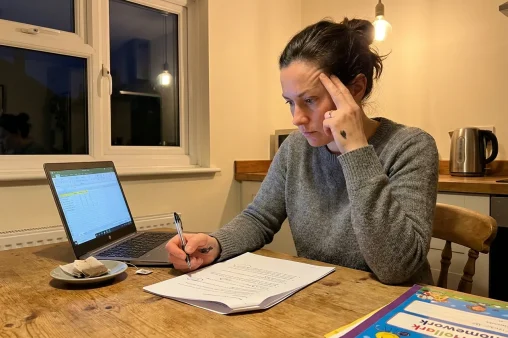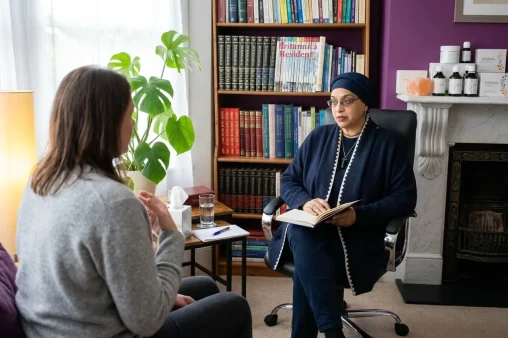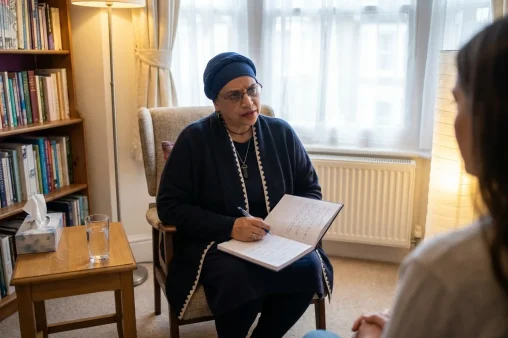
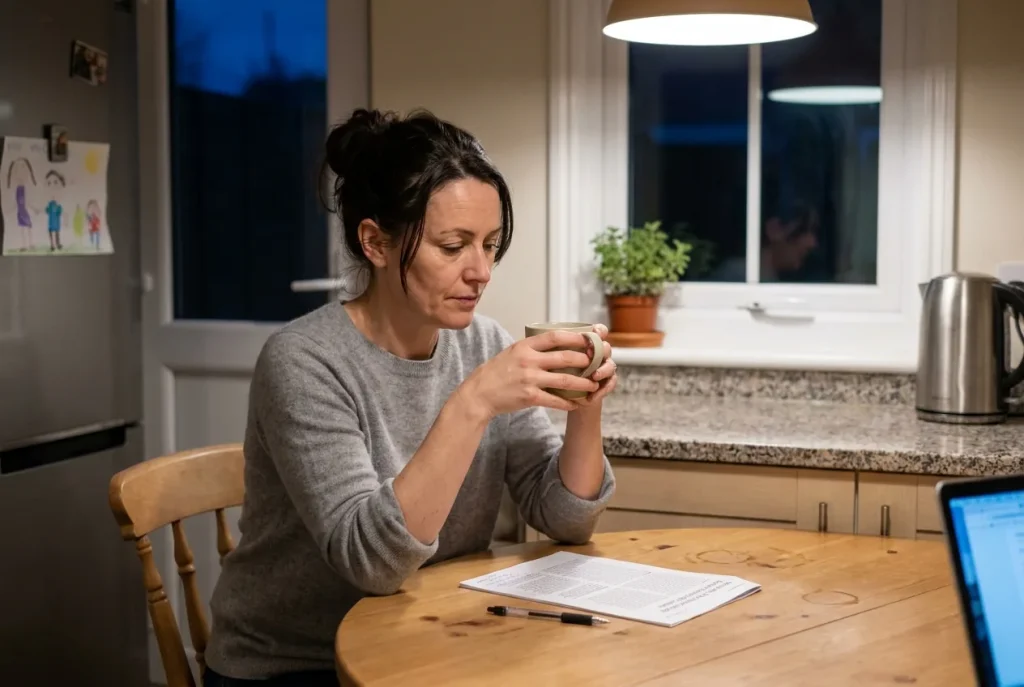
What if the reason holistic healing hasn’t worked for you has nothing to do with the approach, and everything to do with whether you were the right person for it in the first place?
Most practitioners won’t ask that question out loud. Because answering it honestly means telling some people not to buy.
But here’s what 30 years of sitting across from people has taught me. The wrong fit doesn’t just waste your money. It erodes something worse. Your belief that anything can actually help you. And that’s a far bigger cost than the programme fee.
Root cause healing isn’t right for five specific types of people. Quick-fix seekers who want symptoms gone without asking why they appeared. People who refuse to look at the whole picture. People who expect to be fixed without doing any work themselves. People in acute psychiatric crisis who need specialist care. And anyone who needs a formal clinical diagnosis, because bioenergetic scanning doesn’t do that.
I should tell you before we go further. I’m Sameena Khan, I run Rise Radiantly, and root cause healing is what I do for a living. So yes, I have a bias here. But I also lose when the wrong person walks through my door. So this article does something most wellness practitioners won’t. It tells you honestly when not to invest.
Here’s the short version before I walk you through each one.
Key Takeaways
- This work requires 3 to 5 hours per week of active participation, for a minimum of eight weeks. If you can’t commit to that right now, a single-modality practitioner is genuinely a better fit.
- In 30 years, every client who did the work experienced a shift. Every client who didn’t see results hadn’t followed the protocol. That pattern has never varied.
- Active psychosis and severe psychiatric conditions are a hard boundary. Not from lack of compassion. From direct clinical experience that shaped this limit permanently.
- Bioenergetic scanning identifies energetic imbalances, not clinical diagnoses. If you need a formal diagnosis for insurance or employment, see your GP first.
- Some chronic autoimmune conditions respond more slowly than others, even with full compliance. I won’t pretend otherwise. The limitation is speed and degree, not whether change happens.
Here for one specific concern?
- Wondering if you really need to dig into the emotional stuff? Jump to quick-fix seekers
- Only want one symptom treated? See why that’s a different kind of help
- Worried about the time commitment? Read about what happens without it
- Concerned about mental health conditions? See where I draw the line
- Need a medical diagnosis first? Here’s the honest answer
- Ready to find out if you ARE the right fit? Skip to the self-check
What if I just want my symptoms fixed, do I really need to explore what’s behind them?
If you want your migraines gone but you don’t want to look at what’s driving them, you’re in the wrong place. This work goes deeper than the symptom.
If what you’re really after is a natural version of a painkiller, a single-modality practitioner, whether that’s an acupuncturist, a herbalist, or a nutritional therapist, will serve you better and cost you less.
I hear this more than you’d think. “I’ve come for my cough, so why are you asking about my life?”
Because a chronic cough can be a deeply emotional cough. Because migraines are linked to liver function, which is linked to what you’ve been swallowing emotionally for the past ten years. When one clock doesn’t work, it has a knock-on effect on everything else.
But if you’re not interested in that conversation, right, I’d rather you know now than find out after you’ve spent £2,222 on a RootScan that produces deep insights you won’t act on. That’s not a good outcome for either of us.
The person who’s a good fit for this work doesn’t just want the headache gone. They want to understand why their body keeps creating it.
That’s a different question entirely. And it’s the only one I’m set up to answer.
What if I only want one symptom treated, can I skip the whole-person assessment?
If you only want one symptom addressed in isolation, “just deal with my digestion, don’t ask about my emotions”, this work will frustrate you. Your body doesn’t work in compartments. Neither does this.
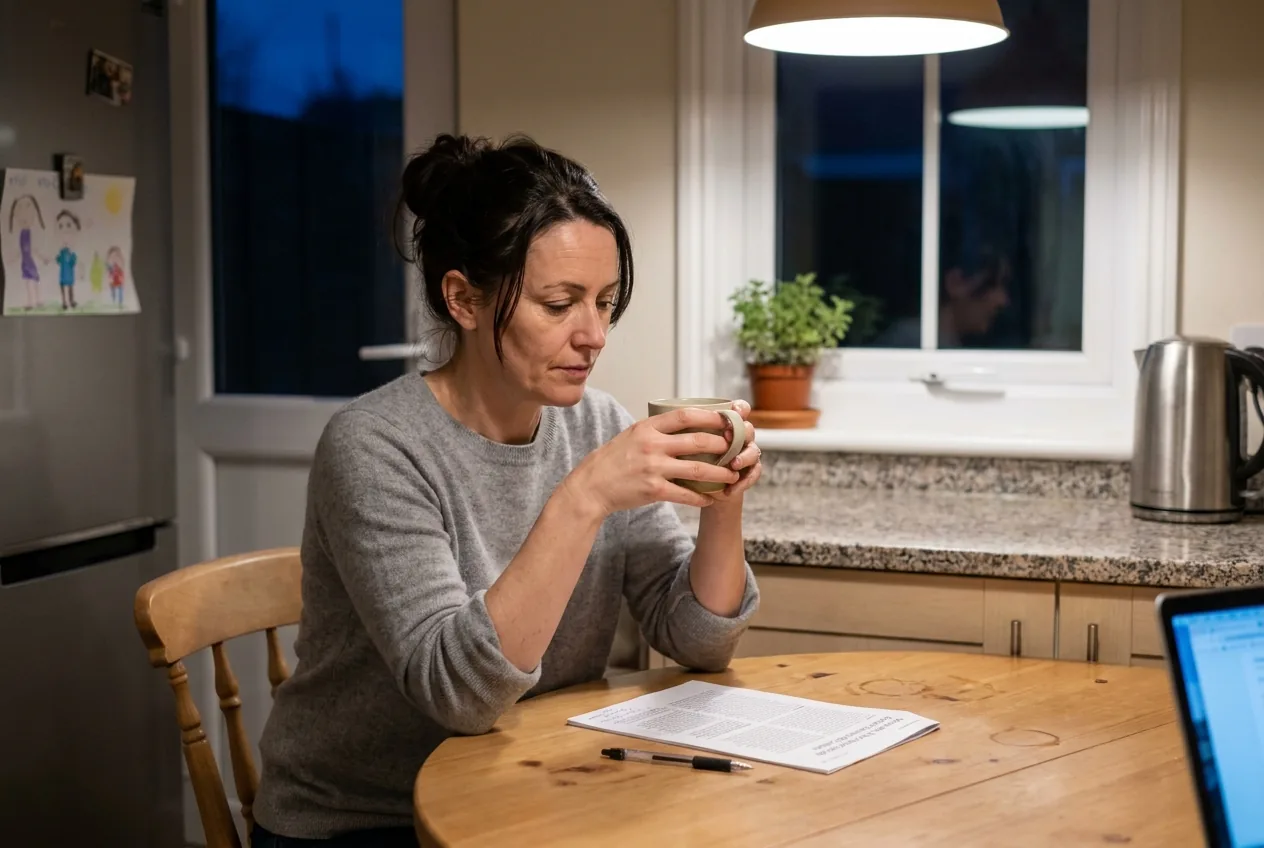
I had a woman come to me who’d been struggling with her digestion for years. She was clear about what she wanted. “Just deal with my digestion,” she said. “I don’t want to talk about my emotions. Just deal with my digestion.” She didn’t want me to go back through her history, didn’t want the full case-taking from birth to now, didn’t want to explore what might have been happening in her life when the symptoms first appeared. Just sort the gut, full stop.
And I understood that. I genuinely did. When you’ve been dealing with something that long, you’re exhausted by it. You just want relief. Her family could see how much it was affecting her daily life, and they wanted answers too. Everyone around her was hoping I’d be the person who finally fixed the one thing she’d come about.
But here’s what happens when you treat digestion without looking at the full picture. You get improvement. Sometimes significant improvement. But it doesn’t hold. Because the emotional root, the thing that created the imbalance in the first place, hasn’t been touched. With digestive issues in particular, I’ve seen it time after time. Something happened in that person’s life that was genuinely indigestible, an experience they couldn’t stomach, couldn’t process, and the body’s been expressing it ever since. If you won’t let me look at that, I’m working with one hand tied behind my back.
You’re cutting the weeds at the top. They look tidy for a while. Then they grow back.
I told her straight. You’re in the wrong space. Not because I don’t care, but because I know what happens when we only go halfway. She’d spend money, see partial results, feel hopeful, and then watch it unravel. That conversation wasn’t easy. She’d come expecting me to say yes. Her family had told her I could help. And I could have helped, if she’d let me look at the whole picture. But taking her money knowing the outcome would disappoint? I’d rather be honest about that upfront.
If you genuinely want a single-symptom approach, a standalone homeopath like Hilary Dorrian or a nutritional therapist like Malika Guechoul will give you focused, effective care at a lower price point. We explore this honestly in our article ‘When Is a Less Expensive Holistic Practitioner Actually the Right Choice for Me?‘. There’s no shame in that. It’s just a different kind of help.
What happens if I don’t do the homework between sessions?
If you expect to show up, receive treatment, and leave the healing entirely to me, it won’t work. This requires your active participation. Journaling, breathwork, taking your remedies on schedule, dietary adjustments. Without that commitment, even the best programme in the world won’t shift what needs shifting.
There’s no magic pill. But there is a magic process, if you’re willing to be part of it.
I’ve seen this play out more times than I can count. A client finishes the programme and comes back saying, “It’s not working.” I open my notes. I go through the list.
And what I find is that half her remedies are still in the bottle. The journaling never happened. The breathwork was done once in week two. Meanwhile, three of the five symptoms she originally came with have actually improved. She just hasn’t noticed because she’s focused on the one that hasn’t shifted.
The pattern has never varied in 30 years. Every client who did the work experienced a shift. Every client who didn’t see results hadn’t followed the protocol.
And I’m not saying this to blame anyone. Before I say this, don’t beat yourself up. Life gets busy. You have a business to run, children to manage, a hundred things pulling at you.
But the eight-week Rooted Radiance Immersion requires 3 to 5 hours per week of active participation. That’s real time. If that’s not available to you right now, the honest answer is to wait until it is.
This isn’t just a Rise Radiantly thing. Even the NHS Talking Therapies service, which is free, approved by the National Institute for Health and Care Excellence (NICE), and professionally staffed, sees only about 37% of referrals complete treatment.
Of those who do finish, fewer than half reach what the NHS calls reliable recovery. The biggest predictor of poor outcomes isn’t the approach itself. It’s the gap between what someone expected and what the process actually requires.
And that’s exactly why I’m writing this page. The wellness industry has an unspoken norm. Accept anyone’s money, deliver the programme, and when results don’t materialise, blame the client’s “commitment” after the invoice has cleared. I’d rather tell you the truth before you spend a penny.
What if I’m struggling with severe mental health conditions, is this safe?
If you’re experiencing active psychosis, acute mania, or severe psychiatric crisis, you need specialist care. Not a holistic practitioner. This isn’t about willingness or compassion. It’s about safety. Going into deep emotional work when someone’s nervous system is already in crisis doesn’t help. It makes things worse.
This boundary didn’t come from a textbook. It came from a man with schizophrenia whose wife brought him to see me.
She wanted him to get help. He wanted help too, or at least she believed he did. His friend had encouraged the appointment. There were people around this man who cared deeply, looking for answers the conventional system hadn’t given them. I understood that. I wanted to help.
During the session, he became severely distressed. He refused to leave my home. He went to the porch and started banging his head against the wall. I was home alone. It was frightening. Not just for me, but watching someone in that level of crisis and knowing that what I was doing was not making it better. It was making it worse.
His wife begged me to continue treating him afterwards. His friend begged me. They were desperate. They’d run out of options and saw me as one more avenue to try. I said no.
Not because I didn’t care about him, or about them. Because I cared enough to recognise that I was not the right person to help him, and that continuing would have put him at genuine risk. That experience shaped one of my most important professional boundaries permanently. A practitioner who claims to help everyone is a practitioner who helps no one well.
The NHS Talking Therapies Manual explicitly excludes psychosis, bipolar disorder, personality disorders and eating disorders from its scope. That’s a free, regulated, professionally staffed service.
If the NHS draws that line, any holistic practitioner who steps beyond it is claiming to do more than a publicly funded clinical service can. That’s not safe. And it’s not honest.
If this is your situation, please get specialist psychiatric support first. Get stabilised. And if there comes a point where complementary work alongside your clinical team makes sense, that’s a conversation we can have. Under proper shared care.
What if I need a formal medical diagnosis?
If you need a named diagnosis for insurance, employment, or legal reasons, your GP is the right first step. Bioenergetic scanning shows me where your body is out of balance and helps you understand why, but it doesn’t give you a clinical diagnosis. I can’t give you the piece of paper a doctor can.
I’m clear about this with every person who sits across from me. If anyone’s expecting a diagnosis, you’re in the wrong place. I’m looking at you bioenergetically. Energetically, under the surface.
That’s a different kind of information. Valuable information. But it’s not what a GP, a consultant, or an insurer will accept.
If you’ve got undiagnosed symptoms, the right sequence is simple. Go to your GP. Get blood tests done. Get a baseline. Rule out the serious stuff. Then come and see me, and we’ll look at what the conventional tests might not be showing.
When is your GP genuinely the right first step?
This isn’t a disclaimer. It’s genuine guidance I give people regularly. There are times when your GP should come first.
See your GP first if you’ve got acute symptoms you haven’t had investigated. Chest pain, sudden severe headaches, heart palpitations, unexplained bleeding. If there’s an emergency, there’s A&E. Don’t wait for me.
See your GP first if you’re on multiple medications and want to understand what you’re working with before adding holistic support. I never take people off medication. I work around the drug layer. But we both need to know what that layer looks like before we start.
The NHS itself notes that most complementary therapies aren’t available through the health service, and they don’t replace the need for conventional assessment when something acute or serious is going on.
And if your GP gives you a clear bill of health but you still know something isn’t right, that’s often exactly where I come in. The person whose blood tests say “normal” but whose body says otherwise? They’re one of the people I work with most.

Who IS the right fit for root cause healing?
If you’ve read through every profile above and recognised yourself in none of them, that’s a very good sign.
The people who get the strongest results share five things.
You’re willing to share your emotional history, even when it’s uncomfortable. Not because I’m nosy. Because what happened to you at 17, at 25, at 32, might be driving what’s happening in your gut at 45. I’m not here to judge you. I’m here to help you. The more honest you are with me, the better I’m able to do that.
You can commit 3 to 5 hours per week for at least eight weeks. That includes sessions, homework, journaling, breathwork, and following the remedy protocol. It’s a real commitment. But it’s also concentrated. You’re not in and out of GP surgeries and specialist waiting rooms for the next two years.
You’re ready to explore root causes that may go back decades. Let’s go back. Let’s go back. Let’s go back. That’s what I do. If you’re open to it, we’ll find it.
You’ll do the work between sessions. Take the remedies. Do the journaling. Practise the breathwork. This is teamwork. I bring 30 years of experience and every tool in my toolbox. You bring honesty and commitment.
You see healing as a partnership, not a prescription. You’re not coming to me to be fixed. You’re coming so we can work together to find the root and pull it out. I empower you with the knowledge of why you got sick, so you can prevent it happening again.
One more thing I should be honest about. If you’ve been on multiple medications for 15 or 20 years, eight weeks won’t undo two decades of drug layers. You’ll see shifts. You always do with full compliance. But moderate improvement in that timeframe is realistic, not a complete turnaround.
That doesn’t mean we can’t work together. It means I won’t pretend the timeline is shorter than it is.
I ran a beta coaching programme with eight women from completely different cultural and professional backgrounds. Every single one shifted in a different way.
Because they showed up. They did the work. And each one got tools they’ll use for the rest of their life.
Quick self-check. Can you honestly say yes to at least four of the five traits above?
If the answer is four or five, this work was built for you. If it’s two or three, let’s have a conversation, but be honest about what’s holding you back. If it’s one or fewer, you’ll genuinely be better served by a different approach right now. And that’s absolutely fine.
If burnout or chronic fatigue is what brought you to this page, our burnout and chronic fatigue recovery guide covers the full picture of what’s available to you.
If none of that is you, let’s talk
Here’s what I see, time after time. A woman spends 12 months trying three or four different approaches. Each one incomplete. Each one abandoned before the root was reached.
A nutritionist who gave her a list. Therapy that helped her understand things but never shifted the migraines. A supplement regime that cost £500 and addressed everything except the why.
In my experience, within a year that’s typically £3,000 to £5,000 spent on incomplete approaches. A 2024 Versus Arthritis survey found 87% of people using complementary medicine in the UK are paying privately. That’s a lot of money going toward approaches where nobody assessed fit before swiping the card.
Every month you spend in that cycle is another month the belief erodes. The belief that anything can actually help you. If you’re weighing up the financial side, our breakdown of what holistic healing for burnout actually costs gives you the full pricing picture.
If you’ve read through these five profiles and recognised yourself in none of them, a free 30-minute health audit is the simplest way to confirm what you already suspect. It’s not a sales call. It’s a conversation where I tell you honestly whether I can help with your specific situation. And if I can’t, I’ll tell you that too.
If you’d rather start on your own, the self-check above gives you an honest answer in two minutes. And if you’ve already decided and want to understand what your body is telling you, the RootScan Breakthrough Session is where that conversation starts.
Sameena Khan
Founder, Rise Radiantly
Frequently Asked Questions
What if I’m not sure which profile I fit?
Most people who genuinely wonder whether they’re a bad fit aren’t. The person who asks “am I ready for this?” is usually far more ready than the one who never questions it. That’s just what I’ve seen.
If you’re unsure, book a free 15-minute health audit and I’ll be straight with you. That’s what the call is for.
Can I start with a single session to test the fit?
Yes. The RootScan Breakthrough Session at £2,222 is designed as a standalone experience. You get a full bioenergetic scan, personalised remedies, a strategy session, and a follow-up call. It’s a complete piece of work in itself, not a taster.
If deeper work makes sense after that, we can talk about the eight-week programme. If it doesn’t, you walk away with genuine insights and tools.
What if I’m on medication, does that disqualify me?
Not at all. Some homeopaths say you can’t — a question I address directly in our article ‘Can I Take Homeopathic Remedies Alongside My Current Medication?‘. I disagree, and I’ve worked around drug layers for 30 years.
I never take people off their medication. I work with what you’re on, not against it. If you need to take the antibiotics, take them. I’ll help you detox afterwards.
What if I want to explore root causes but I’m scared of what we might find?
That’s not a disqualification. That’s honesty. Most of the clients who sit across from me are nervous about what might come up.
I wrap hard truths carefully. Before I say this, don’t beat yourself up, and it’s not your fault because you didn’t know any different. We go at your pace. And you’re in control of how deep we go at every stage.
What if I’ve already tried holistic healing and it didn’t work?
Not all practitioners are the same, just like not all GPs are the same. What I’d want to understand is why it didn’t work. Was it the wrong approach, or were you the wrong fit for that specific practitioner?
Often it’s neither. In our article ‘What If Holistic Healing Does Not Work for Me, and I Have Already Tried Everything?‘, we explore how often the real issue is that nobody looked at the full picture. That’s exactly what a free 30-minute health audit can help us figure out.
Still wondering whether you’re the right fit? Book a free 30-minute health auditand I’ll give you an honest answer.