Nobody in the holistic world ever publishes what they can’t fix. That’s always bothered me.
So here it is. After 30 years of clinical practice, root cause healing has six specific limitations every person considering this investment deserves to hear before they spend a penny.
They include emergency medical conditions that need Accident and Emergency (A& E), severe psychiatric conditions that sit outside holistic scope, deeply entrenched medication layers that take months rather than weeks to shift, the requirement for emotional openness that not everyone is ready to give, conditions where the body needs pharmaceutical force that homeopathy simply can’t provide, and the honest reality that no outcome can ever be guaranteed.
If you’ve been burned by a previous health investment that hid its limitations until after you’d paid, this article is the opposite of that.
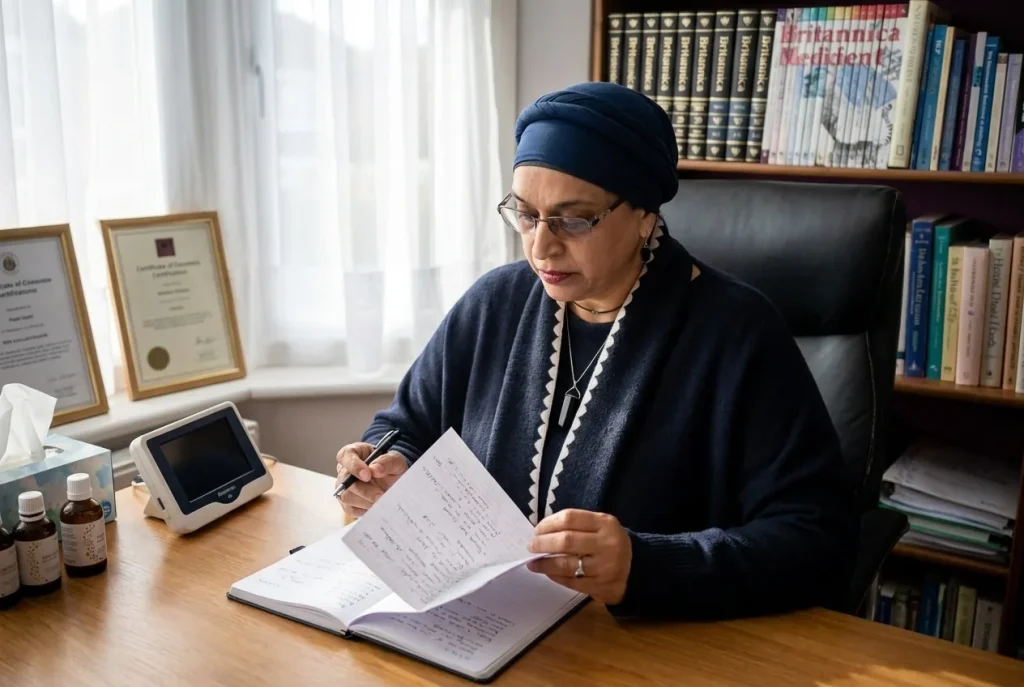
I should be upfront. I’m Sameena Khan and I run Rise Radiantly, where I practise homeopathy, bioenergetic scanning, hypnotherapy, and coaching. I have a clear stake in this conversation. Everything that follows is as honest as I can make it, but factor in where I’m coming from.
Here’s the short version before I walk you through each one.
Key Takeaways
- Emergency conditions need A& E. Homeopathy can’t replace what saves your life during a stroke or heart attack.
- I refuse severe psychiatric cases. Schizophrenia and bipolar need pharmaceutical management I can’t replicate.
- Twenty years of medication won’t unravel in eight weeks. The honest timeline is months to 18 months.
- If you won’t explore your emotional history, the root stays buried. Active participation is the method itself.
- Homeopathy can’t force the body, and no outcome is guaranteed. The body heals on its own timeline, not mine.
Here for one specific thing?
- Can holistic healing stand in for emergency care? Jump to emergency conditions.
- Wondering about severe psychiatric conditions? See why I refuse those cases.
- Concerned about years of medication stacking up? Read the honest timeline.
- Not sure you want to dig into your emotional past? Find out why it matters.
- Want to know what homeopathy simply can’t do? See the hard limits.
- Worried about what the process actually feels like? Read about healing crises.
- Just want to know if this is right for you? Skip to the fit check.
Can holistic healing replace emergency medical care?
No. And any practitioner who hedges on this answer should worry you.
If you’re having a heart attack, a stroke, a severe asthma attack, or a seizure, you need A& E. You need the pharmaceutical intervention that works in a time-critical window.
Homeopathy stimulates your body’s own healing process, and that’s genuinely powerful in the right situations. But it doesn’t replicate what a clot-dissolving drug does in the first twenty minutes of a stroke.
My protocol is non-negotiable. Before I begin any root cause work, I insist you’ve seen your GP, had blood tests done, and got a medical baseline.
If there’s an emergency, there’s A& E. Don’t wait for me. If you need antibiotics, take them. If you need steroids, take them. I’ll help you detox afterwards.
I work alongside conventional care, never instead of it.
The Society of Homeopaths’ Code of Ethics requires practitioners to refer conditions needing medical supervision, and the Professional Standards Authority’s updated standards place stronger emphasis on public protection across all complementary registers.
A practitioner who blurs this line isn’t being brave. She’s being reckless.
Can it treat severe psychiatric conditions like schizophrenia?
No. And this is the limitation I feel most strongly about, because I learned it the hard way.
Early in my practice, a man with schizophrenia was brought to see me. His family were desperate for alternatives. I agreed to take the case.
During the consultation, he became severely distressed. He refused to leave my house. He went to the doorway and started banging his head against the wall. I was home alone. It was frightening. Genuinely frightening.
What stayed with me afterwards wasn’t just the fear. It was the clarity. If his distress had escalated any further, I had no pharmaceutical tools to stabilise him. No antipsychotic. No clinical team to call. I was a homeopath in a home consultation room, and I was completely out of my depth with a condition that requires neurochemical management I am not trained or equipped to provide.
His wife and a friend begged me to continue treating him. I refused. And I’ve refused every case of schizophrenia and acute bipolar disorder since. That boundary has never wavered, no matter how desperately a family asks.
This isn’t about lacking confidence in what I do. It’s about patient safety.
These conditions require pharmaceutical neurochemical management, the kind that keeps someone’s brain chemistry stable enough to function. Body-mind modalities like homeopathy and hypnotherapy risk destabilising someone whose neurochemistry is being held together by antipsychotic medication.
The stakes are documented. A UK coroner’s Prevention of Future Deaths report from 2025 found that a woman’s death was directly linked to subtherapeutic antipsychotic levels that weren’t acted upon.
That’s the real-world consequence when psychiatric medication isn’t properly managed. No complementary therapy can fill that gap.
A practitioner who refuses these cases isn’t showing weakness. She’s showing clinical judgement.

What happens when you’ve been on medication for fifteen or twenty years?
Progress happens, but it’s measured in months, not weeks. And this is the limitation most practitioners quietly skip past.
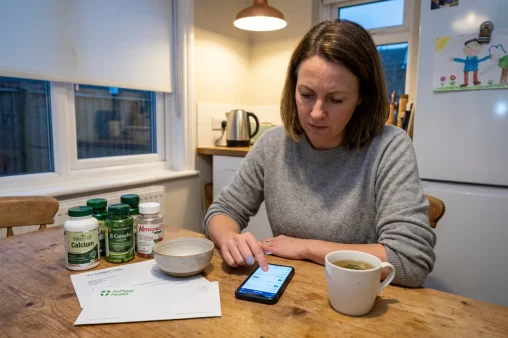
If you’ve been on thyroid medication for two decades, or you’re on 5 or more prescription drugs where each one manages the side effects of the last, an 8-week programme isn’t going to completely reverse that picture. It’ll start the process.
You’ll likely see measurable improvement. But the honest timeline for deeply entrenched cases is months to 18 months, not weeks.
This is biology, not a failing of the approach.Over 15% of adults in England are currently on five or more regular medications, according to the Department of Health and Social Care. Research from North West London found that polypharmacy affects 10.3% of women specifically, with rates climbing steeply after age 45.
Here’s the uncomfortable truth I’d rather tell you now than after you’ve invested. Even with a fully compliant client who takes every remedy, does every piece of homework, and attends every session, some conditions with two decades of accumulated medication layers will show only moderate improvement in 8 weeks.
The body heals on its own timeline. I can’t accelerate that. No one can.
The practitioner who promises otherwise is selling hope, not healing.
What I can tell you is that every fully engaged client sees some improvement. The limitation isn’t whether change happens. It’s speed and degree.
For specific timelines by condition severity, see our article ‘How Long Holistic Healing Actually Takes to Show Results‘.
What if you’re not ready to explore the emotional roots?
If you won’t go there, the root stays buried. No amount of scanning, remedies, or coaching can compensate for that.
Physical symptoms frequently have emotional and psychological origins. I’ve observed it consistently across three decades. The body keeps score.
Digestive issues linked to shocks that were emotionally indigestible. Urinary infections linked to anger. Hay fever linked to unresolved grief.
The mind-body connection isn’t woo-woo. It’s clinical pattern recognition.
So when someone sits across from me and says, “Just deal with my digestion, I don’t want to talk about my periods or my emotions,” I have to be honest. You’re in the wrong space.
Not because I’m being difficult, but because if you won’t let me look at the full picture, I literally can’t find the root.
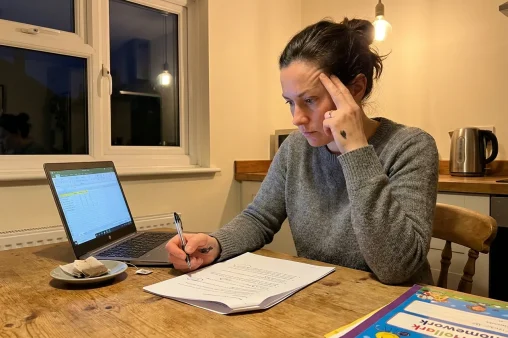
Before I say this next bit, don’t beat yourself up, because most people don’t realise it until someone points it out. Sometimes the reason holistic healing underdelivers isn’t the approach. It’s the client’s readiness.
The pattern is clear in my practice. Clients who engage fully with the process see measurably better outcomes than those who hold back. If you’re wondering what full engagement looks like week by week, our article ‘What Going Through a Holistic Healing Programme Actually Involves‘ walks you through it.
This isn’t a belief system. It’s how the method works.
If you want a single symptom treated in isolation, a standalone nutritionist, a functional medicine clinic, or a homeopath who works on acutes may serve you better. I’d rather tell you that now than take your money and watch you feel let down.
Our honest comparison of one integrated practitioner versus multiple specialists goes deeper into when each route works best.

What can homeopathy actually not force the body to do?
This is a principle I’ve held for 30 years and I’ll say it to anyone who sits across from me. Homeopathy does not force the body to do anything. Full stop.
I chose those words deliberately, and I’ve repeated them in every initial consultation for three decades. Not as a disclaimer buried in paperwork. As a conviction I state before any treatment begins. When I first trained in homeopathy, the foundational thing I understood was that a remedy stimulates the body’s own healing intelligence. It doesn’t override biology. It can’t. That understanding shapes every prescription I write and every case I take. If a client expects homeopathy to force an outcome the body isn’t ready to produce, I’d rather lose the booking than mislead her about what this modality is.
It works with your body’s own healing intelligence. When you have a cut on your finger, you clean it, and it heals by itself.
Homeopathy works on the same principle, on the mental level, the emotional level, the physical level. It stimulates the process. It doesn’t override it.
I can’t stop your periods on demand. I’ve had women ask me before a pilgrimage, “Can you stop my periods?”
No. Homeopathy can’t force that. I told her she’d need the contraceptive pill and I’d help her detox afterwards.
It can’t cause or prevent pregnancy. It can’t replace insulin for someone with Type 1 diabetes. The Australian National Health and Medical Research Council’s (NHMRC) 2025 comprehensive review found no adequate trial evidence for homeopathy as a substitute for conditions requiring direct pharmaceutical force, and I wouldn’t claim otherwise.
Conditions that need pharmaceutical force belong with conventional medicine. Immediate blood pressure reduction. Acute seizure control. Insulin for Type 1 diabetes.
If you need them, take them. There’s no grey area.
That’s the trade-off. A remedy that works with the body rather than overriding it is precisely why there are no side effects and why it’s safe for newborns, pregnant women, and the elderly.
But it means there are situations where homeopathy is simply not the right tool. And you deserve to hear that before, not after, you invest.
What does the emotional cost of this work actually look like?
Nobody warns you about this part, so I will.
When we do deep root cause work, we go back. Sometimes to childhood. Sometimes to trauma, grief, or abuse that hasn’t been processed.
That is genuinely painful. It’s not a pleasant afternoon chat. It’s sitting with something you may have buried for years and allowing it to surface so the body can finally process it.
In my clinical experience, fewer than 1 in 10 clients experience what’s called a healing crisis, a temporary intensification of symptoms as the body starts clearing what’s been held.
I should be clear. There’s no peer-reviewed UK population data on this figure. It’s what I’ve observed across 30 years of practice.
The most common manifestations are skin flare-ups such as eczema or rashes, emotional releases like unexpected crying or old memories surfacing, and vivid dreams. These typically last hours to a few days and resolve on their own.
There is a clear line between a benign healing response and something that needs medical attention.
New chest pain, severe breathlessness, neurological changes, or loss of consciousness are not healing crises. They’re red flags. You go to A& E.
No one can guarantee 100% anything. I won’t pretend otherwise.
What I can guarantee is that if you do the work I give you, take the remedies, do the journaling, show up honestly, you will shift.
But the body heals on its own timeline, not mine. One size doesn’t fit all.
Who this is genuinely not for
I’d rather turn someone away who isn’t the right fit than watch them invest and feel let down. Three profiles where a different path makes more sense.
You need pharmaceutical-speed results from a long-standing condition. If you’ve been on multiple medications for 15 or 20 years and expect dramatic resolution in 8 weeks, the honest answer is that the timeline won’t match your expectations. A functional medicine clinic with pharmacological expertise may be a better starting point.
You want a single symptom fixed without exploring the bigger picture. If you’re not willing to discuss your emotional history, relationships, or past experiences, root cause work can’t reach the root. A standalone practitioner who treats acutes without the deeper investigation will be a better match.
You’re in an acute psychiatric or medical crisis. If you need emergency intervention, a clinical diagnosis for legal or insurance purposes, or management of a severe psychiatric condition, conventional medicine is the only responsible choice. Any holistic practitioner who suggests otherwise should be avoided, not trusted.
Who this IS a perfect fit for
You’ve been through the GP appointments, the blood tests, the specialists, and nobody can tell you what’s wrong even though you know something is off. Benenden Health’s 2024 research found that 6 in 10 women in the UK feel their health issues haven’t been taken seriously by a medical professional. If that sounds familiar, you’re not imagining things.
You’re a professional woman who’s sharp on the outside but quietly running on empty. You’ve tried supplements, diets, maybe another homeopath or a nutritionist. You got so far, then it came back.
If burnout and chronic fatigue are part of your picture, our complete guide to burnout and fatigue recovery covers root causes and what genuinely works.
You’re ready to look at the full picture, not just the symptom but the why underneath it. You’re willing to be honest, even about the uncomfortable parts. And you’re prepared to commit to a process, not a quick fix.
This approach works when you work with it. For a detailed, equally honest evaluation, see our article ‘Who Rise Radiantly Helps and Who It Doesn’t‘.
A quick self-check before you go further
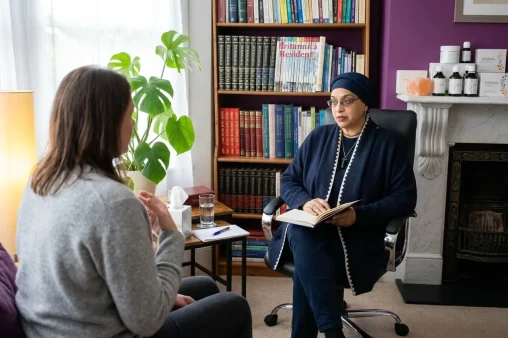
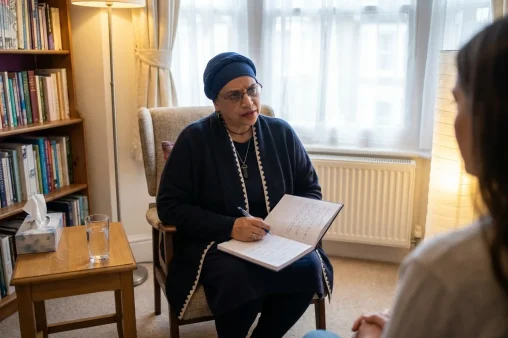
If you were sitting across from me right now, these are the questions I’d ask you before we went any further. Answer them honestly.
- Have you had a GP assessment and medical baseline for your current symptoms? (If no, do that first.)
- Are you willing to explore emotional and psychological factors alongside physical ones?
- Can you commit to taking remedies, doing homework, and showing up between appointments?
- Are your expectations realistic, improvement over weeks to months, not an overnight fix?
- Are you doing this for yourself, not because someone else thinks you should?
If you answered yes to 4 or more, this approach is likely a strong fit. If yes to 2 or 3, it’s worth a conversation, with eyes open.
If 1 or fewer, the honest answer is that right now isn’t the right time. And that’s completely fine.
Here’s what I know after 30 years. A woman who understands the real limitations of an approach before she invests makes a better decision than one who discovers them afterwards.
That’s not a sales line. It’s just respect.
If you’ve spent the last few years investing thousands across specialists, nutritionists and functional medicine clinics without anyone getting to the root, I understand why you’re cautious. Not because those approaches are wrong, but because nobody looked deep enough.
If you’re still weighing whether holistic root cause healing is worth the investment, that article gives you the full honest evaluation.
Every fully engaged client sees improvement. Many see profound shifts. But you deserve to go in with your eyes open.
If you’re not ready for a conversation yet, go back to the self-check above and sit with those five questions. They’ll tell you more than I can in a quick call.
If knowing these limitations has made you more curious rather than less, a free 30-minute health audit is the simplest way to find out whether your specific situation falls inside or outside what I can help with. No pitch. Just an honest conversation about whether we’re the right fit.
If you already know you want to understand what your body is telling you, within the honest boundaries this article describes, you can see what the RootScan Breakthrough Session includes and whether it fits your situation.
And if you’re not ready yet, that’s fine. This article will still be here when you are.
Sameena Khan
Founder, Rise Radiantly
Frequently Asked Questions
What if my condition isn’t on your “can’t treat” list? Does that mean you can definitely help?
Not necessarily. Every person is different, and I can’t make a blanket promise about any condition.
What I can do is assess your specific situation in a free 15-minute health audit and tell you honestly whether I think root cause work would make a difference for you, including telling you if it won’t.
Can I still work with you if I’m on medication?
Yes. I never take people off medication. I work around the drug layer. The only person who adjusts your medication is your GP.
Some homeopaths say you can’t use homeopathy alongside drugs. I disagree. That’s incorrect, and it stops people getting help they could benefit from.
What happens if I have a healing crisis? How do I know if it’s normal or an emergency?
A benign healing response involves temporary intensification of existing symptoms, typically lasting hours to a few days.
Red flags are anything new and severe. Chest pain, sudden breathlessness, neurological changes, or loss of consciousness. Those need A& E, not a voice message to me.
You said no guarantees. So what DO you guarantee?
I guarantee my commitment and everything described in the programme. I guarantee I’ll work with you as a team.
And I guarantee that if you do the work, you will shift. What I can’t guarantee is the exact speed or degree, because your body decides that, not me.
How is this different from other holistic practitioners who don’t publish their limitations?
That’s the whole point. Research on brand transparency consistently shows that honesty about limitations increases buyer trust and purchase confidence.
And in my experience, looking at the advertising complaints that do get investigated, the most common issue by far is practitioners making misleading claims about what they can do. A practitioner who names her edges precisely is demonstrating she knows exactly what she’s doing inside them.
Still have questions? Book a free 30-minute health audit and let’s talk through your specific situation. It’s the quickest way to find out whether I can help.